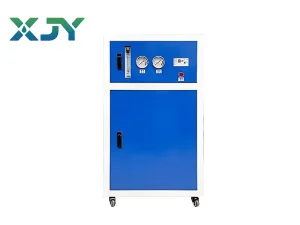
industrial EDI Water Treatment Service, Factories

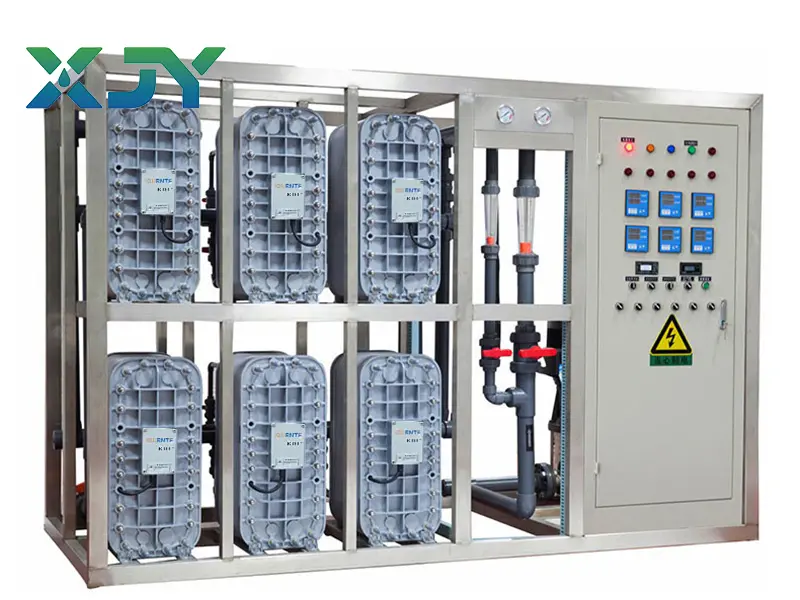
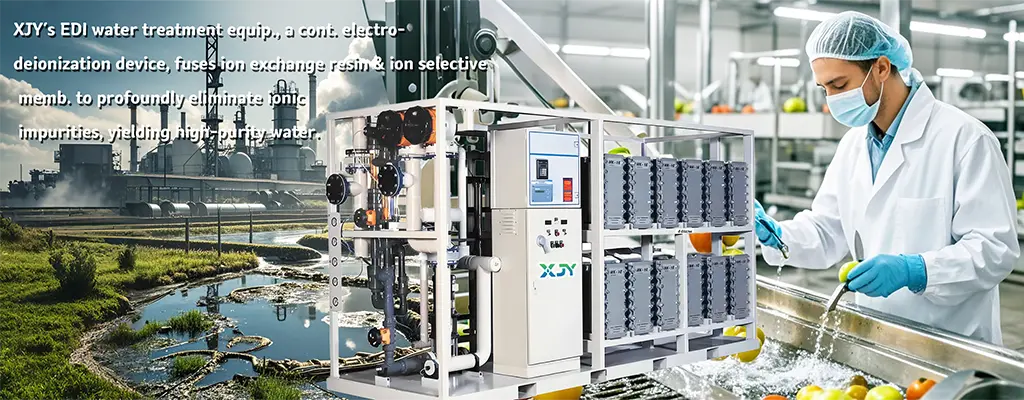
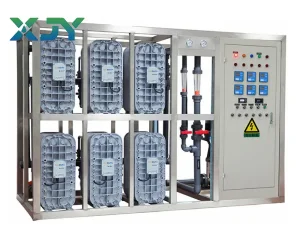
XJY's EDI water treatment  combines ion exchange with electric drive. Under the traction of electric field force, anions and cations in water migrate to the concentrated water chamber through selective ion exchange membranes respectively, continuously removing almost all ionic impurities in the water, thereby preparing high-purity ultrapure water efficiently and stably without the need for large amounts of acid and alkali regeneration.

Product Description

Introduction To EDI Water Treatment Equipment
What is a desalination machine?
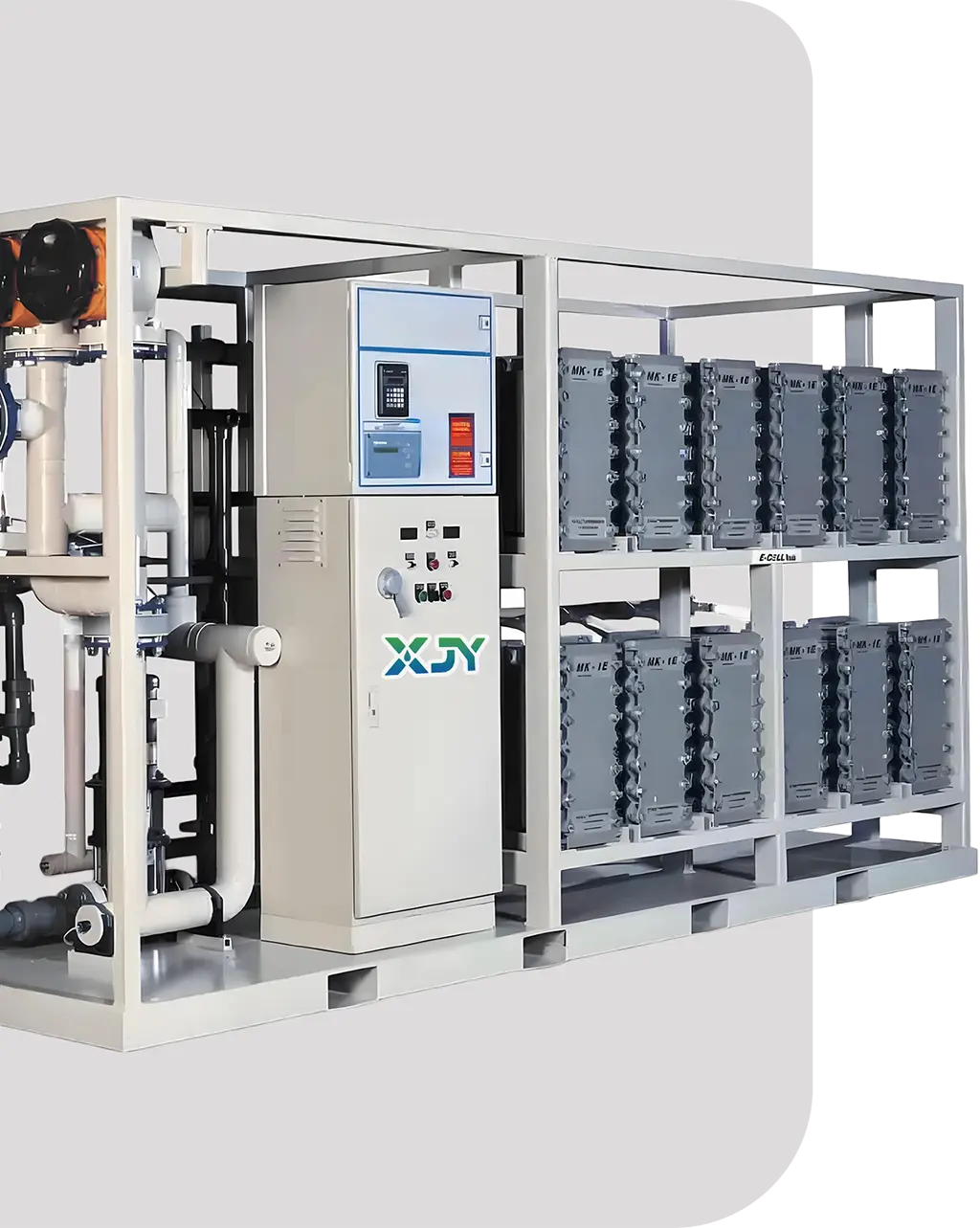
EDI water treatment equipment combines ion exchange with electric drive. Under the traction of electric field force, anions and cations in water migrate to the concentrated water chamber through selective ion exchange membranes respectively, continuously removing almost all ionic impurities in the water, thereby preparing high-purity ultrapure water efficiently and stably without the need for large amounts of acid and alkali regeneration.
EDI Equipment Intro
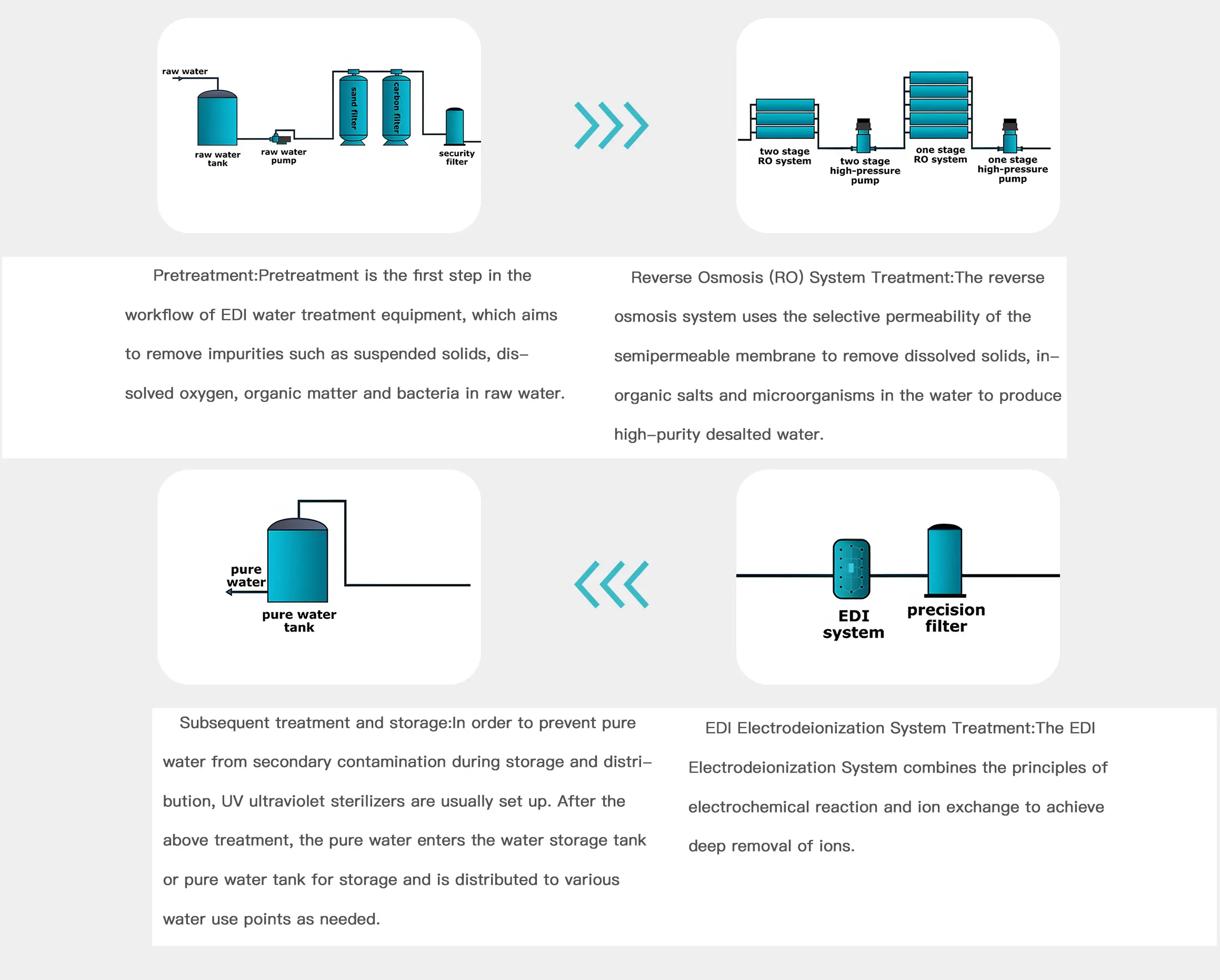
EDI Water Treatment Equipment Process
EDI Process Diagram
Core Functions Of EDI Water Treatment Equipment
EDI System Core
EDI System Technology
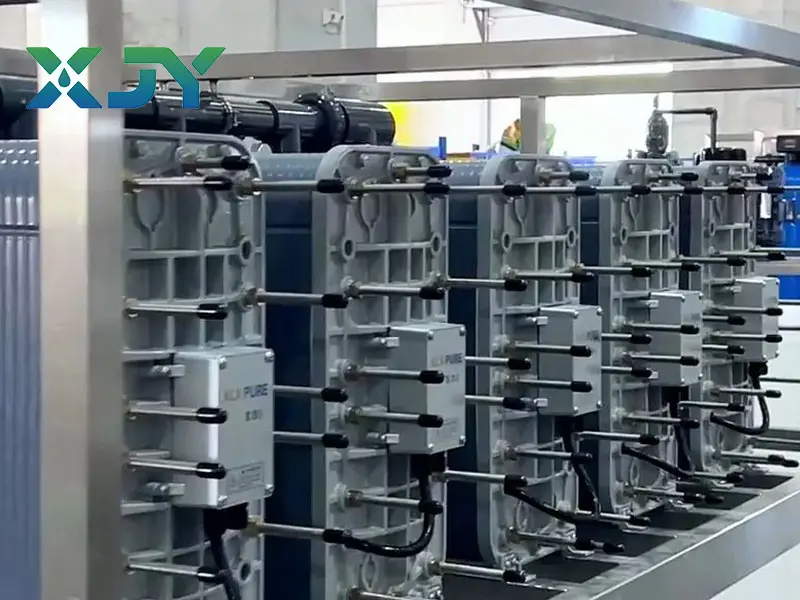
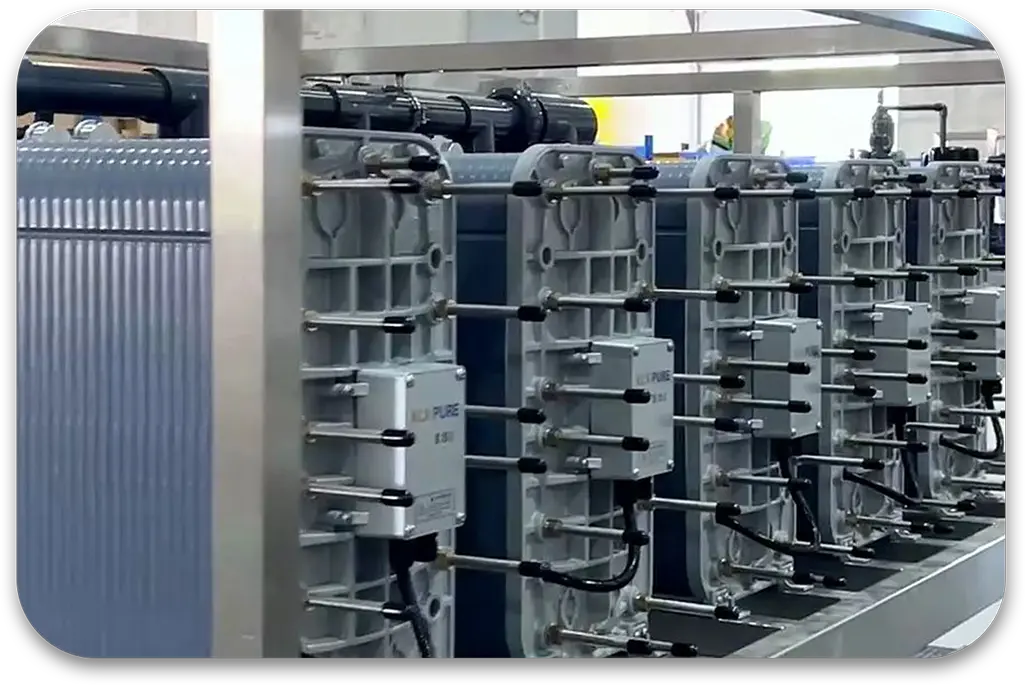
EDI (Electrodeionization), also known as electric desalination, is a new ultrapure water preparation technology. This technology combines electrodialysis technology and ion exchange technology, realizes the directional migration of ions under the action of DC electric field through the selective permeation of membranes and resins. This completes deep desalination while generating hydrogen and hydroxide ions to regenerate the resin continuously without acid-base chemical regeneration.
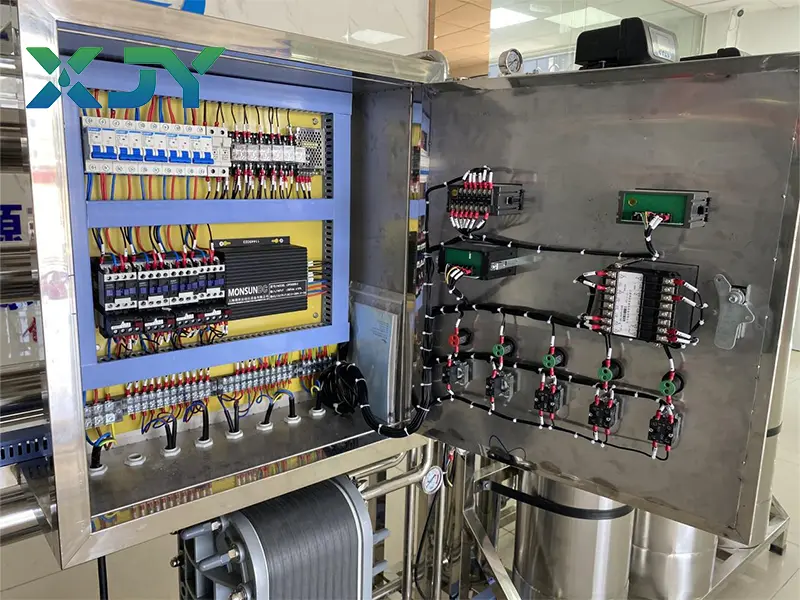
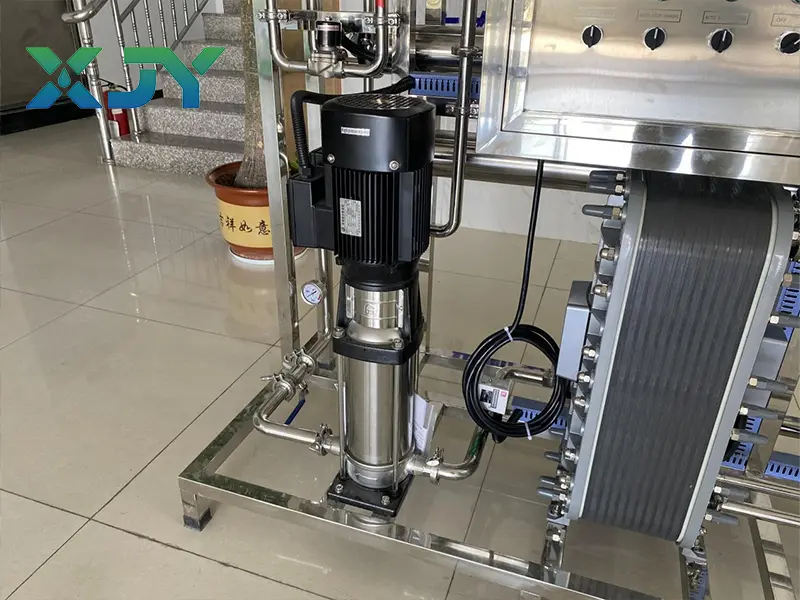
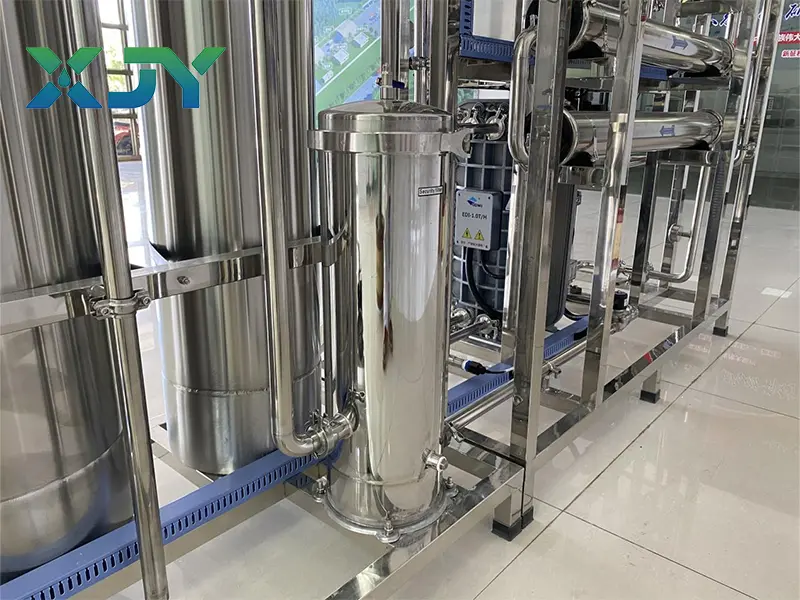
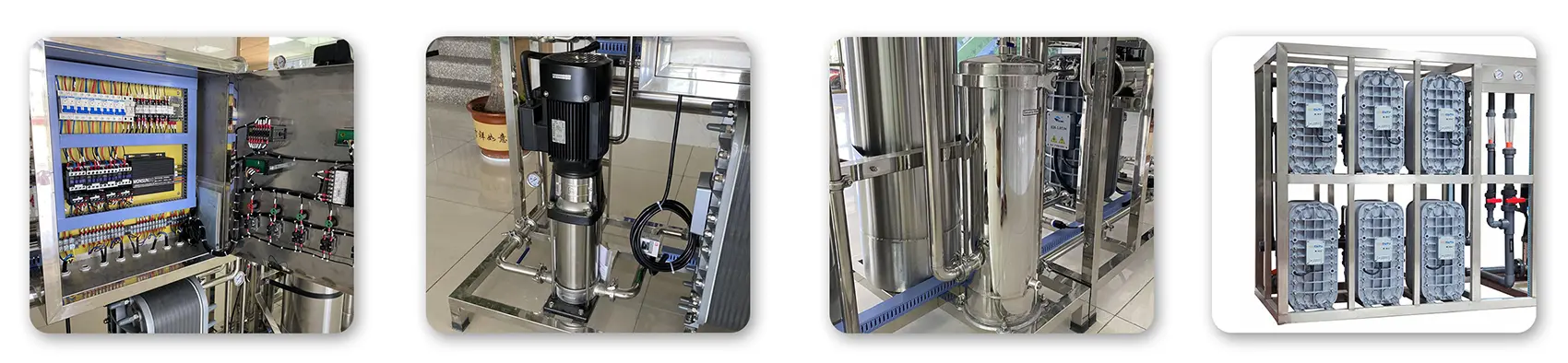
EDI Functions Display
Product Details Component
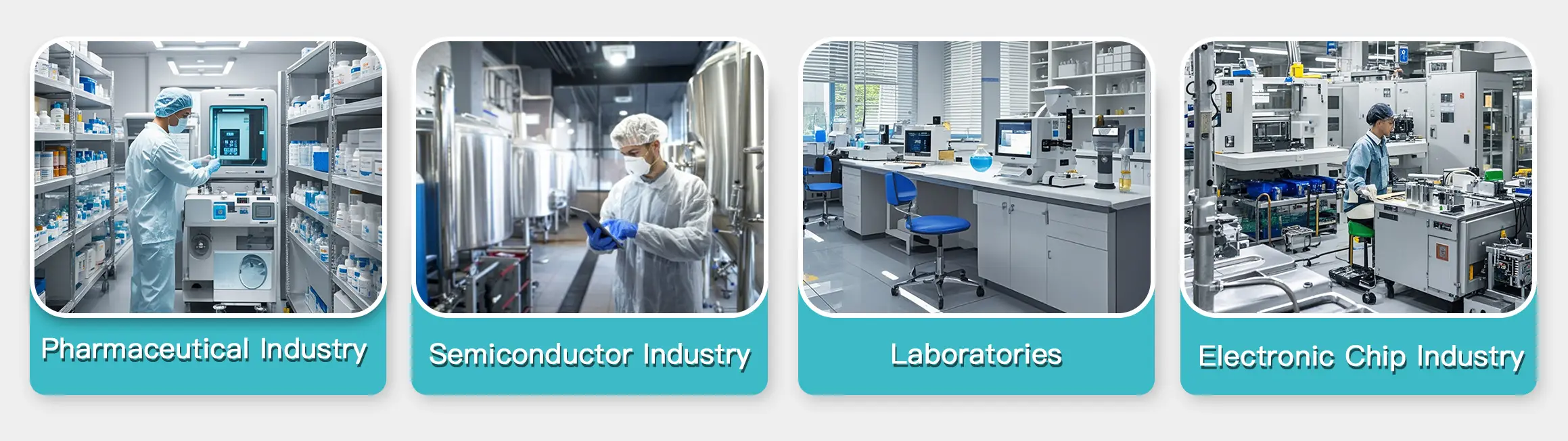
Product Usage Scenarios & Advantages
Usage Scenarios
Comprehensive Characteristics and Advantages
1
Technology Integration

Combines electrodialysis and ion exchange, using electric fields for continuous desalination and resin regeneration.

2
Modular Design

Modular structure facilitates installation, debugging, and maintenance with flexible configuration scale.

3
High Effluent Quality

Produces ultrapure water with stable resistivity over 15MΩ·cm for electronics and medicine.

4
Energy & Environment

Eliminates acid/alkali regeneration, reducing wastewater discharge and environmental pollution.

5
Stable Operation

Operation remains unaffected by external fluctuations in time, pressure, or temperature.

6
Reliable Quality

Ensures consistent water quality without fluctuations or decline during production cycles.
Delivery and Installation
Delivery Range
Global Delivery Range
Global delivery is available. Integrated products can be installed independently, providing a convenient, simple, and easy-to-operate solution for high-purity water needs.
Water Standard Specifications
NAME Grade I Grade II Grade III
Electrical conductivity (25℃), μs/cm ≤ 0.1 1 5
Electrical conductivity (25℃), μs/cm ≤ (Alternative) 0.01 0.1 0.5
Electrical resistivity (25℃), MΩ·cm ≥ 18.2 17.5 12
REMARK:
① GB-Abstract of GB6682-92 Standard for Water in Chinese Laboratories
② ISO-International Organization for Standardization ISO 3696:1995
③ ASTM-Standards for Pure Water from the American Society for Testing and Materials
Frequently Asked Questions (FAQ)
What is EDI technology in water treatment?
EDI (Electrodeionization) is a green water treatment technology that removes ions from water using electricity, ion-exchange membranes, and resin, without requiring chemical regeneration.
How does EDI differ from traditional ion exchange?
Unlike traditional ion exchange that requires acid and alkali for resin regeneration, EDI uses an electric field to regenerate the resin continuously, making it more eco-friendly and cost-effective.
What level of water purity can EDI achieve?
EDI systems can consistently produce ultrapure water with a resistivity of 15 to 18.2 MΩ·cm, suitable for high-precision industrial applications.
Is the EDI system easy to maintain?
Yes, the modular design allows for easy installation and maintenance. Since there is no need for chemical handling, the operational safety and simplicity are significantly improved.
Which industries benefit most from EDI water equipment?
EDI is widely used in the pharmaceutical, electronics, power generation, and chemical industries where stable, high-purity water is essential for production.

Related Products