commercial Containerized Water Treatment Systems Manufacturers, Factories
Containerized integrated water purification equipment is a water treatment equipment that integrates multiple water purification processes and is integrated into a standard container. This equipment has been widely used in many fields due to its unique advantages. The filtration system can remove a variety of contaminants such as sediment, bacteria, viruses, and chemicals, ensuring that the output water meets high quality standards.
What is Container Integrated Water Purification Equipment
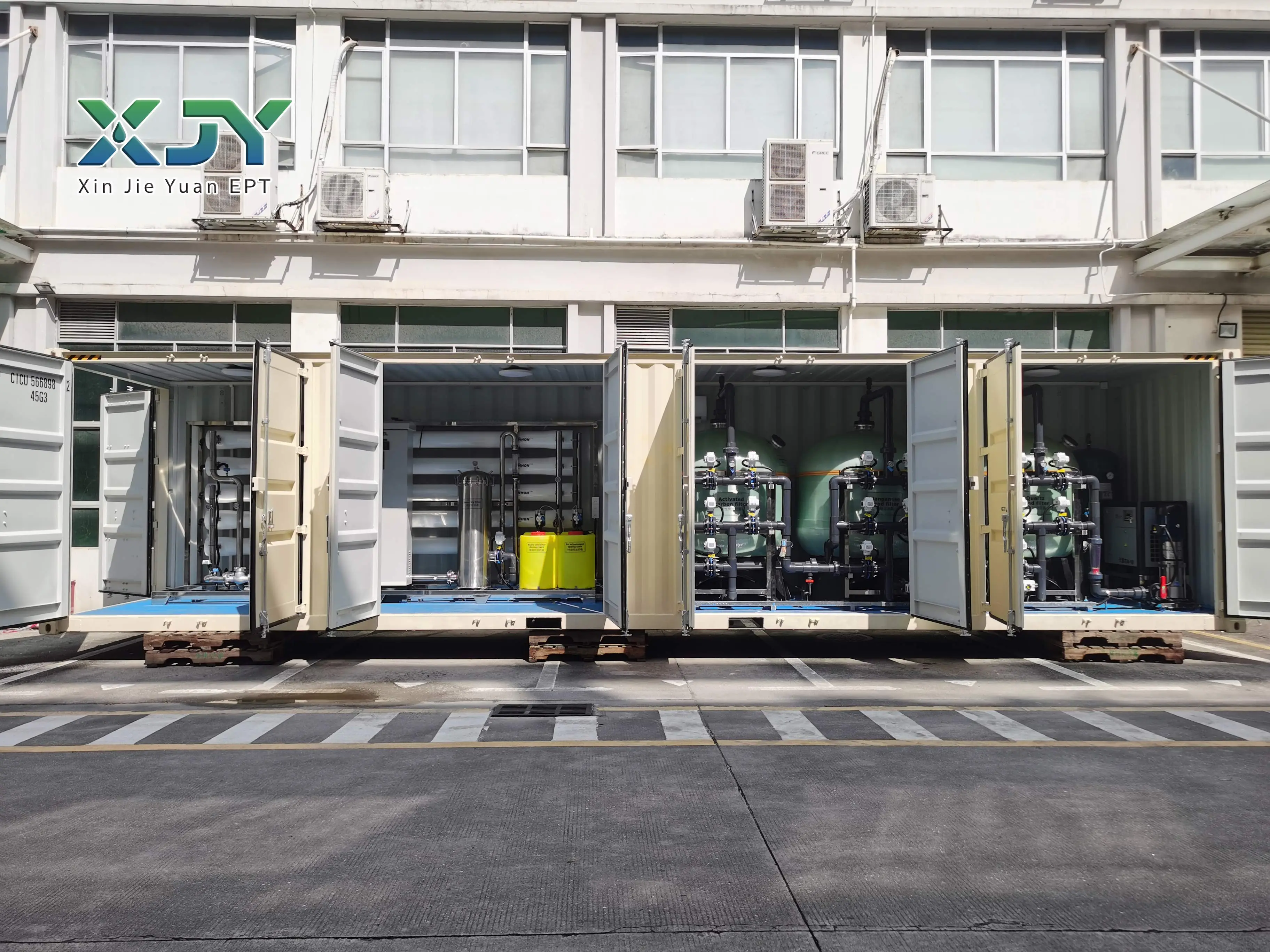
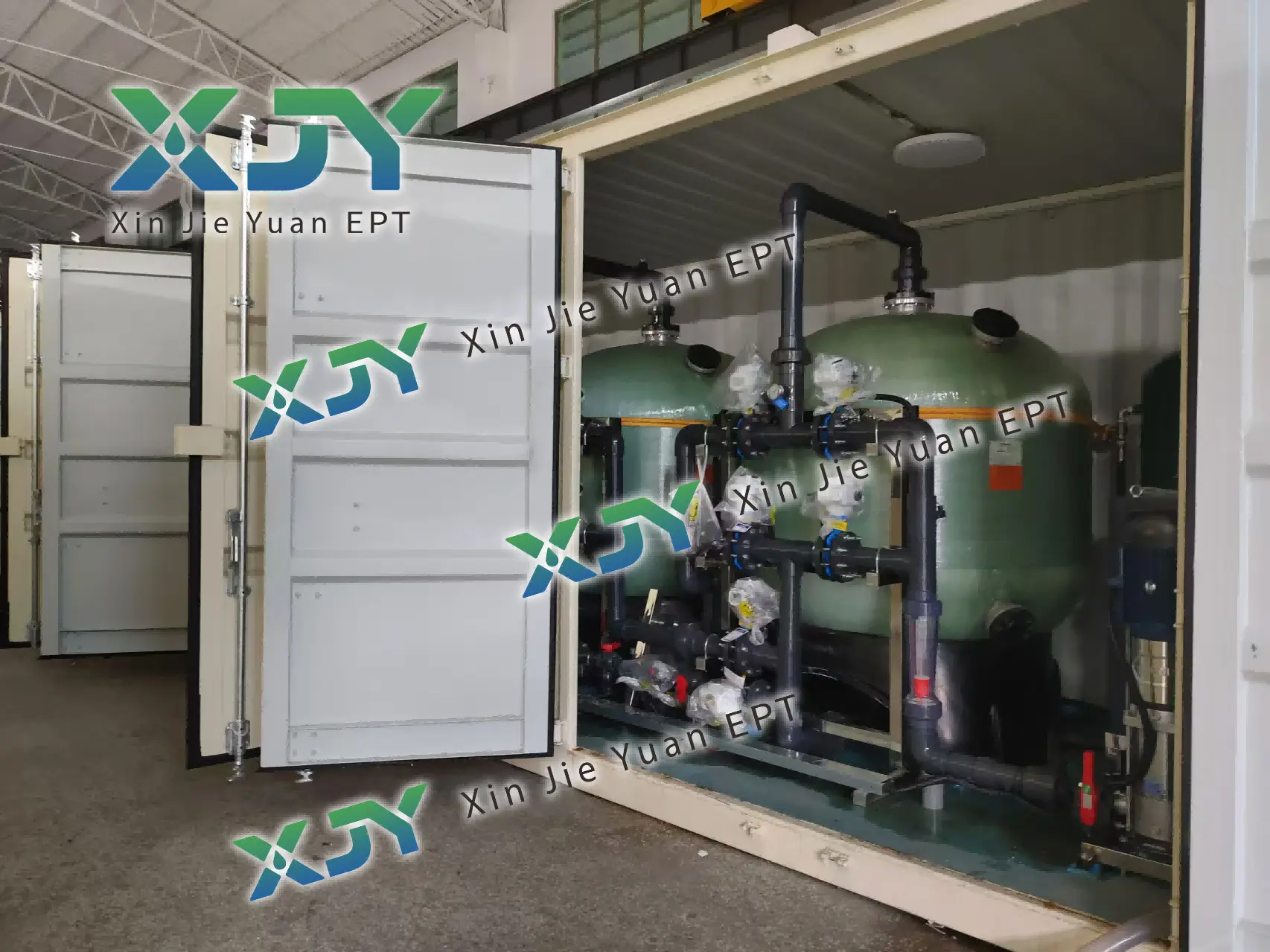
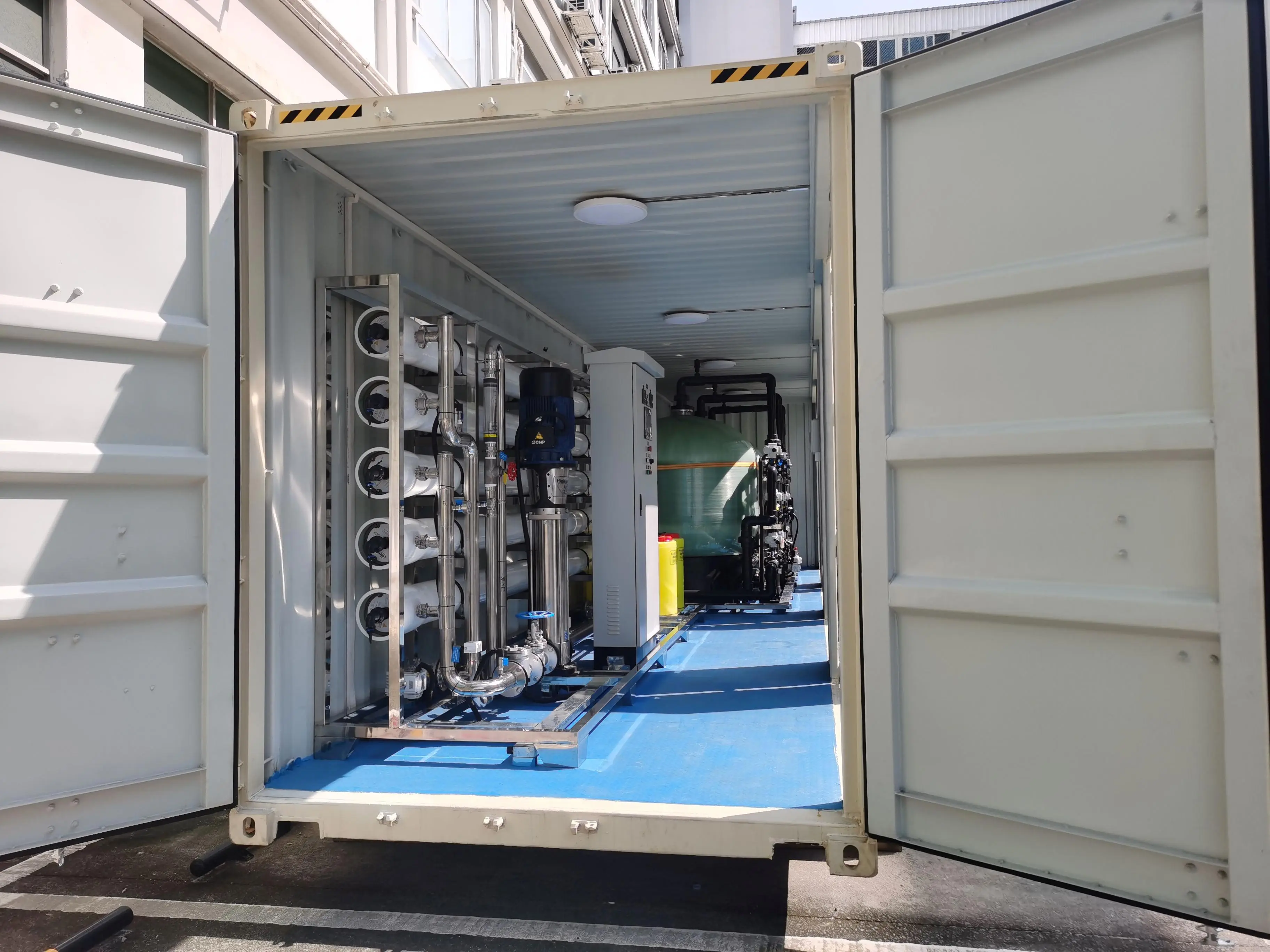
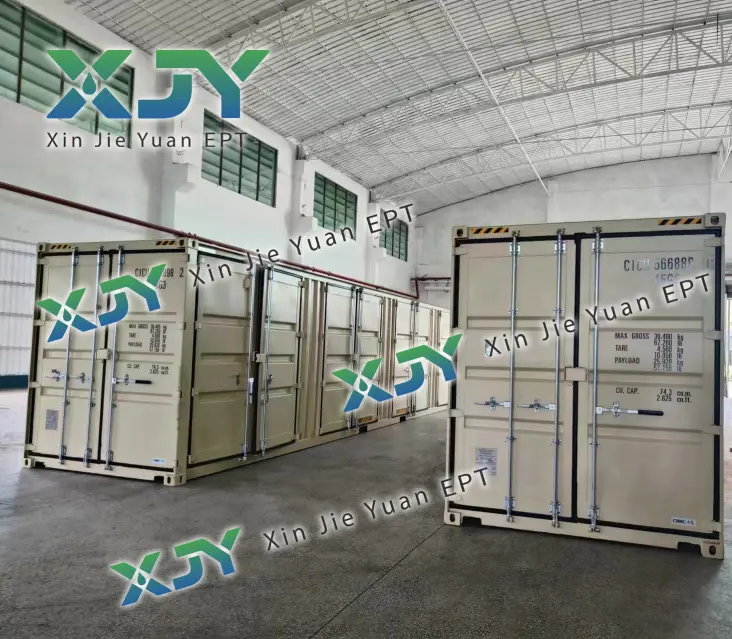
Containerized integrated water purification equipment is a water treatment equipment that integrates multiple water purification processes into a standard container. This equipment has been widely used in many fields due to its unique advantages.
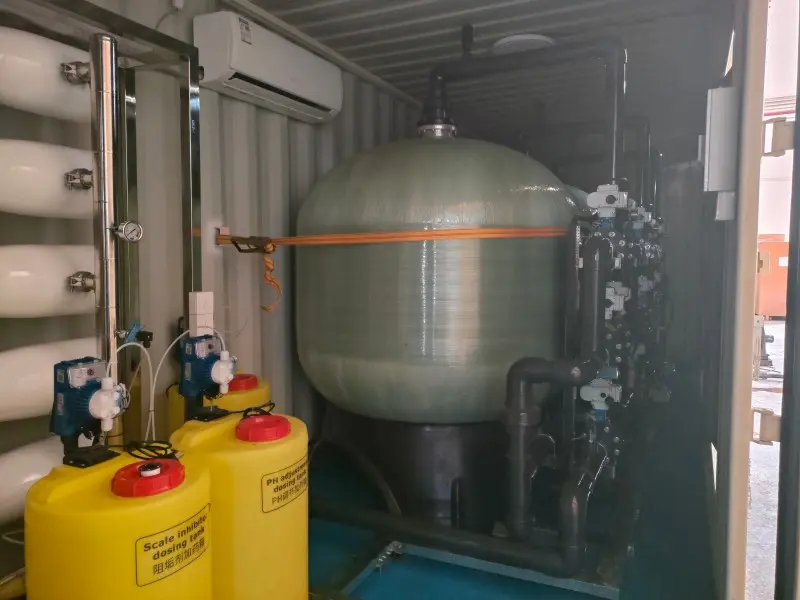
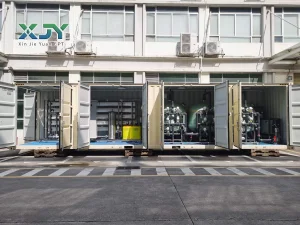
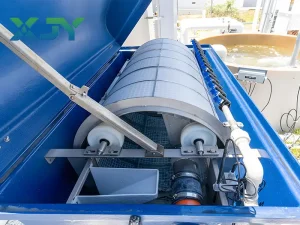
Picture 1: Containerized integrated water purification operation
Product Details and Features
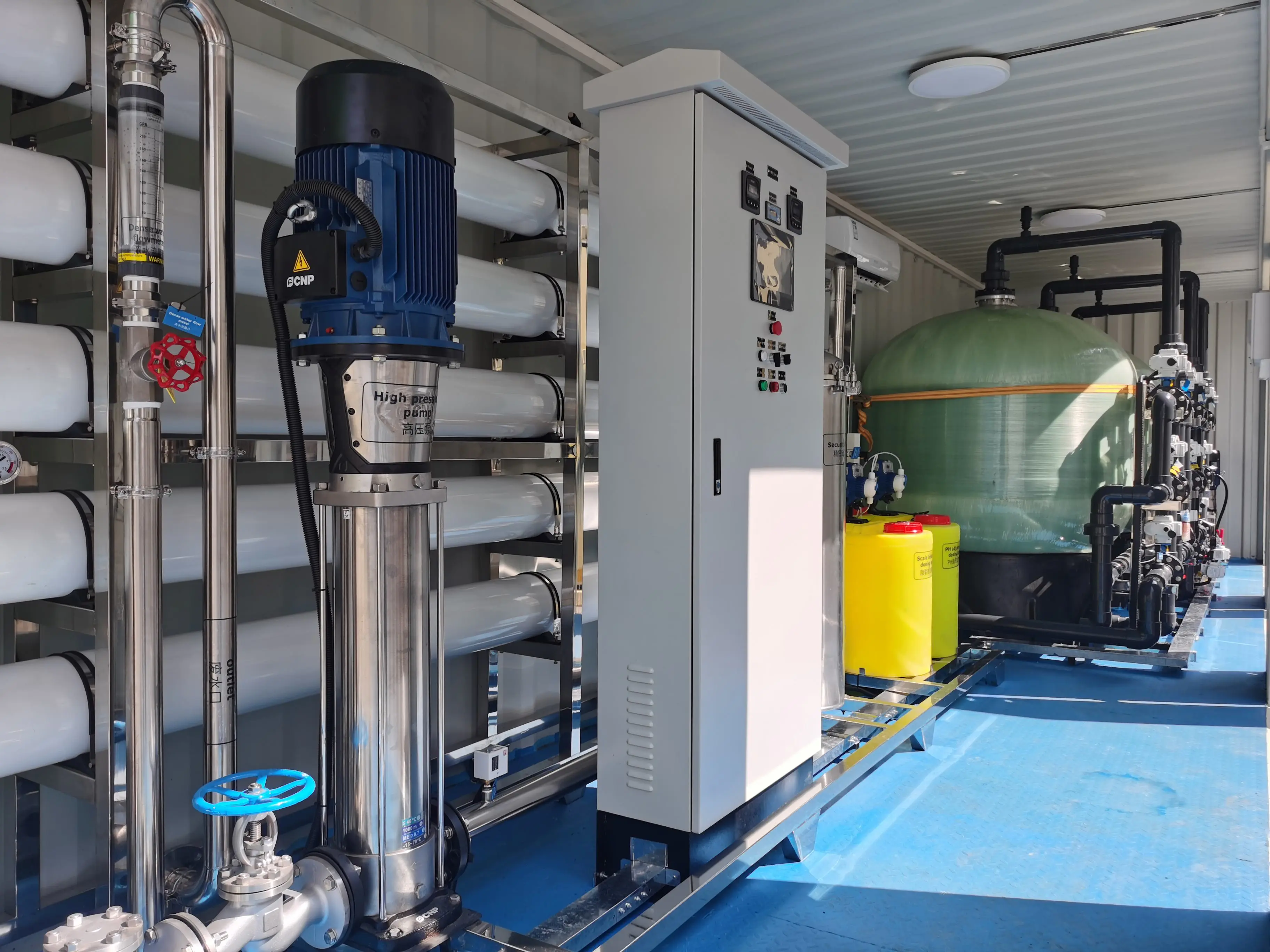
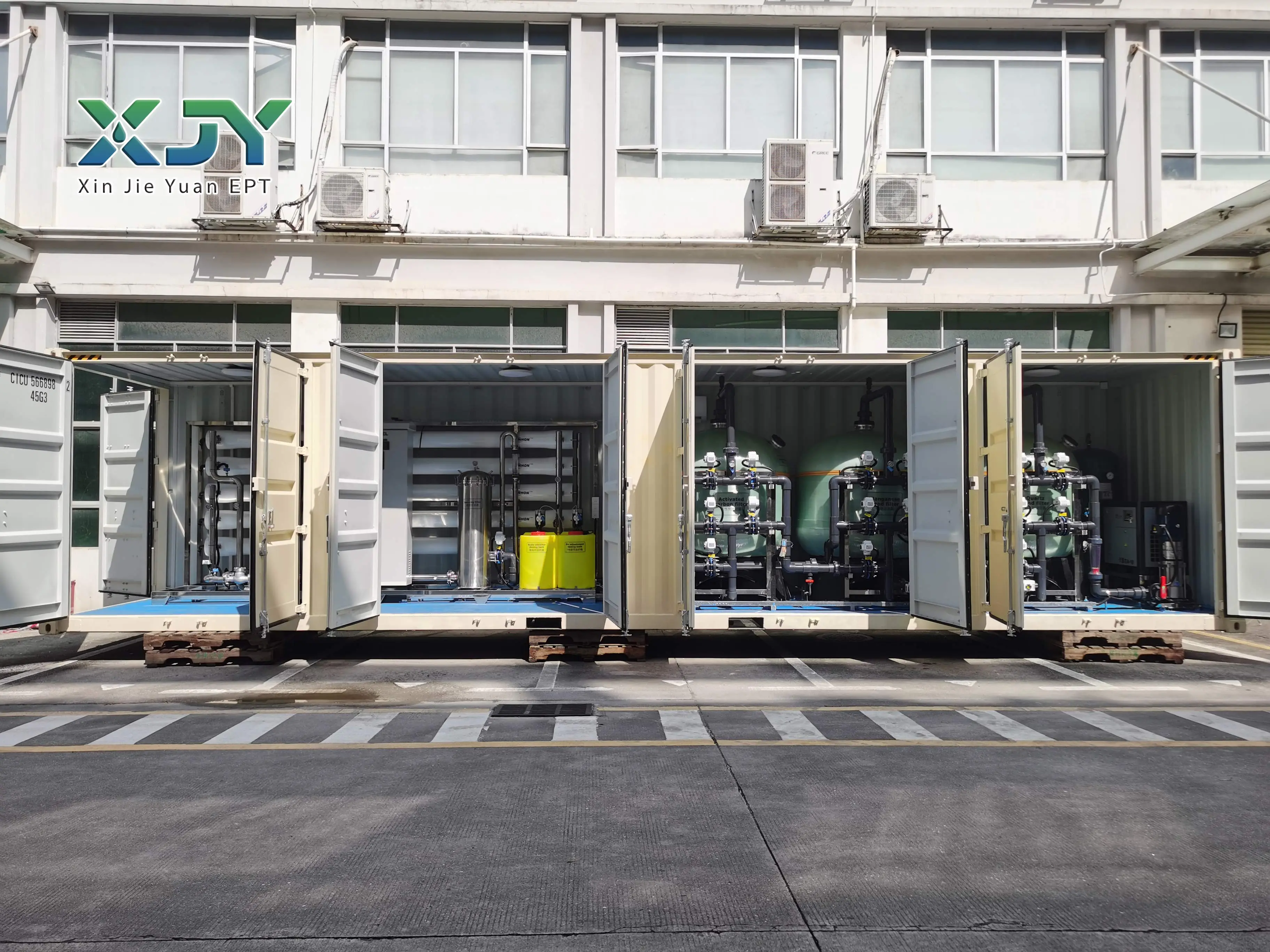
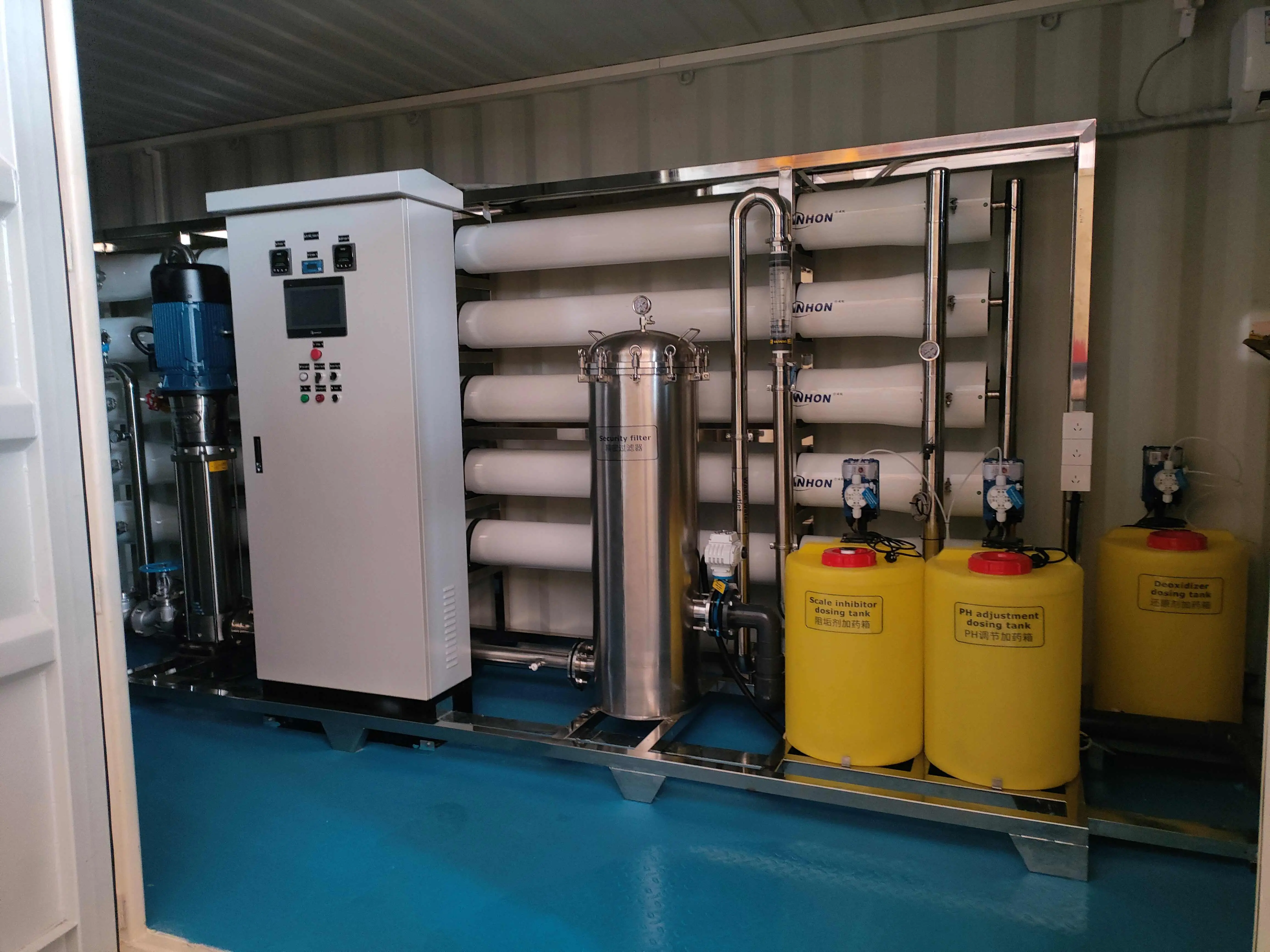
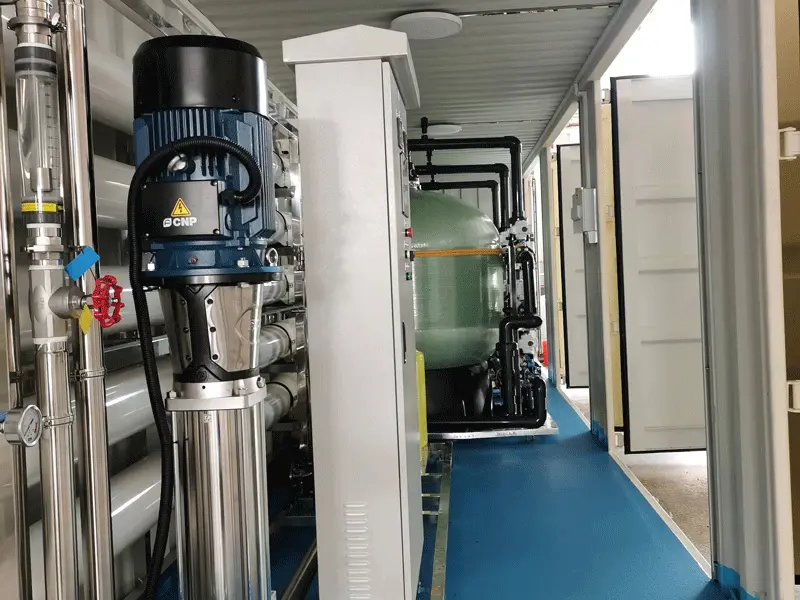
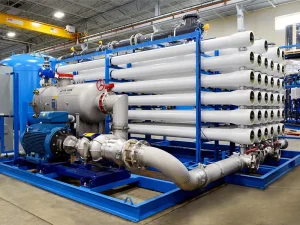
The integrated design means that all components required for water purification are contained within the container. This usually includes a filtration system, a sedimentation tank, a disinfection device, and a pump. The filtration system can remove a variety of contaminants such as sediment, bacteria, viruses, and chemicals, ensuring that the output water meets high quality standards.
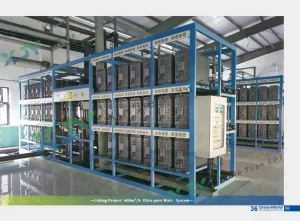
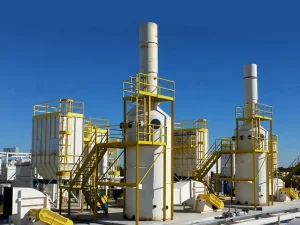
Picture 2: Integrated water purification equipment
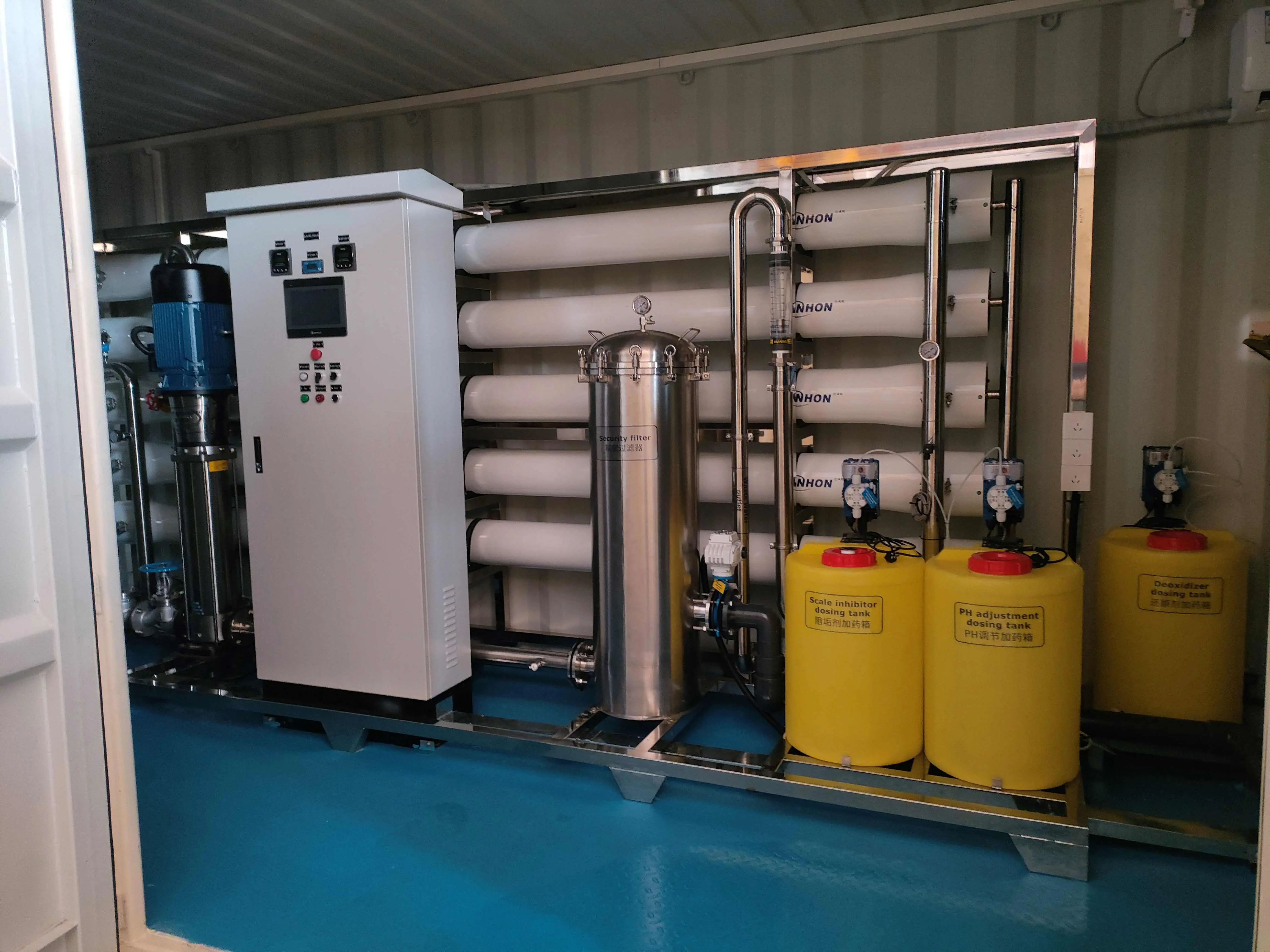
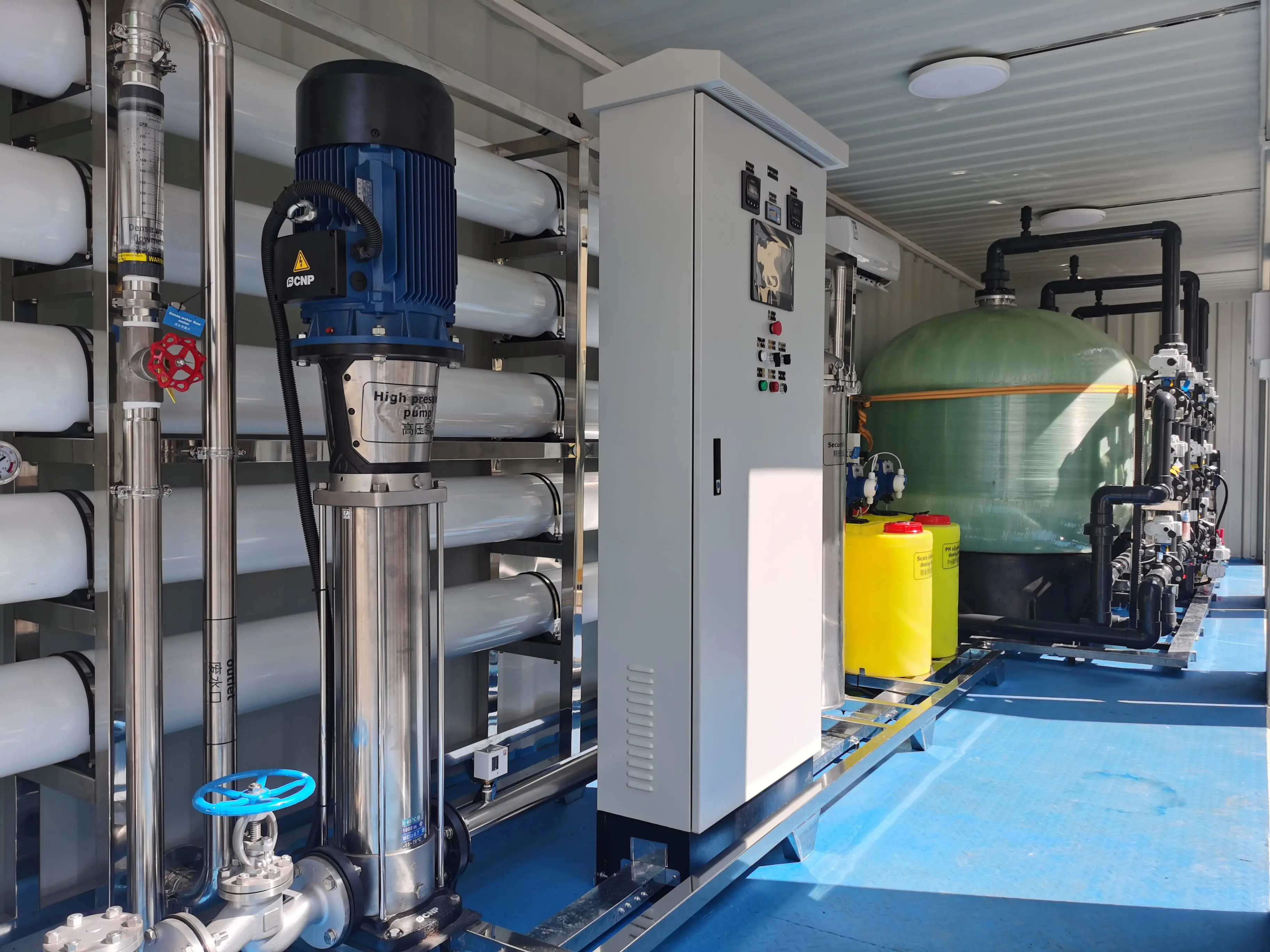
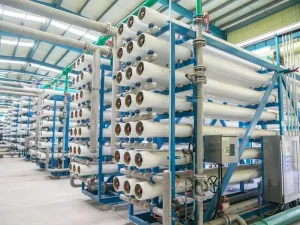
The equipment is usually equipped with an advanced control system for easy operation and monitoring. The operator can adjust the settings and monitor the purification process in real time to ensure optimal performance. The container provides weatherproof protection and can withstand harsh environments.
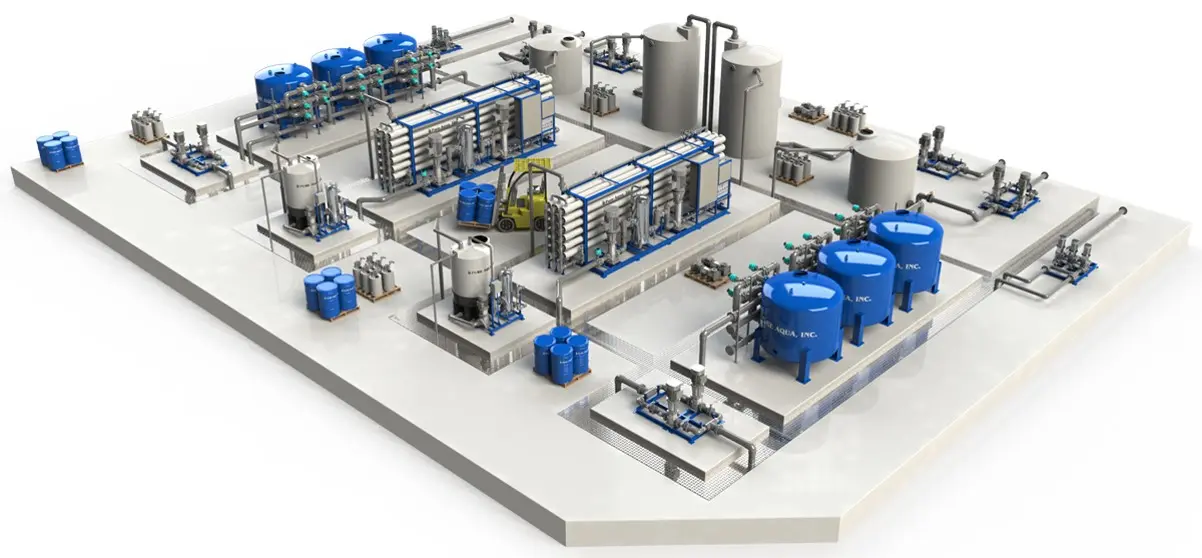
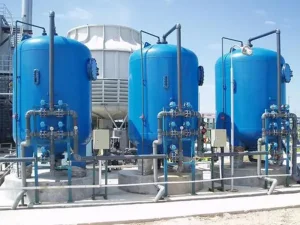
Picture 3: Containerized integrated water purification side view
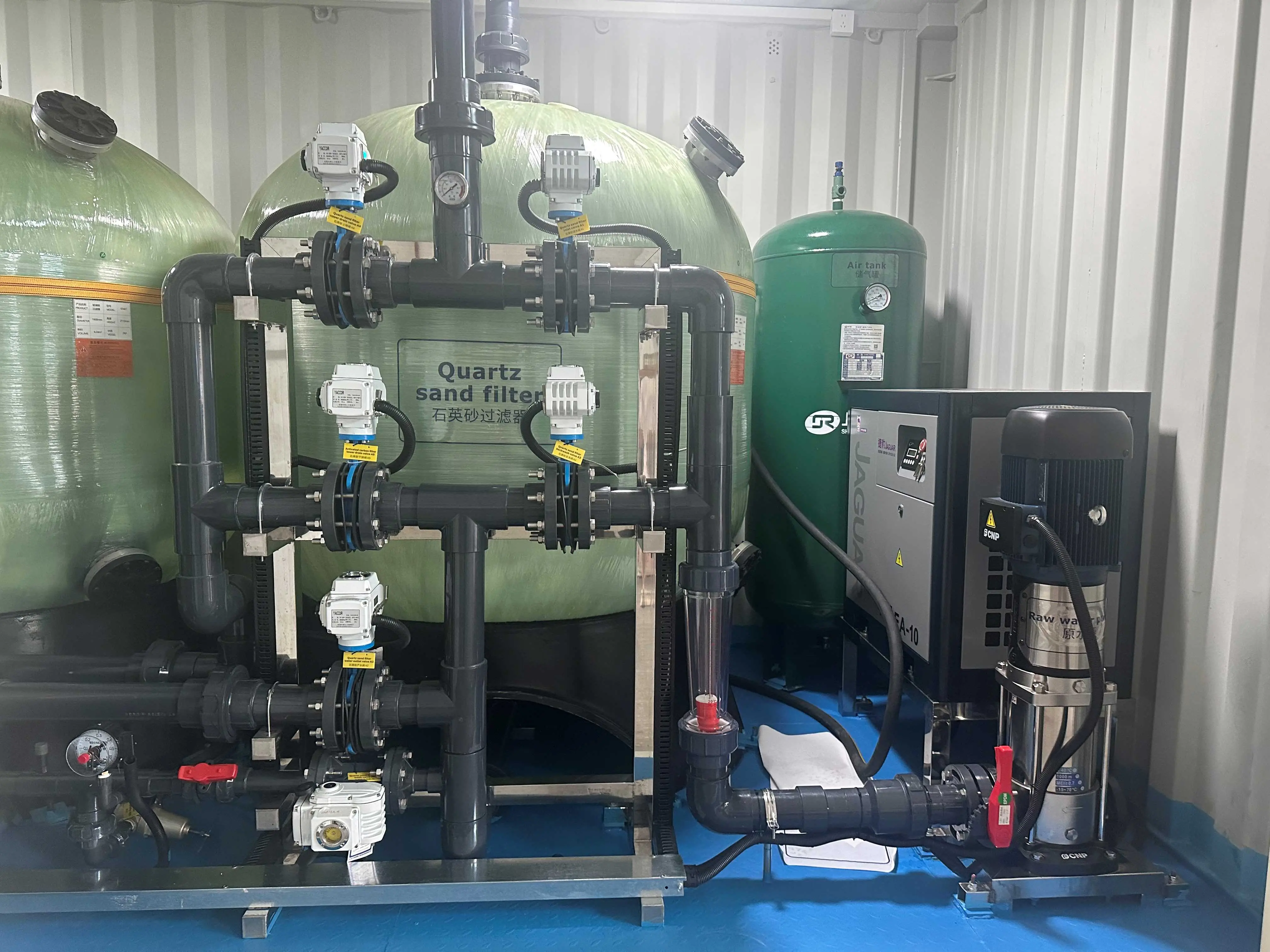
Working Principle
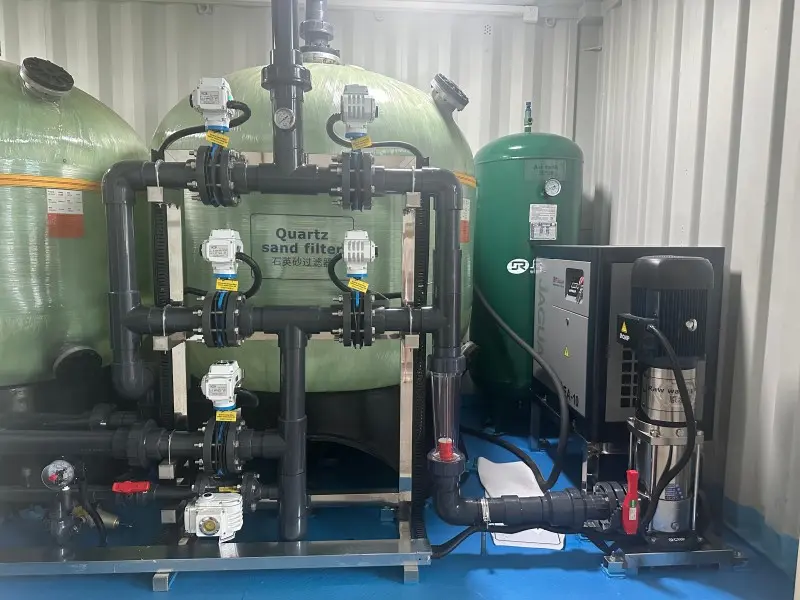
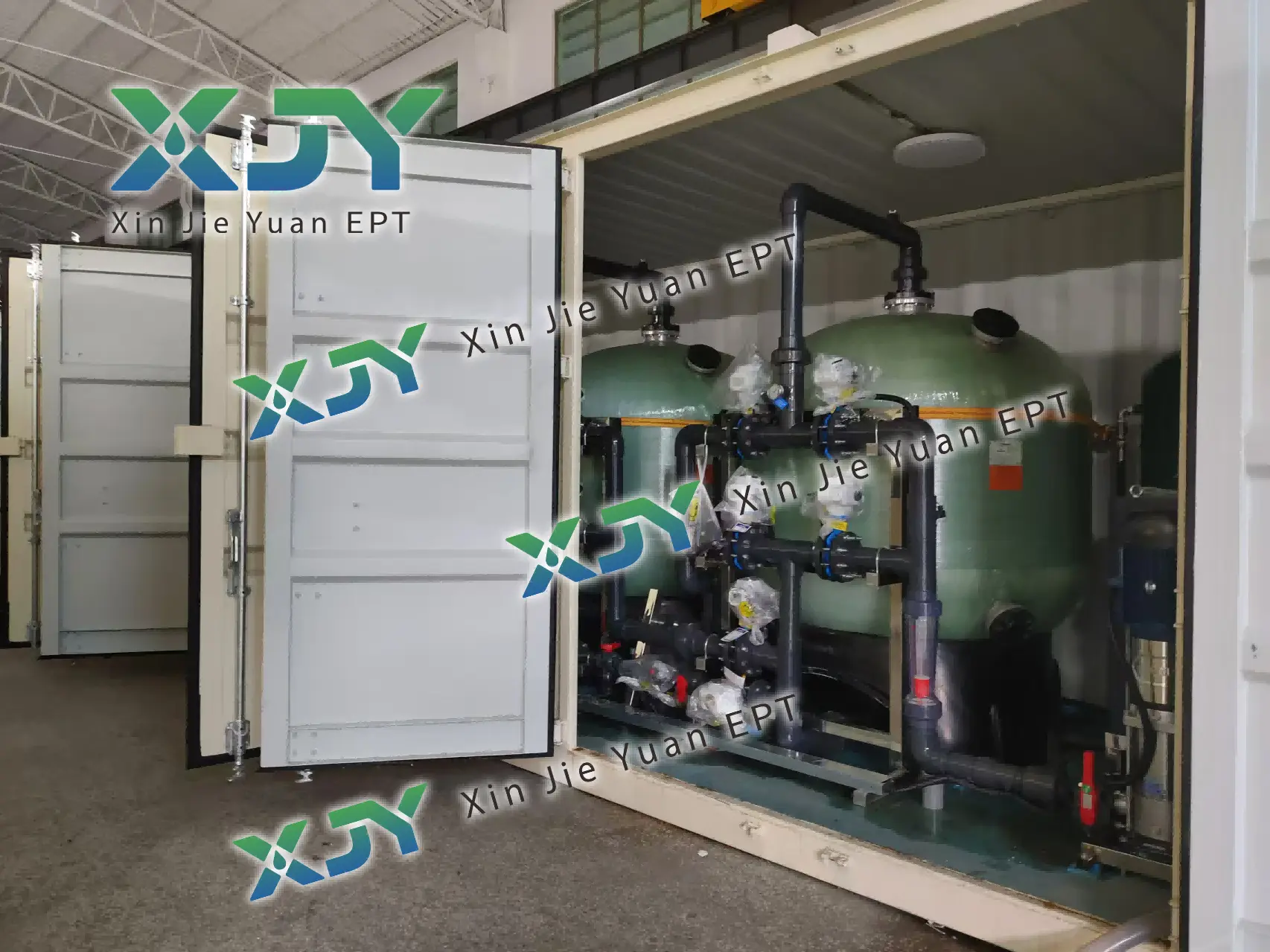
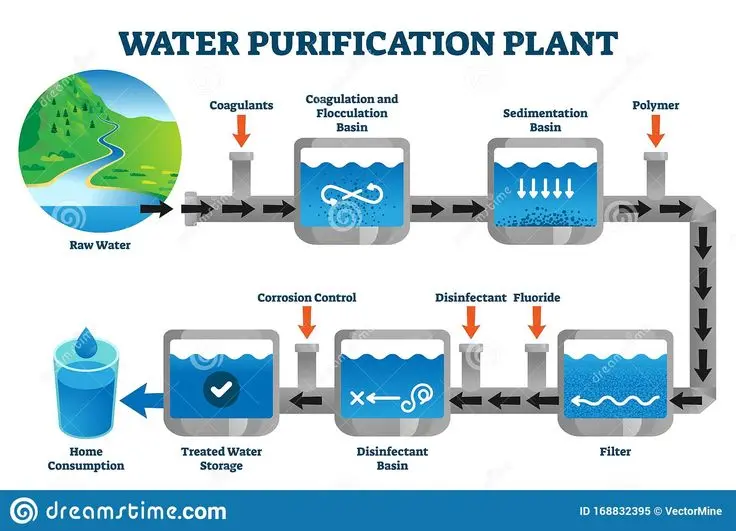
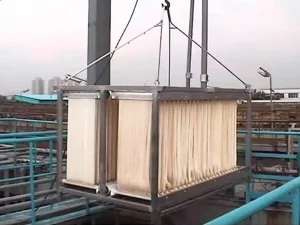
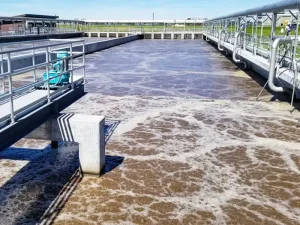
Picture 4: Process of the water purification
1. PretreatmentRaw water undergoes filtration to remove large particles and debris. Chemicals are added for coagulation and flocculation.
2. SedimentationFlocculated water settles in a tank where heavier floccules are removed from the bottom.
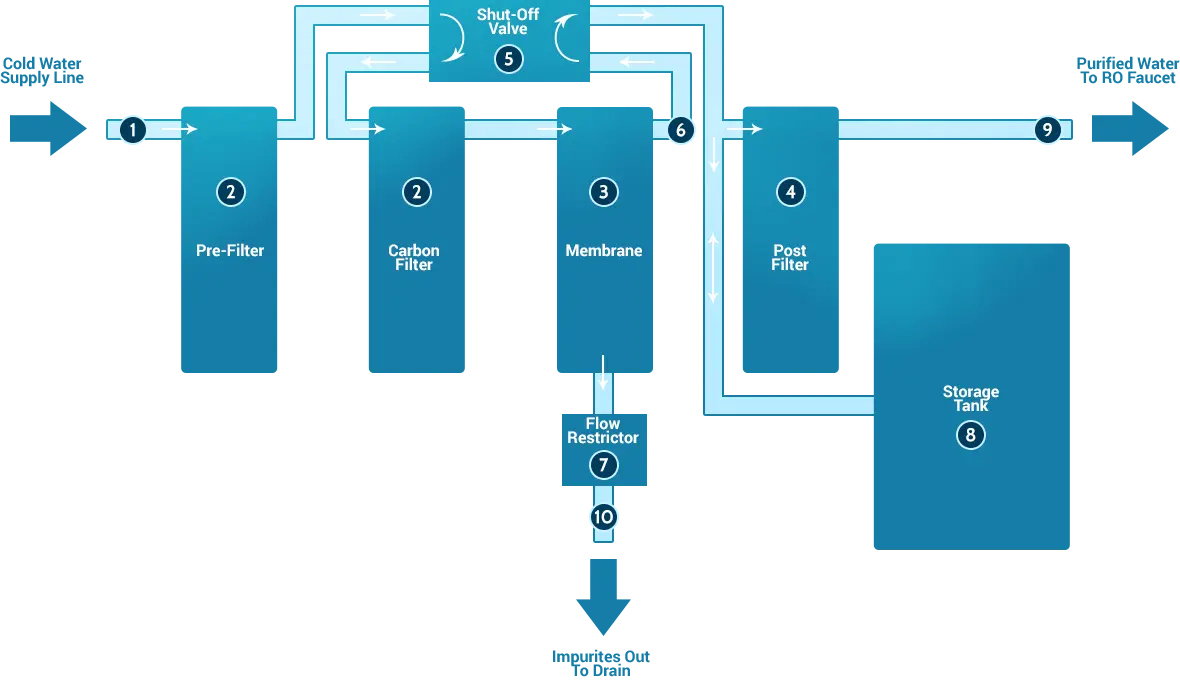
3. FiltrationWater passes through media like sand, activated carbon, or membranes to remove smaller contaminants.
4. DisinfectionFiltered water is treated via chlorination, UV irradiation, or ozone to eliminate microorganisms.
5. Storage and DistributionPurified water is stored in tanks and distributed through a pipe system.
Main Components
Pretreatment unit: Removes large particles through sedimentation and filtration.
Chemical dosing: Automates injection of coagulants based on water quality.
Physical filtration: Uses sand, gravel, or quartz to ensure high-quality output.
Membrane filtration: Optional RO/UF membranes for microscopic contaminants.
Disinfection unit: Uses chlorine, ozone, or UV to ensure safety.
Control system: PLC system for real-time monitoring and automation.
Picture 5: Flow chart of water purification
Key Advantages
Mobility and Rapid Deployment: Ideal for emergency response and remote areas.
Integrated Technology: Combines multiple technologies into one unit, reducing footprint.
High Efficiency: Automatic control systems ensure stable water quality.
Scalability: Customizable to meet different flow requirements.
Low Maintenance: Modular design simplifies part replacement.
Specifications & Technology
Water Capacity
Systems range from 100 l/h to 75,000 l/h to suit various needs.
Raw Water TDS
Standard systems handle up to 2,000 mg/L NaCl; customized for higher concentrations.
Quality Standards
Meets TS 266 Type 1, ISO 10500, and WHO Drinking Water Quality Guidelines.
Microbiological Control
Coliform reduced to 0 CFU/100 mL; bacteria below 100 CFU/mL.
Application Scenarios
These systems provide clean drinking water to disaster sites, campsites, refugee camps, construction sites, and military bases. Depending on needs, technologies like chemical dosing, filtration, ultrafiltration, reverse osmosis, and UV disinfection can be integrated.
Emergency Response: Clean water for natural disasters.
Remote Communities: Supply for areas with limited infrastructure.
Industrial Use: Supporting factories and mines.
Agriculture: Irrigation with treated water.
Military: Ensuring safety for personnel in remote areas.
Frequently Asked Questions
1. What is the main benefit of a containerized water treatment system?
The main benefit is mobility and rapid deployment. Because all components are integrated into a standard container, it can be easily transported and put into operation quickly in remote or emergency locations.
2. Does the treated water meet international drinking standards?
Yes, our systems are designed to meet TS 266 Type 1, ISO 10500, and WHO Drinking Water Quality Guidelines, ensuring the highest safety standards for consumption.
3. What is the typical water production capacity?
The production capacity is scalable and typically ranges from 1,000 liters per hour (l/h) up to 75,000 l/h, depending on the specific model and configuration.
4. Can the system handle high levels of dissolved solids (TDS)?
Standard systems handle raw water with TDS values up to 2,000 mg/L NaCl. However, we offer customized solutions for more concentrated water sources if required.
5. Is the equipment easy to maintain?
Yes, the modular design and integrated PLC control system simplify maintenance. Components are easily accessible, and the automation reduces the need for constant manual intervention.
6. What disinfection methods are used?
The systems can integrate various methods including chlorination, ultraviolet (UV) irradiation, or ozone treatment to effectively kill bacteria and viruses.
 XINJIEYUAN