The working principle of mbr membrane bioreactor
MBR membrane bioreactor (MBR) is an efficient wastewater treatment method that combines membrane separation technology and biological treatment technology. Its working principle is mainly based on the following points:
⚙️
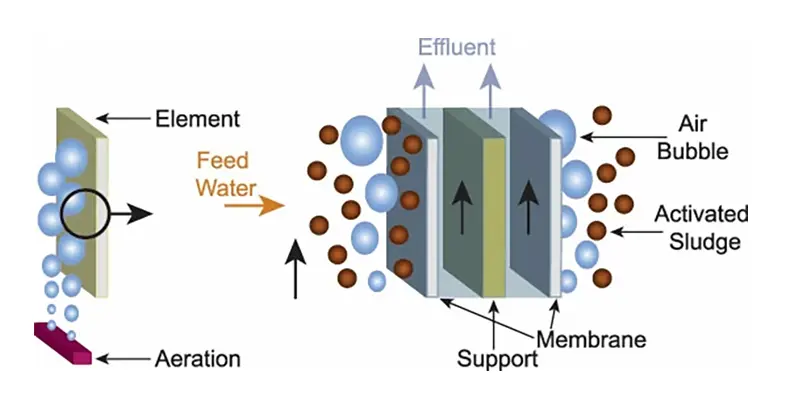
Membrane separation technology: MBR membrane is separated by ultrafiltration or microfiltration membrane technology, replacing the secondary sedimentation tank and conventional filtration unit in the traditional sewage treatment process. This technology can effectively trap activated sludge and macromolecular organic matter, so as to achieve solid-liquid separation.
🔬
Biological treatment technology: MBR membrane process uses membrane separation equipment to trap activated sludge and macromolecular organic matter in the biochemical reaction tank, eliminating the secondary sedimentation tank. This makes the activated sludge concentration greatly increased, the hydraulic retention time (HRT) and the sludge retention time (SRT) can be controlled separately.
The high-efficiency solid-liquid separation capacity of MBR membrane bioreactor makes the effluent water quality good, suspended matter and turbidity close to zero. It has obvious advantages such as high removal rate of pollutants, strong resistance to sludge swelling, and stable effluent quality.
Composition of MBR membrane bioreactor
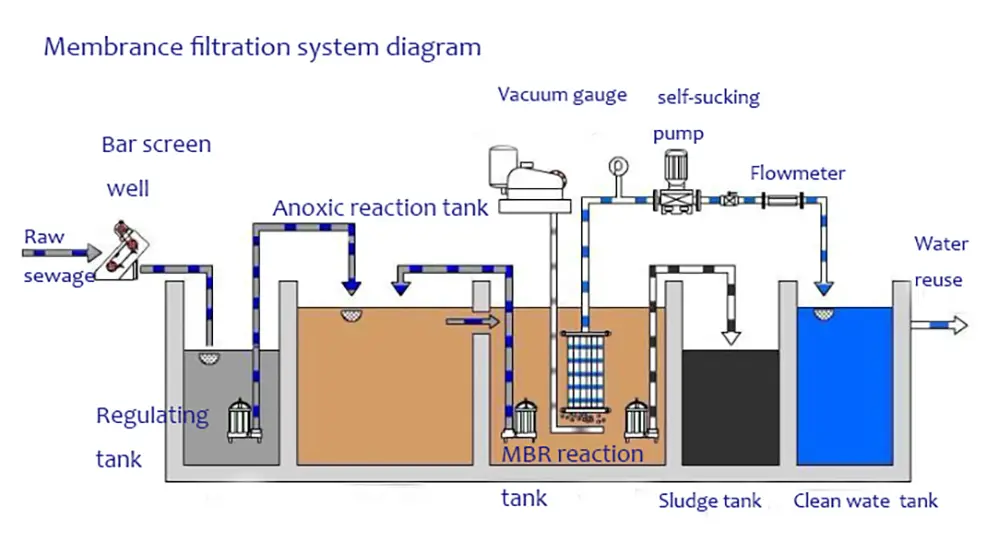
The Membrane bioreactor (MBR) system is generally composed of the following parts:
1. Water inlet well: Equipped with an overflow port and water inlet gate to manage excess water quantity or system load.
2. Grid: Intercepts fibers, slag, and waste paper to ensure normal operation and avoid system debris.
3. Regulation tank: Adjusts the quantity and quality of sewage to reduce operating load and ensure stability.
4. Hair collector: Prevents fine debris from causing blockage to pumps and MBR reactors.
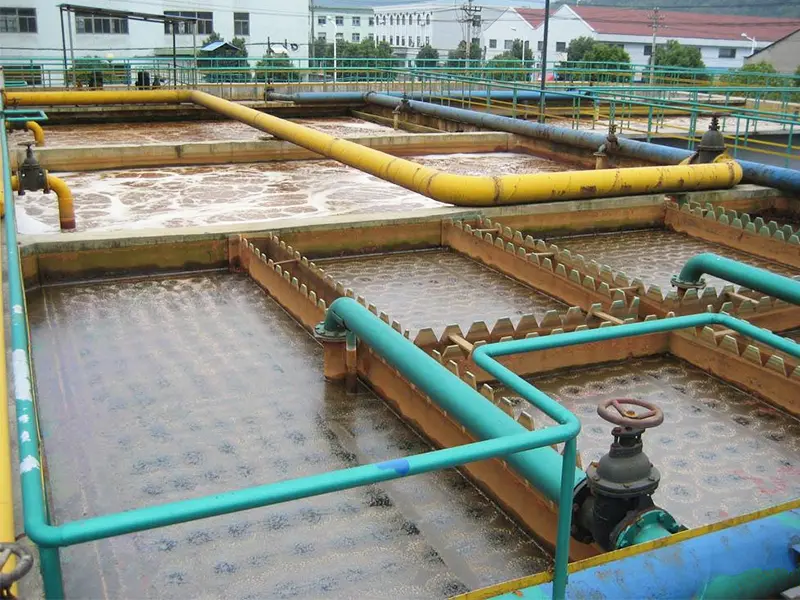
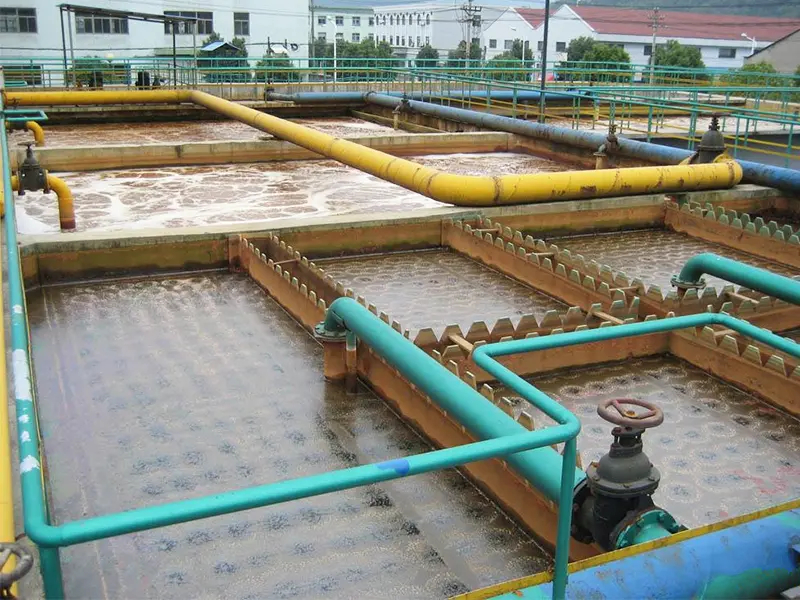
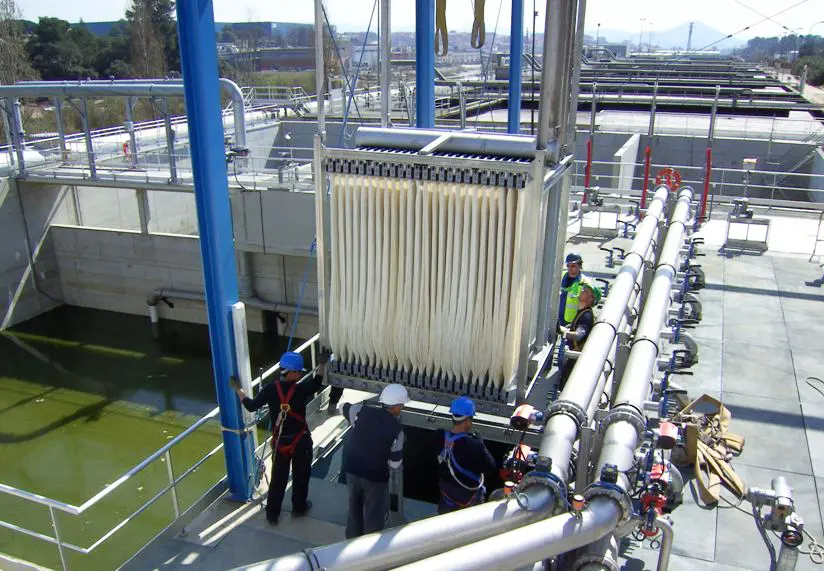
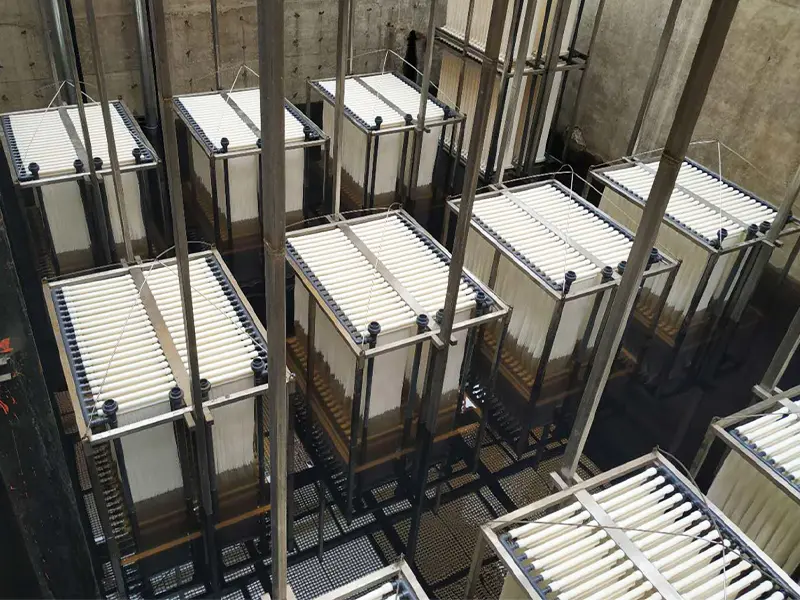
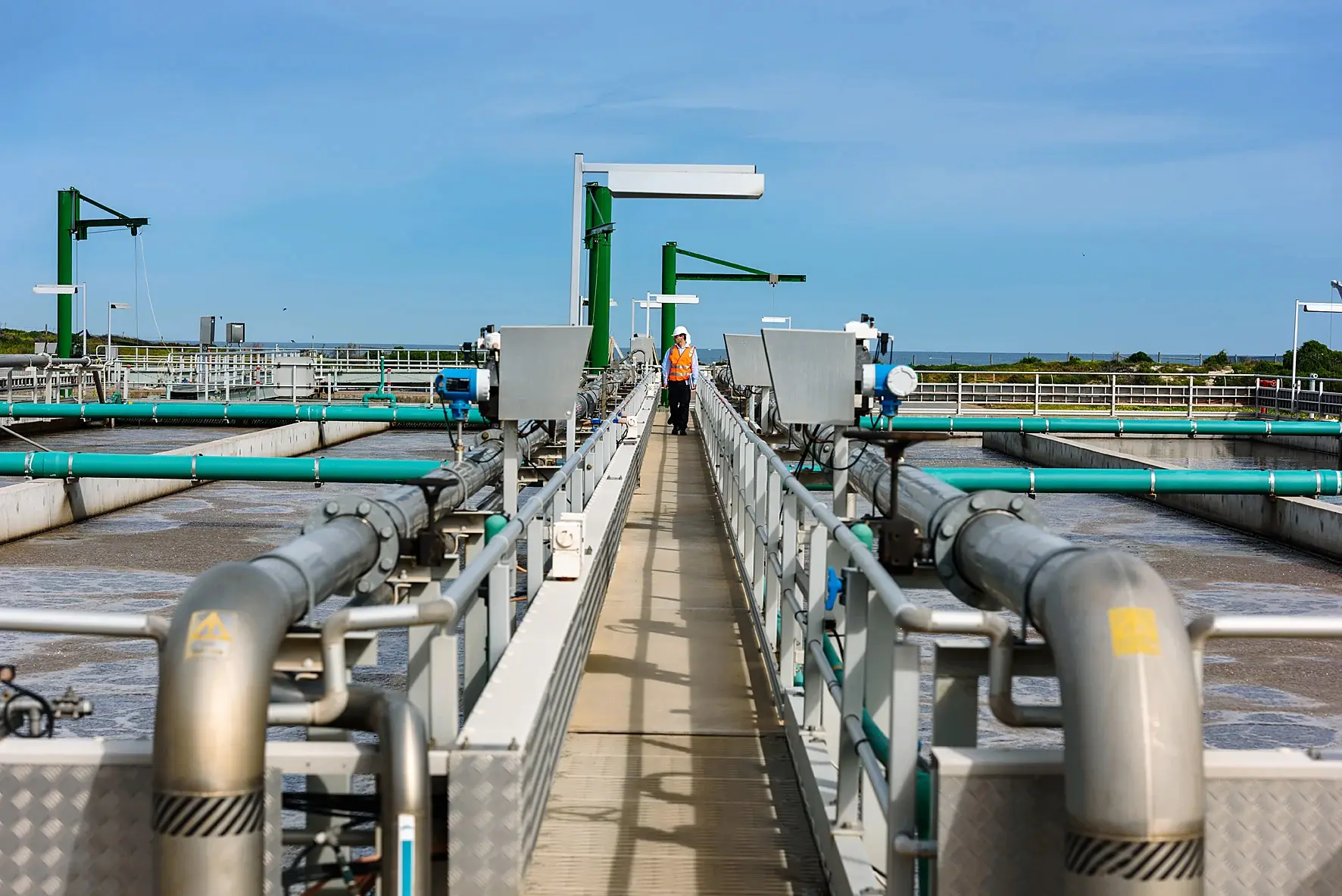
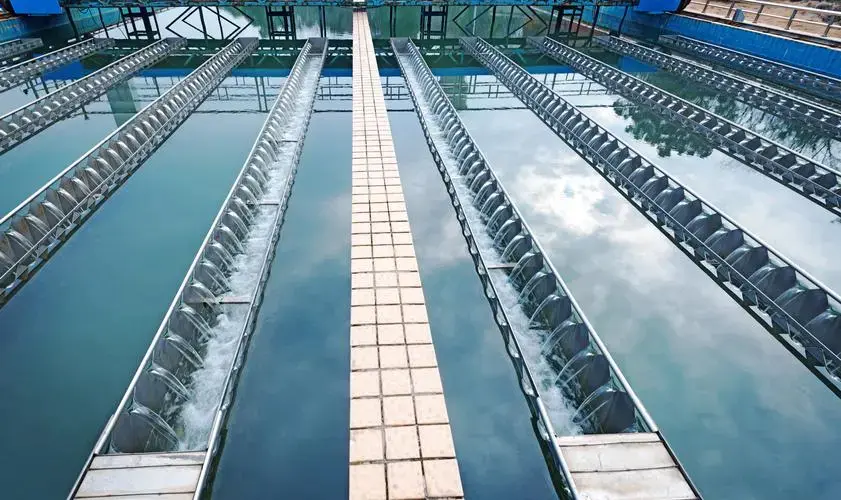
5. MBR reaction tank: The core part for degradation of organic pollutants and mud-water separation.
6. Disinfection device: Automatically controls dosage according to water requirements.
7. Measuring device: Uses flow meters and water meters to control system parameters.
8. Electronic control device: PLC-based control for pumps and fans, available in manual and automatic forms.
9. Clear pool: Designed according to the amount of water and specific needs.
Types of MBR membrane
Membranes in MBR are mainly divided into the following types, each with unique characteristics:
🔘
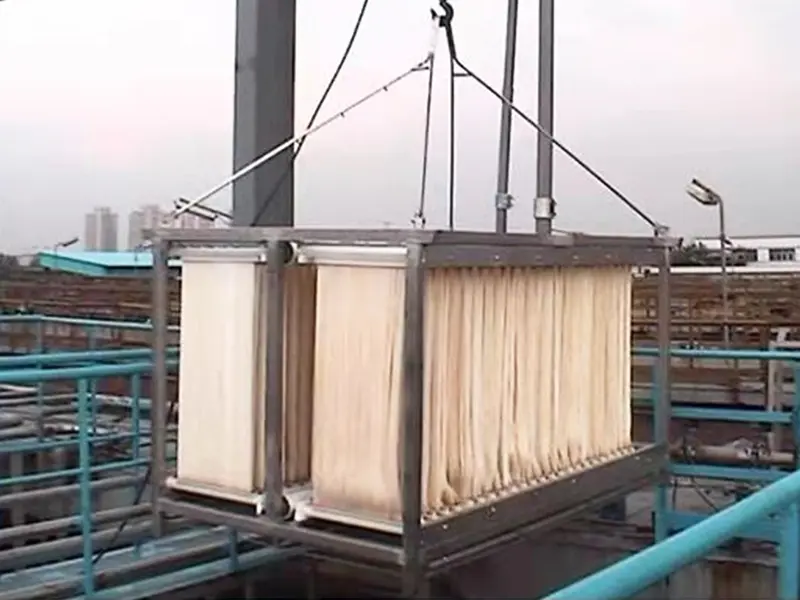
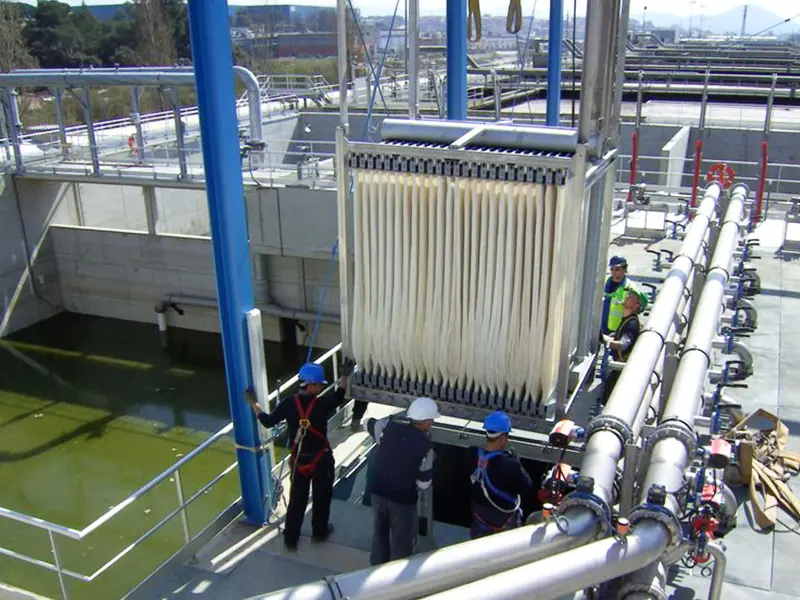
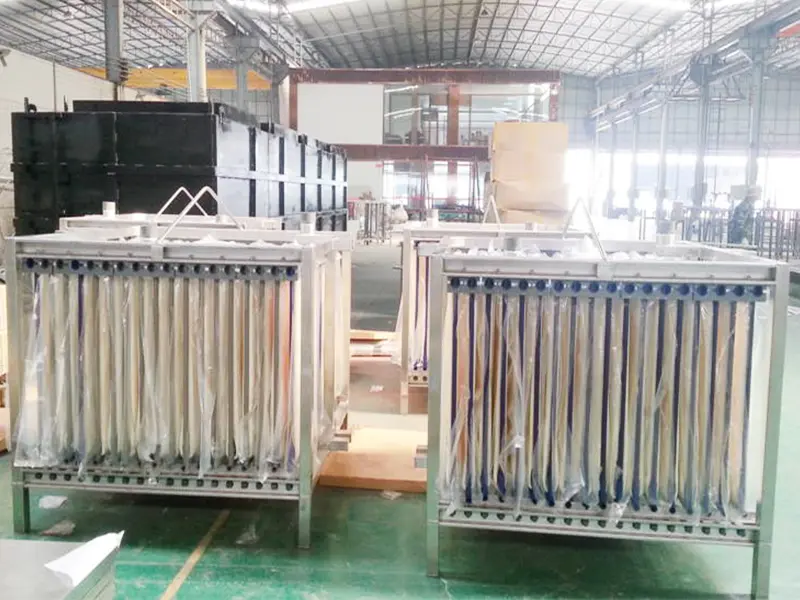
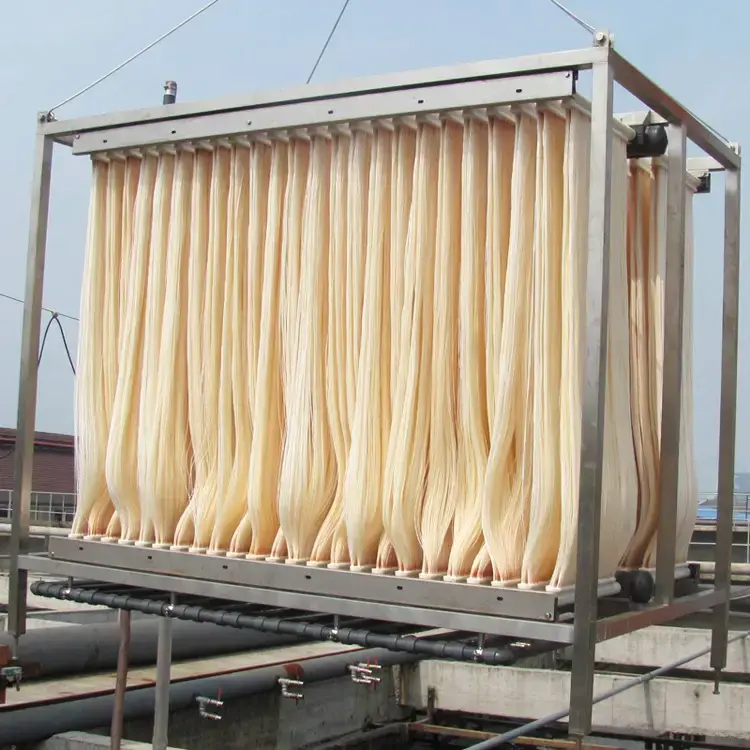
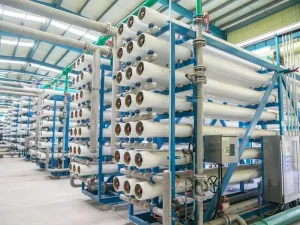
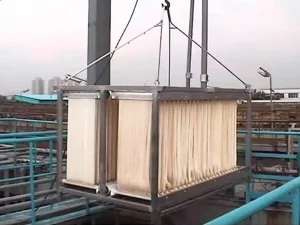
Hollow fiber membrane: Bundle structure with high area density. Features convenient gas washing and modular design for easy maintenance.
🔘
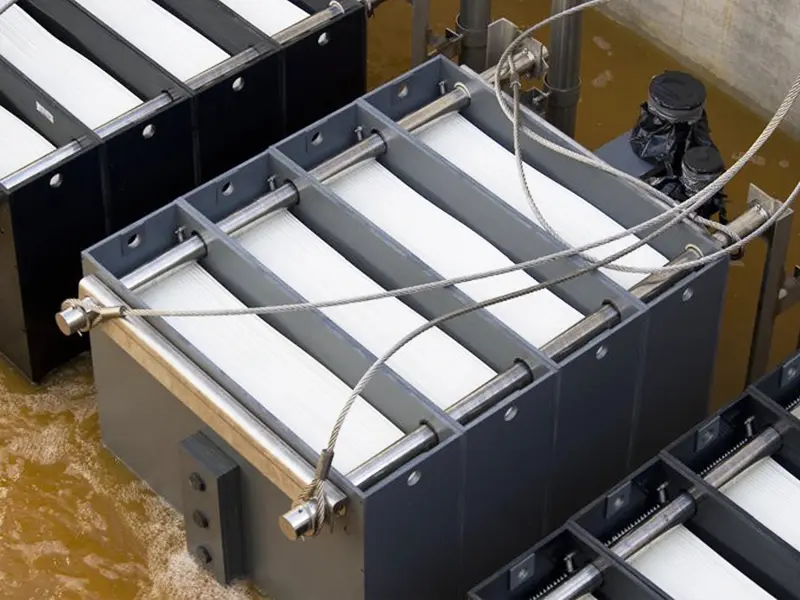
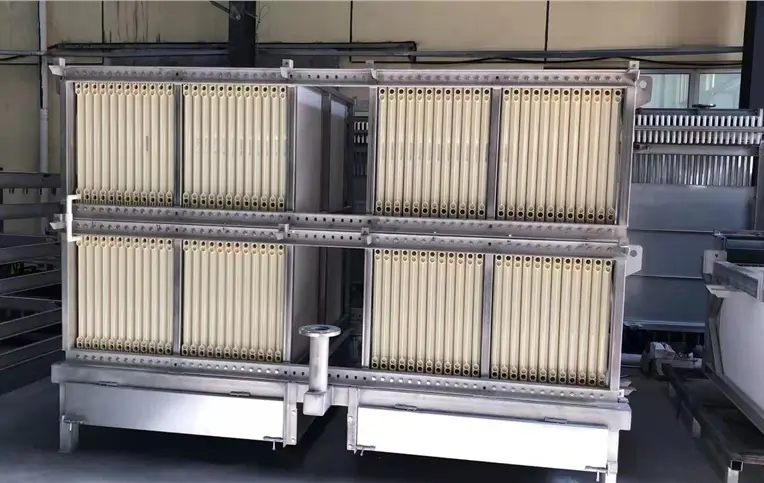
Flat film: Smooth diaphragm fixed on a support. Features high mechanical strength, wear resistance, and suitability for large-scale projects.
🔘
Tubular film: Membrane material wrapped on tubular supports. Ideal for high suspended matter wastewater due to strong anti-pollution and self-cleaning ability.
🔘
Ceramic film: Sintered from inorganic materials. Excellent chemical stability, heat resistance, and high mechanical strength for harsh industrial environments.
The role of MBR membrane bioreactor in wastewater treatment
✅
Efficient solid-liquid separation, improving effluent quality to near-zero turbidity.
✅
High microbial concentration, reducing the footprint of wastewater facilities.
✅
Reduction of excess sludge production, lowering treatment costs.
Application field of MBR membrane
MBR systems have been widely used in several key areas:
1. Urban sewage treatment & Building reuse: Ideal for high-rise buildings and municipal plants.
2. Industrial wastewater: Effective for food, cosmetics, petrochemical, and dye industries.
3. Drinking water purification: Removes biological nitrogen and pesticides.
4. Fecal sewage treatment: High organic removal without dilution.
5. Landfill leachate: Efficiently breaks down hydrocarbons and heavy metals.
Development prospect of MBR membrane
MBR technology shows great potential in:
🚀
Upgrading existing urban sewage plants with limited land space.
🚀
Treatment for tourist resorts, scenic spots, and mobile toilets.
🚀
High concentration, toxic, and difficult-to-degrade industrial wastewater.
Frequently Asked Questions
Q1: What are the main advantages of MBR over traditional treatment?
MBR offers superior effluent quality with near-zero turbidity, a significantly smaller footprint, and reduced sludge production compared to traditional secondary sedimentation systems.
Q2: Can MBR remove bacteria and viruses?
Yes, the membrane separation technology (ultrafiltration or microfiltration) acts as a physical barrier that effectively traps E. coli, other bacteria, and many viruses.
Q3: What types of membranes are commonly used in MBR?
The most common types include hollow fiber membranes, flat sheet membranes, tubular membranes, and ceramic membranes, each selected based on the specific wastewater properties.
Q4: Is MBR suitable for industrial wastewater?
Absolutely. MBR is highly effective for food processing, petrochemicals, pharmaceuticals, and landfill leachate where organic concentrations are high or toxic.
Q5: How does MBR achieve high microbial concentrations?
The membrane completely retains activated sludge within the bioreactor, allowing the sludge concentration to be much higher than in traditional biological processes.
Q6: How is the membrane kept clean?
Membranes are cleaned through a combination of aeration (gas washing), physical backwashing, and periodic chemical cleaning to maintain flux and prevent fouling.
 XINJIEYUAN