 XINJIEYUAN
1 / 5
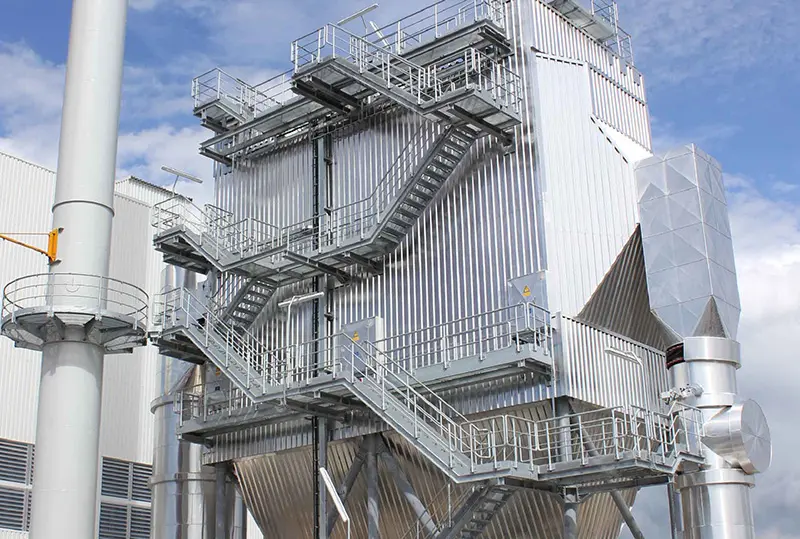
Power Supply: The system operates using a control box, booster transformer, and rectifier. Operating voltages generally range from 40kV to 100kV to maintain maximum dust removal efficiency.
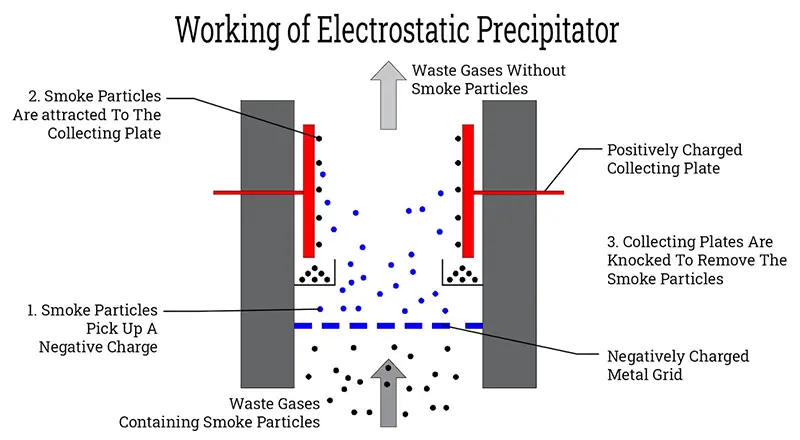
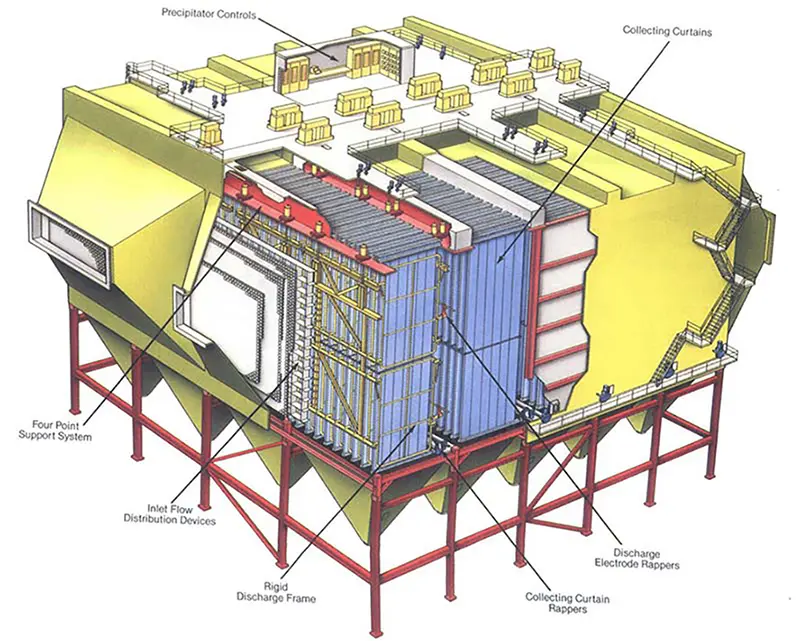
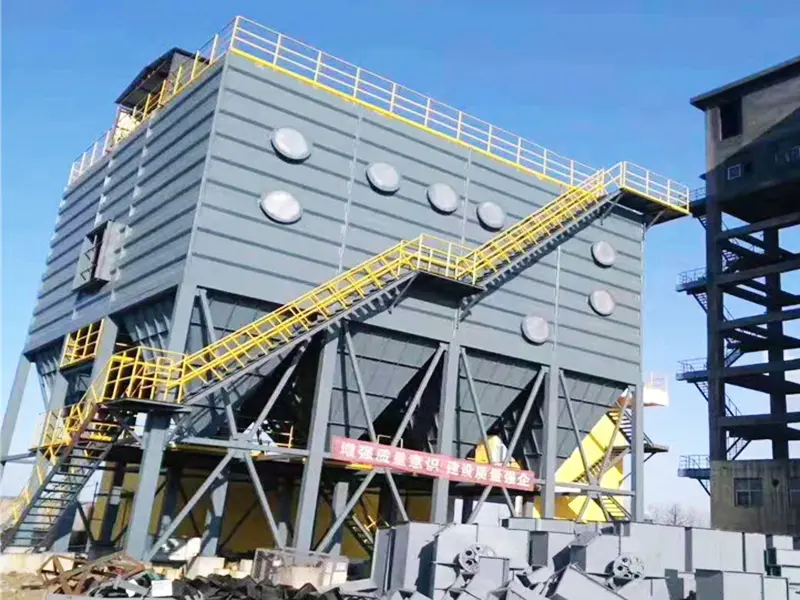
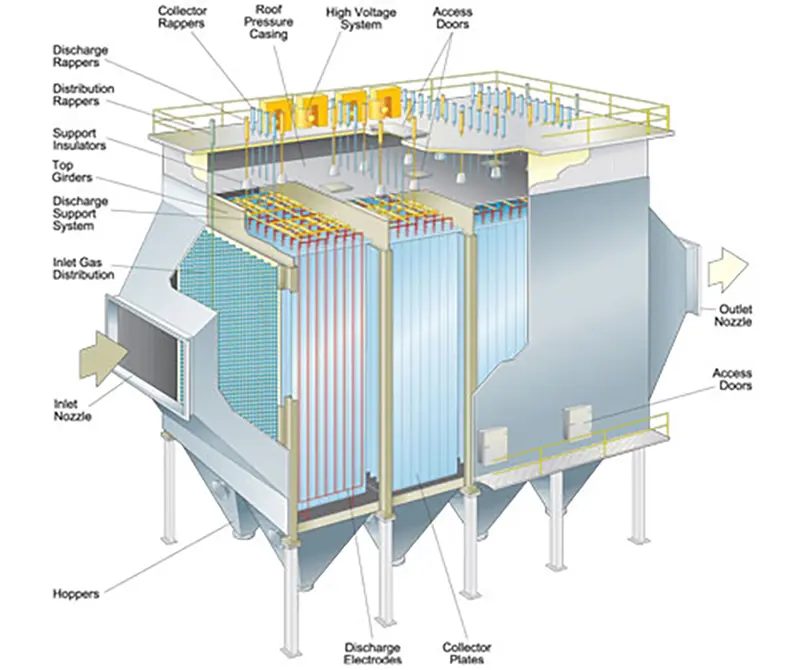
Key Technical Features:
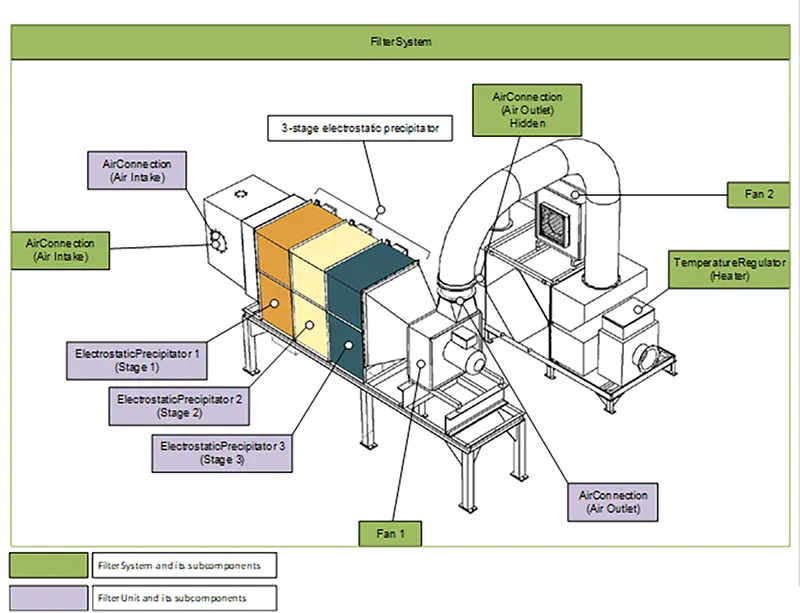
1. Flue Gas Temperature: Extreme temperatures can cause condensation, leading to corrosion or short circuits.
2. Smoke Velocity: High velocity prevents dust from settling and can cause "re-entrainment" where collected dust is blown back into the air stream.
3. Board Spacing: Proper spacing is critical for maintaining electric field intensity.
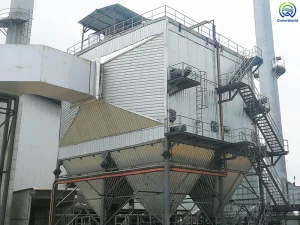
4. Air Leakage: Air entering from the ash hopper or shell reduces temperature and disrupts the electric field, lowering efficiency.
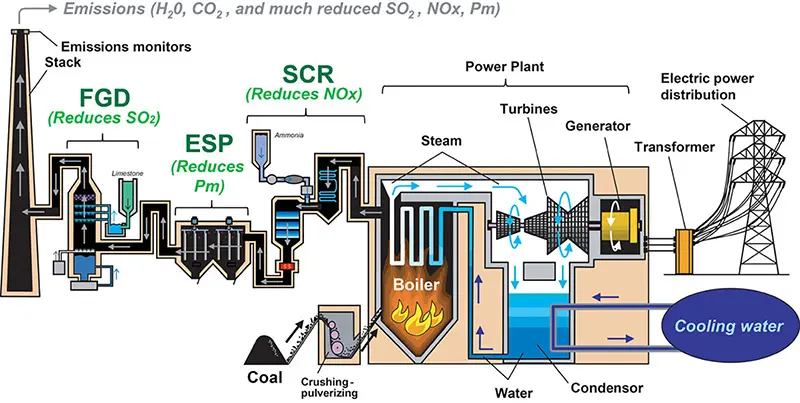
Stage 1 (Pre-treatment): Use primary dust collectors like cyclones or water mist to manage initial dust concentration and resistance.
Stage 2 (Optimization): Improve gas flow distribution, ensure high-quality insulation, and maintain an air leakage rate below 3%.
Stage 3 (Power Management): Utilize high-frequency high-voltage switching power supplies (SIR) which provide 500 times the frequency of conventional units.