 XINJIEYUAN
1 / 5
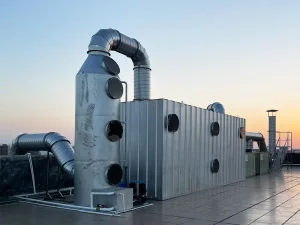
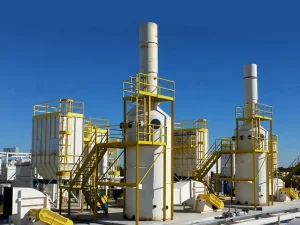
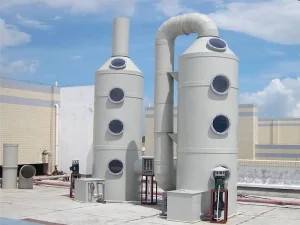
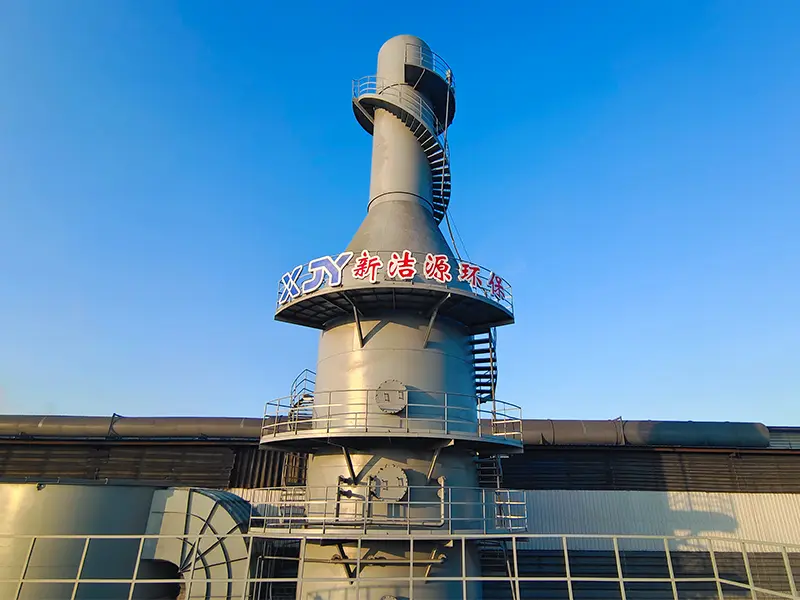
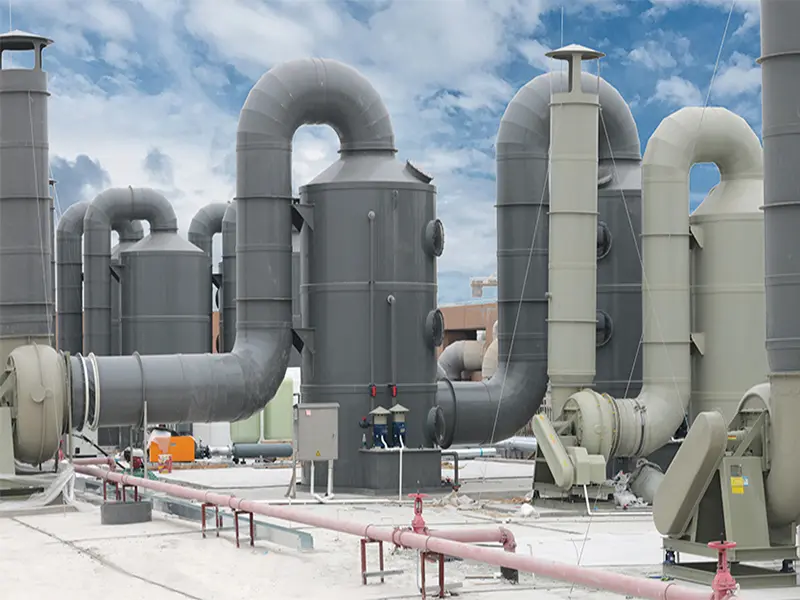
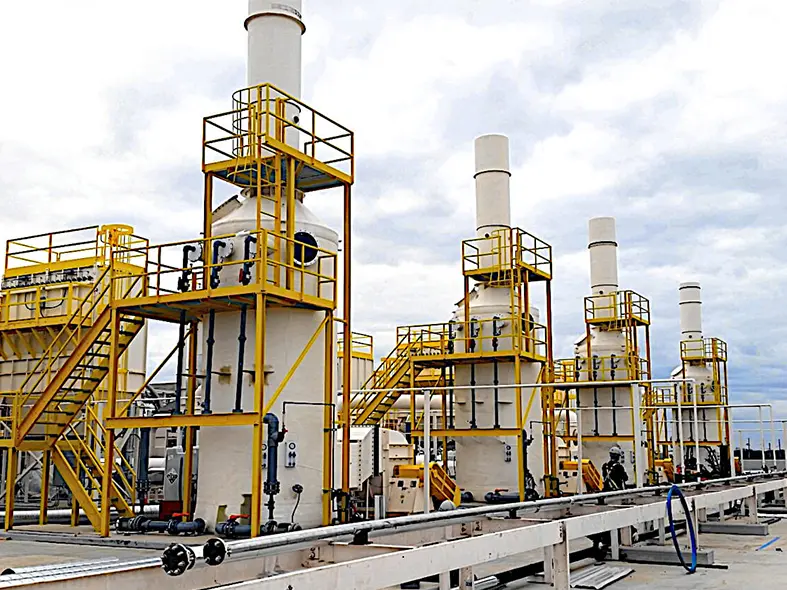
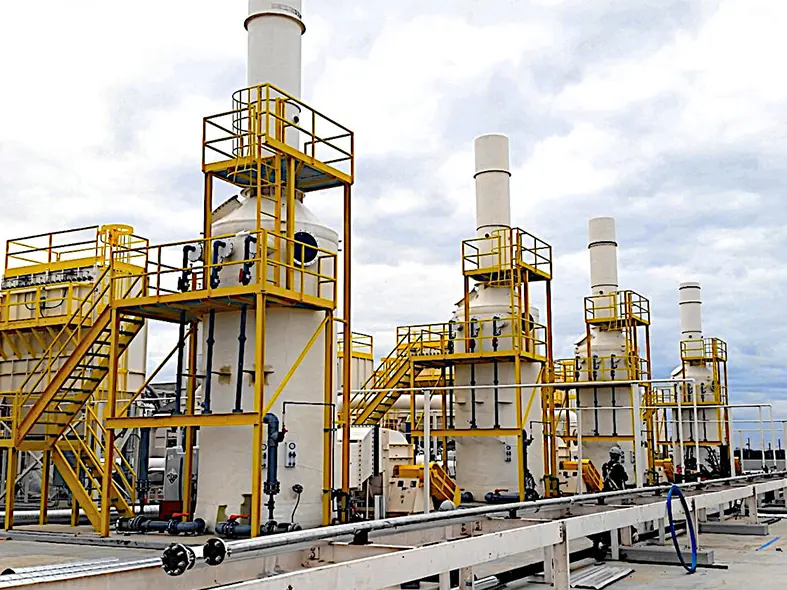
Spray tower exists as a treatment equipment for environmental waste gas treatment. According to the working principle, it is divided into circulating water spray tower, alkali spray tower, and acid spray tower (also known as pickling tower). Based on the tower body material, these are classified into FRP spray tower, PP spray tower, and stainless steel spray tower. Choosing a reasonable spray material and process depends on the specific properties of the waste gas.
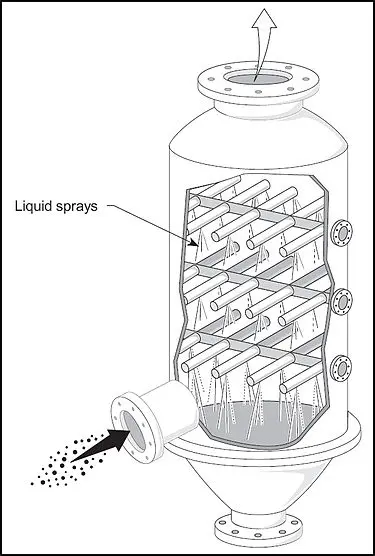
In counterflow spray towers, the inlet gas stream usually enters from the bottom and moves upward, while the liquid is sprayed downward from multiple levels. This technology serves as an efficient wet scrubber for air pollution control. Counterflow exposure ensures that outlet gas with the lowest pollutant concentration meets the freshest scrubbing liquid. Many nozzles are placed at different heights to maximize fine droplets hitting pollutant particles, providing a large gas absorption surface area.
Droplets must be large enough (usually 500-1000 microns) to avoid being carried out in the outlet gas stream. Gas velocity is typically kept low, from 0.3 to 1.2 m/s (1-4 ft/s), to prevent excess droplet carry-over. Consequently, spray towers are often larger than other scrubbers handling similar gas flow rates.
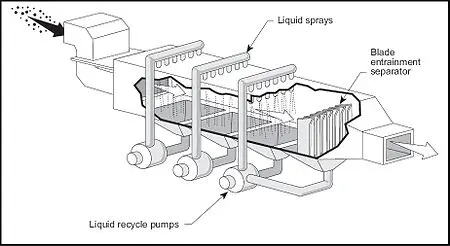
In co-current spray towers, the inlet gas and liquid flow in the same direction, allowing for higher gas velocities and smaller vessel sizes. In cross-flow (horizontal) spray scrubbers, gas flows horizontally through multiple spray sections while liquid falls vertically. Cleanest liquid is typically used in the final spray stage to ensure optimal purification.
The packing layer serves as a mass transfer device between gas and liquid phases. A support plate at the bottom holds random packing, while a pressure plate at the top prevents displacement from airflow. Liquid is distributed from the top and flows down the packing surface while gas enters from the bottom. To prevent "wall flow" and maintain efficiency, packing layers are often divided into sections with redistribution devices.
| Pollutants | Pressure drop (Ap) | Liquid to gas ratio (L/G) | Liquid inlet pressure (PL) | Removal efficiency | Application |
|---|---|---|---|---|---|
| Gas | 1.3-7.6 cm Water | 0.07-2.70 liters/m³ | 70-2800 kPa | 50-90% (High solubility) | Mining, Chemical, Boilers, Incinerators, Steel industry |
| Particle | 0.5-3.0 inches water | 5 gallons/1,000 cu ft | 70-2800 kPa | Diameter 2-8 microns |
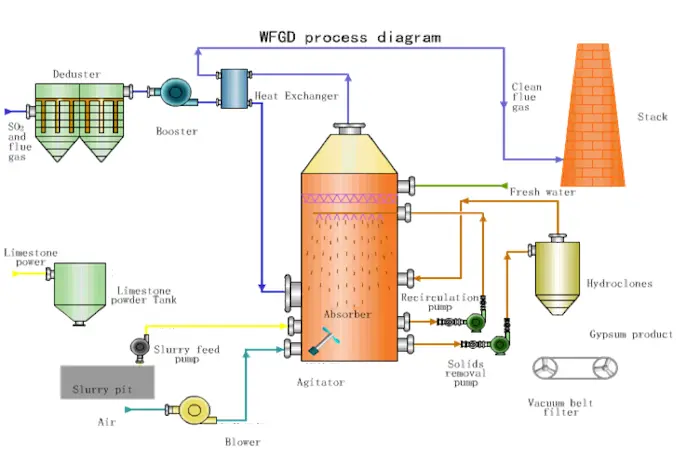
Wet Scrubbing Mechanics: Contaminated air enters the tower and contacts a fine mist of water or chemical solution.
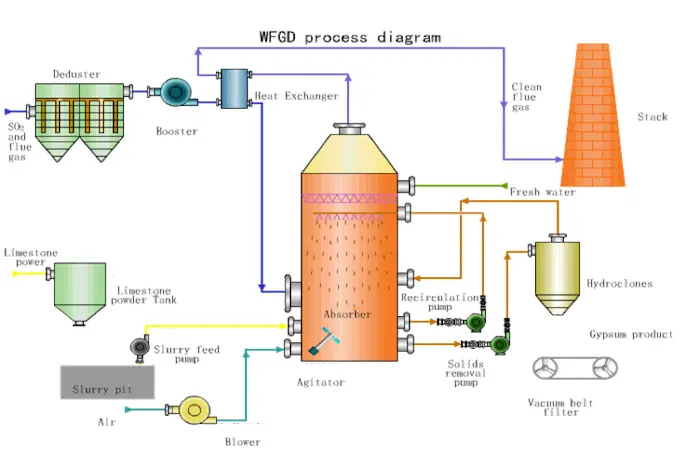
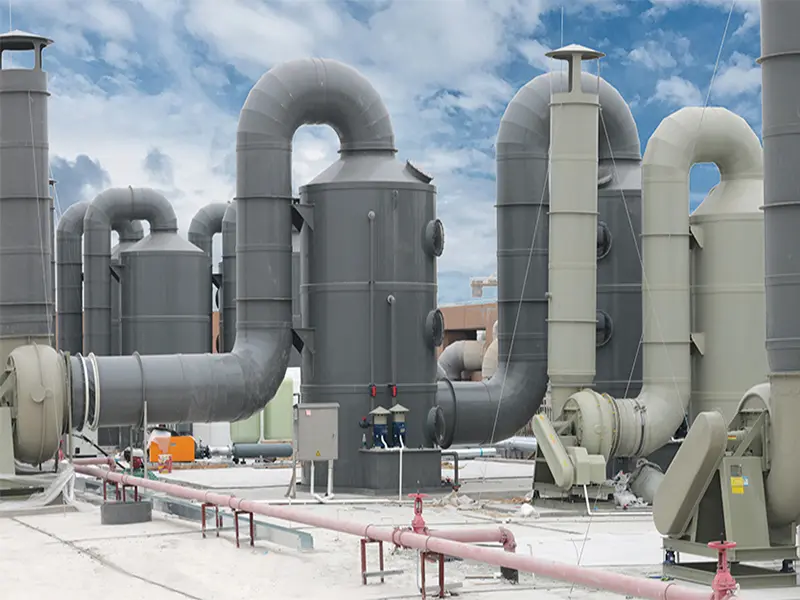
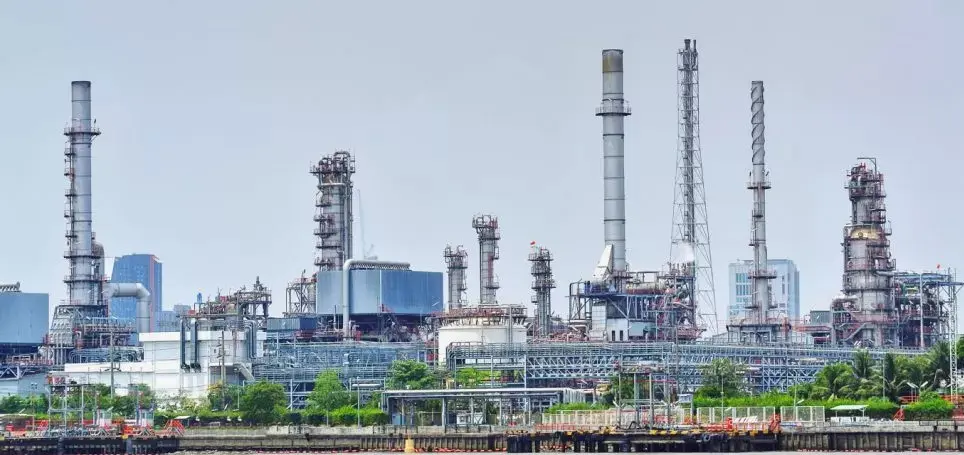
Spray towers are indispensable tools in the fight against air pollution, offering a versatile and efficient solution for various industrial applications. By leveraging advanced scrubbing capabilities, these systems contribute significantly to environmental protection and public health, helping industries operate within strict regulatory frameworks.