 XINJIEYUAN
1 / 5
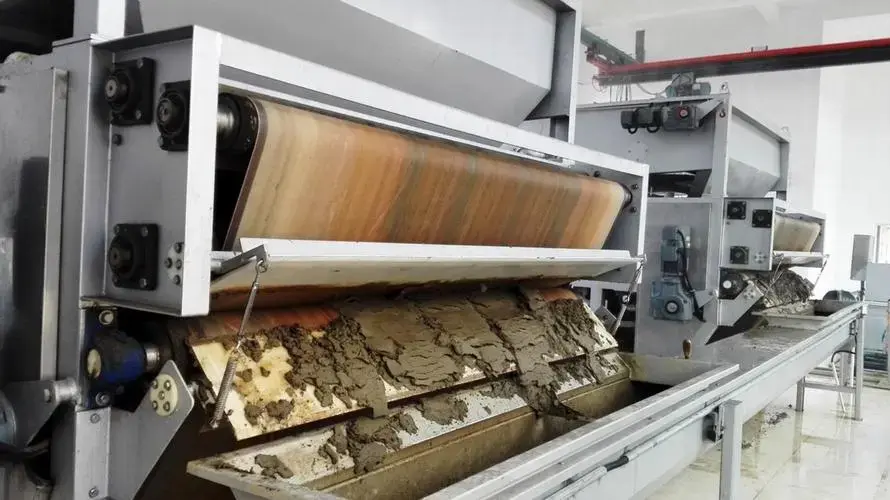
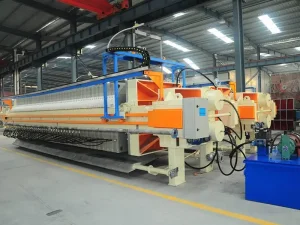
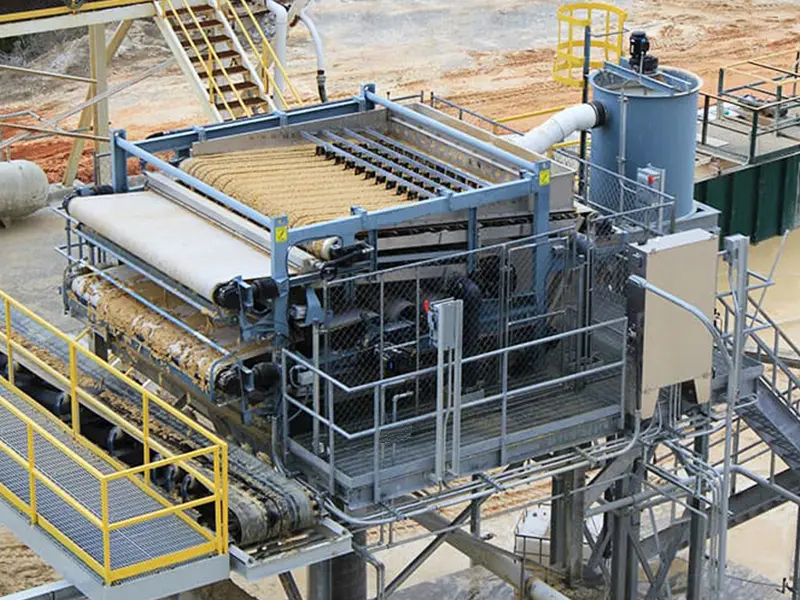
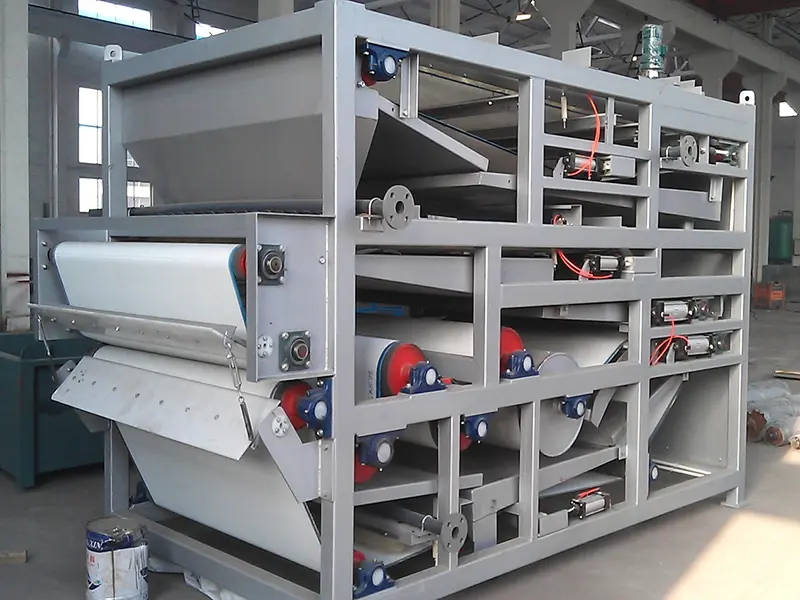
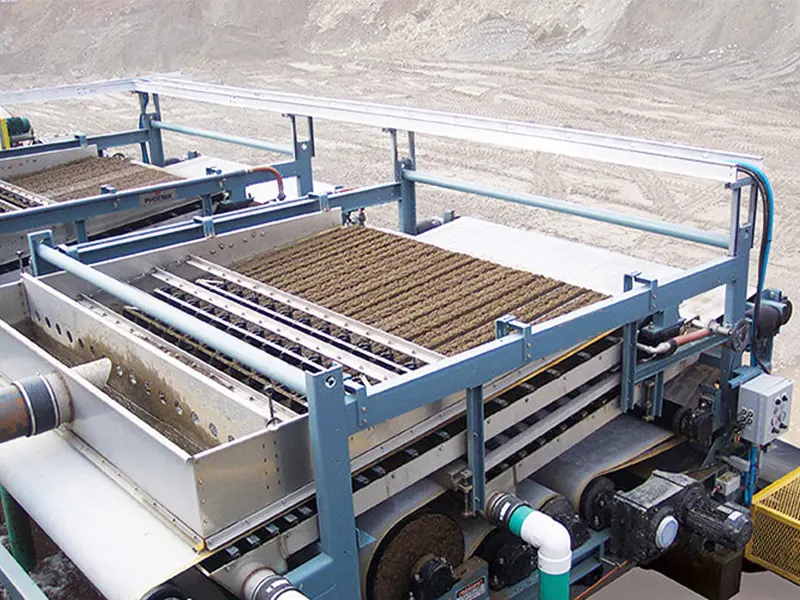
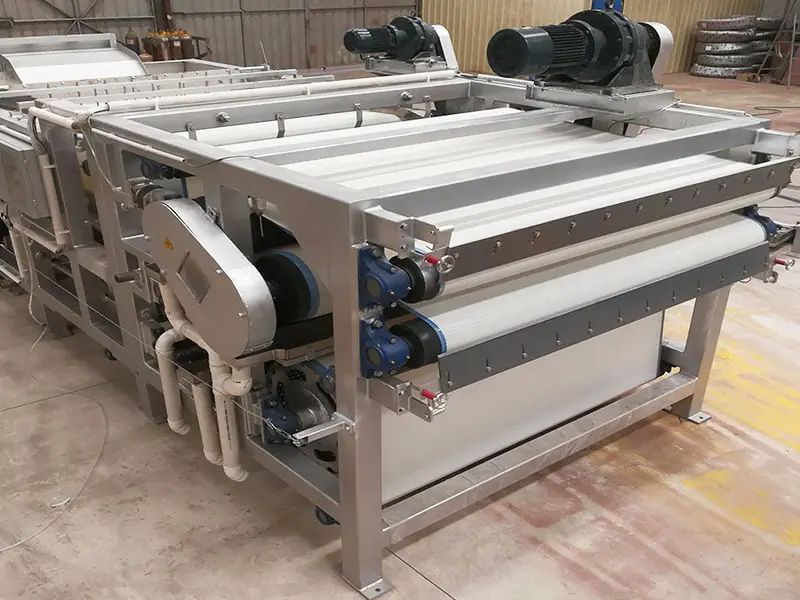
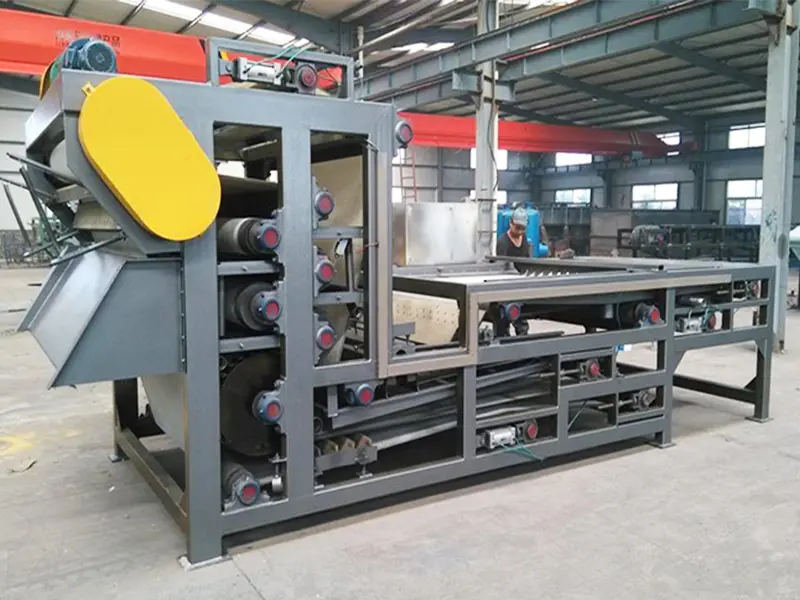
Belt filter press is a kind of equipment widely used in sewage treatment, sludge dewatering and other fields, its structural characteristics mainly include the following aspects.
Mainly composed of motor, reducer, drive shaft and conveyor belt. The transmission system has the characteristics of high precision, high stability and high efficiency, which can ensure the normal operation of the equipment and extend the service life.
Composed of conveyor belt, roller and tensing device. It features high carrying capacity, high stability and long life, ensuring normal operation in harsh environments.
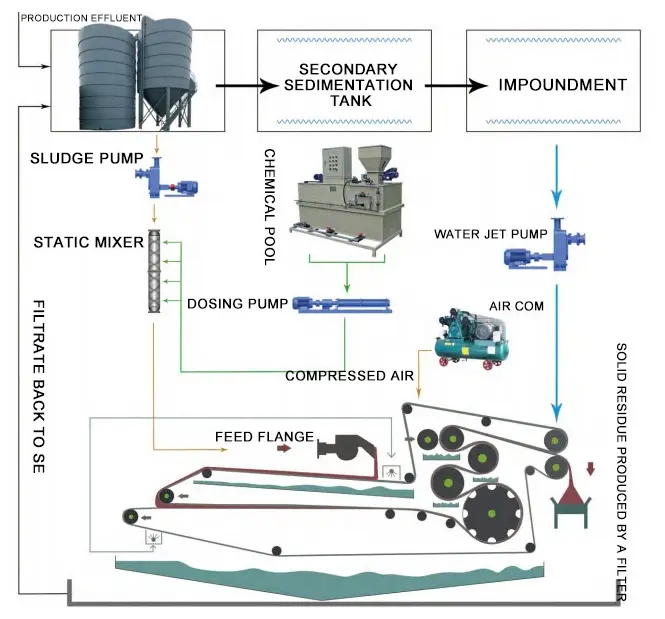
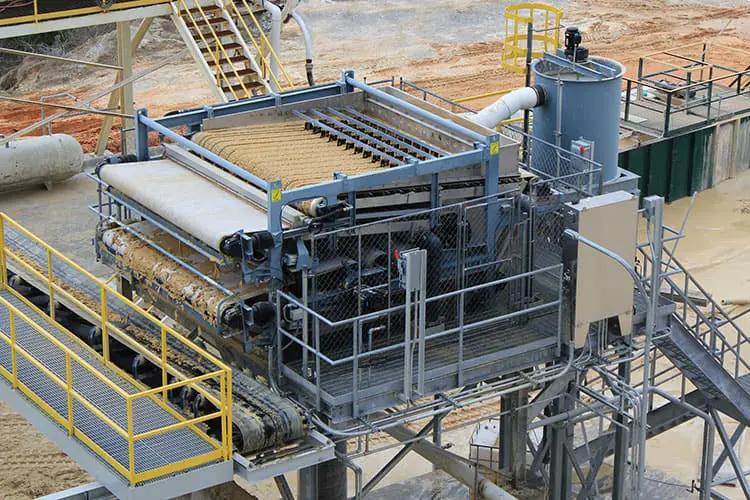
The core part consisting of filter cloth, filter belt, filter cake, press roller and filtrate collector. By applying pressure, the press roller presses out the water in the filter cake to achieve efficient dehydration with low energy consumption.
The vibration system promotes filter cake fixation and filtrate discharge through resonance. The sink system includes wash and return tanks to rinse the filter cake and recycle water resources.
Equipped with PLC, touch screens and sensors for automation. Safety systems include overload, overcurrent, and overvoltage protection to avoid damage and casualties.
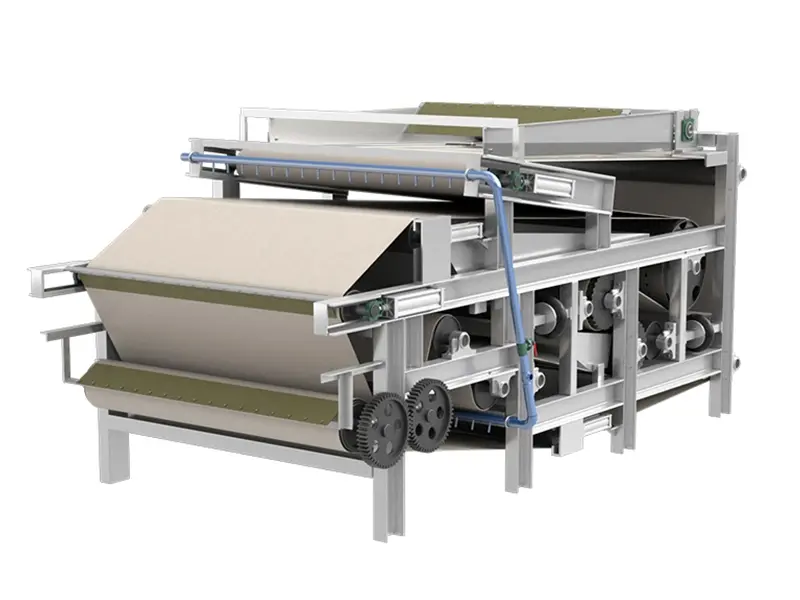
Host Frame: National standard carbon steel with 10mm wall thickness and anti-corrosion fluorocarbon paint.
Dehydration Roller: High-quality stainless steel T-type tank, resistant to wear, acid, and alkali.
Filter Belt: Ultra-high molecular polyester mesh with good water permeability and high tensile strength.
Pneumatic Control: Uses cylinders and air bags for flexible tightening, correction, and extrusion dehydration.
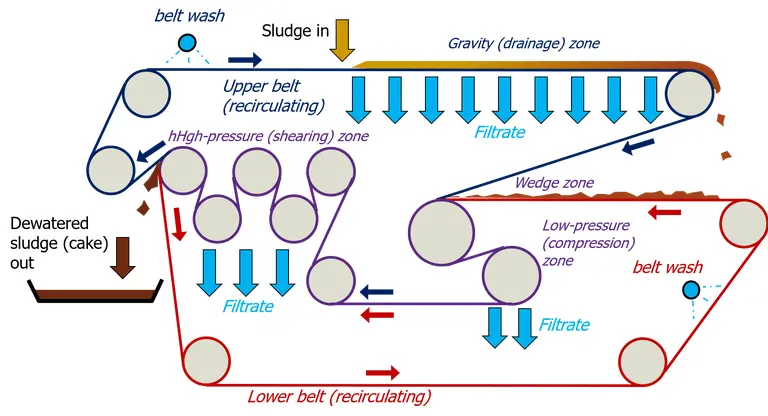
The process involves several key stages: Gravity dehydration (removing free water), Wedge dehydration (forming filter cake), and High-pressure dehydration (forcing water out using rollers).
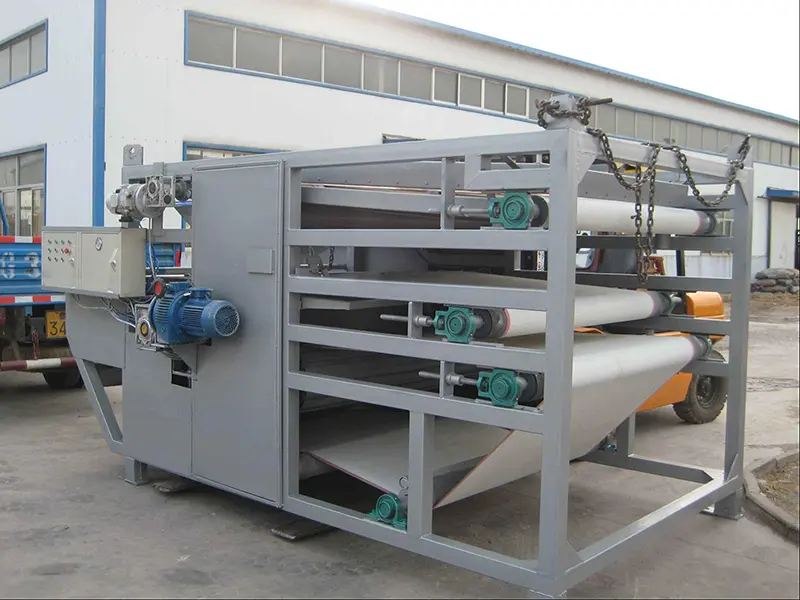
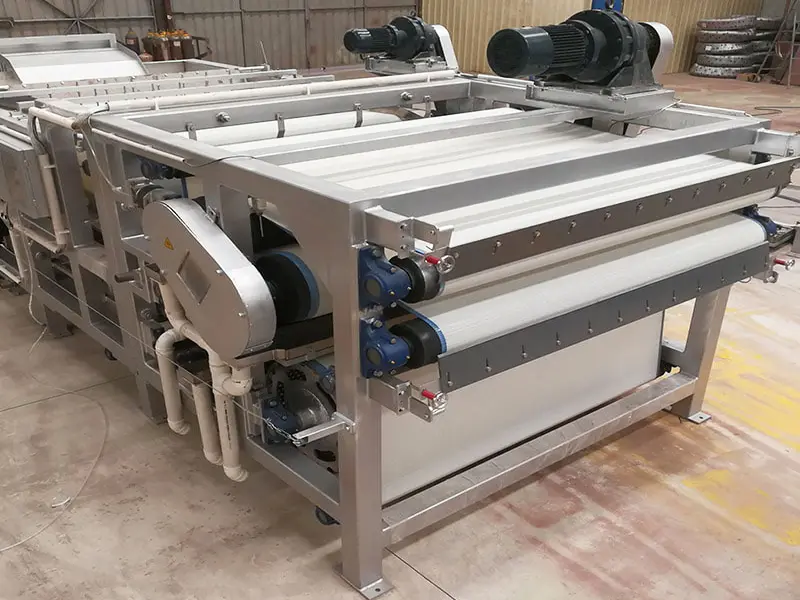
Process Flow: Initial State → Feed → Filtration → Press → Washing → Vibration → Discharge → Recycling.
Monitor filter belt damage (typical lifespan 6-14 months). Check for tearing, corrosion, or aging caused by irregular rollers or insensitive correction systems.
Ensure sufficient washing time. After shutdown, rinse the belt immediately. Every meter of belt requires about 10m3/h of washing water at 600kPa pressure.
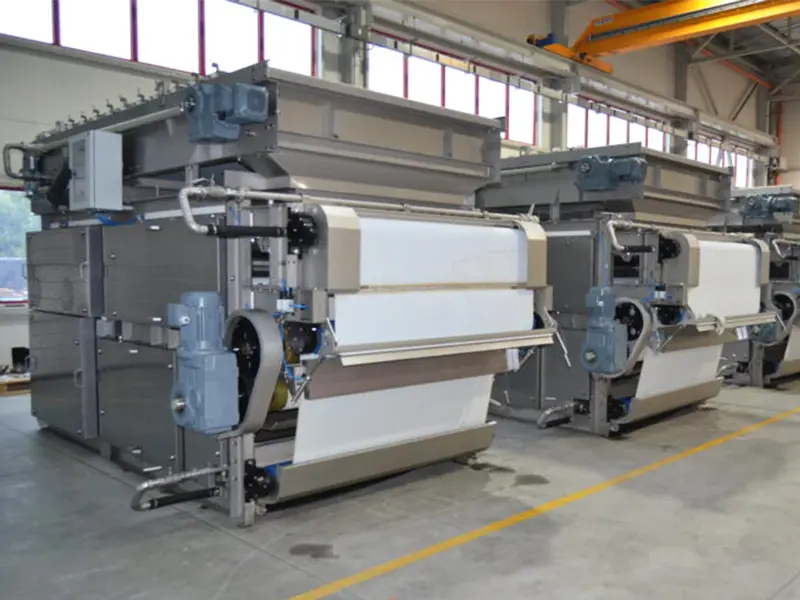
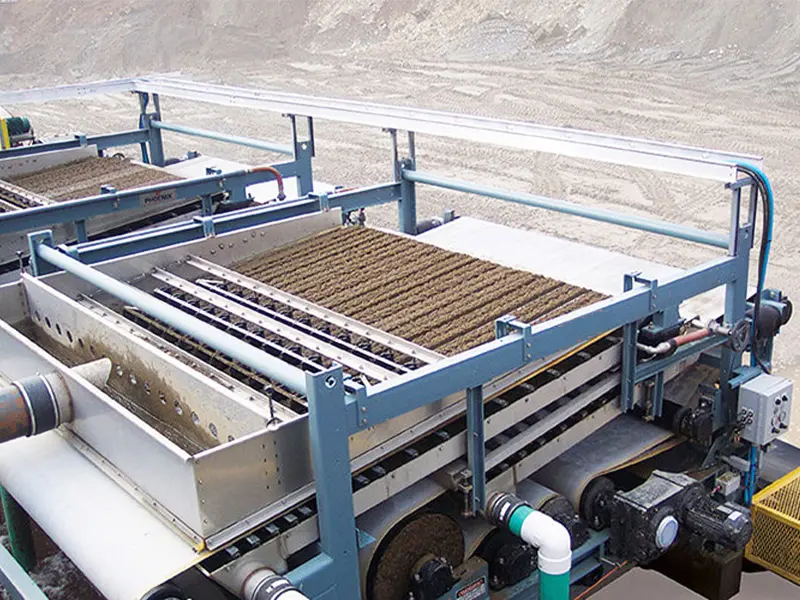
Wastewater & Sludge: Crucial for purifying industrial/domestic wastewater and reducing sludge volume for landfills.
Industrial Waste: Achieves volume reduction through liquid separation, improving waste utilization rates.
Waste Gas: Can be used to capture solid particles like soot and dust, purifying air emissions.