Project Introduction
For large particles, small sheet materials, small cylindrical and amorphous materials, belt dryer is a more suitable dryer. Now the common is the through-flow belt dryer, the parallel flow drying method is only used in the tunnel dryer. The belt dryer introduced in this refers to the through-flow belt dryer, referred to as the belt dryer.
Composition of belt dryer
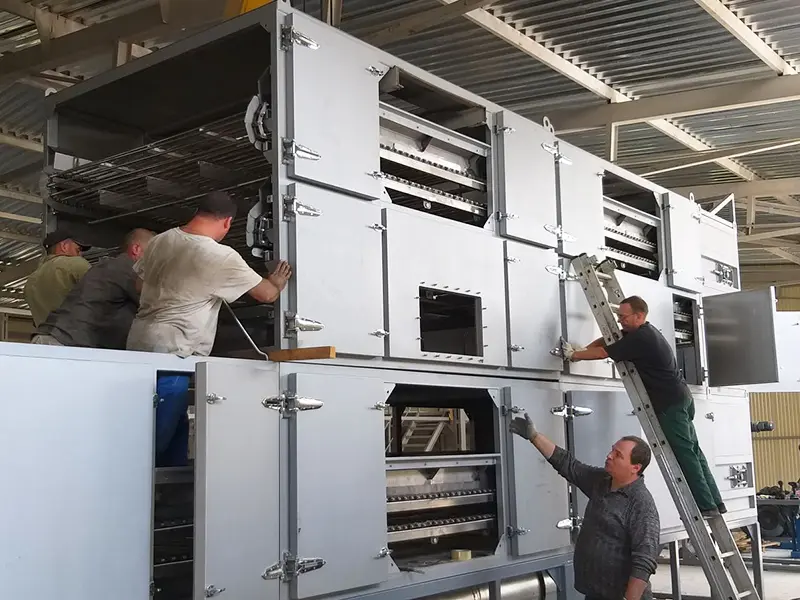
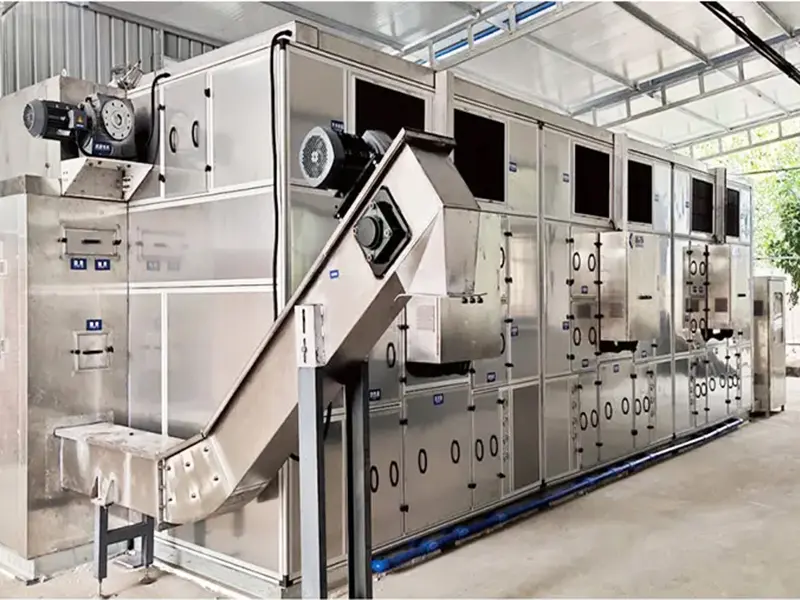
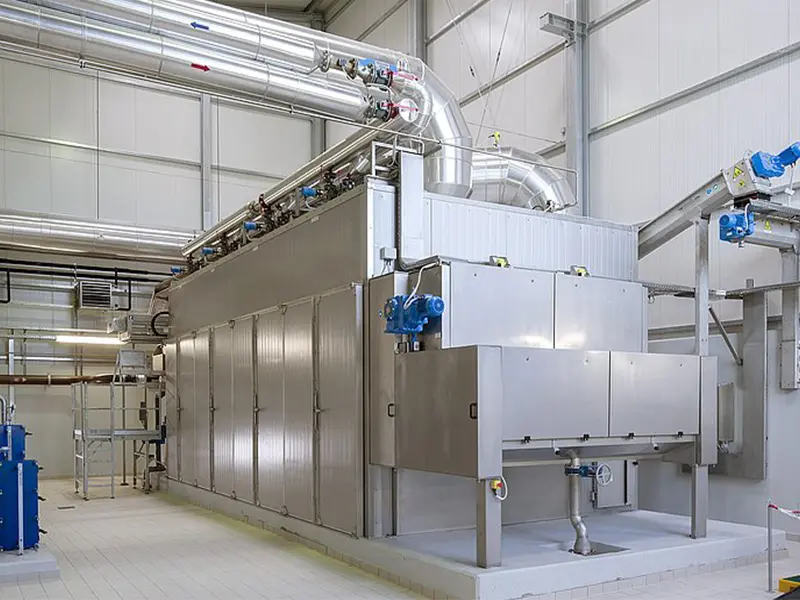
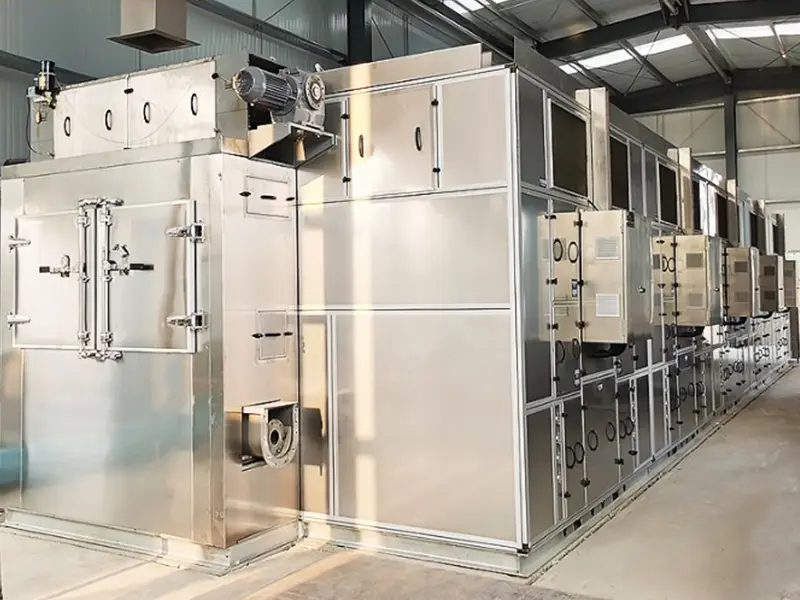
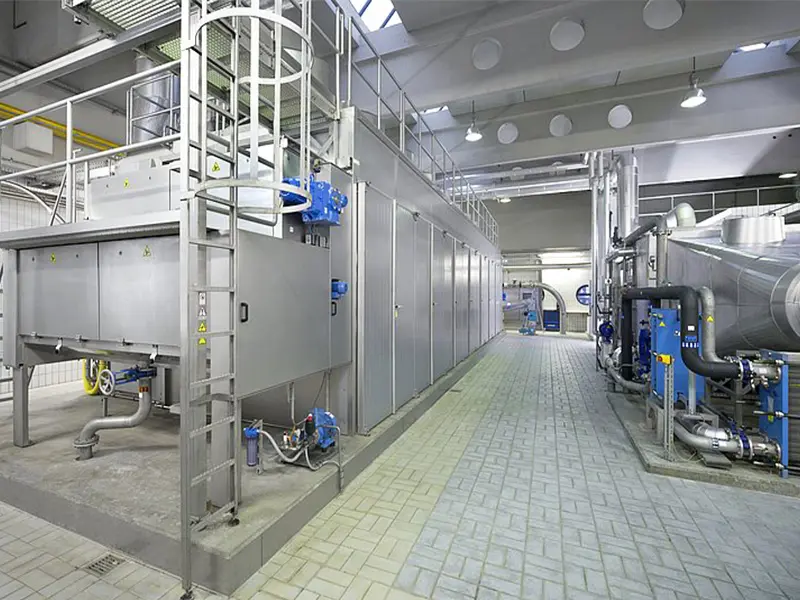
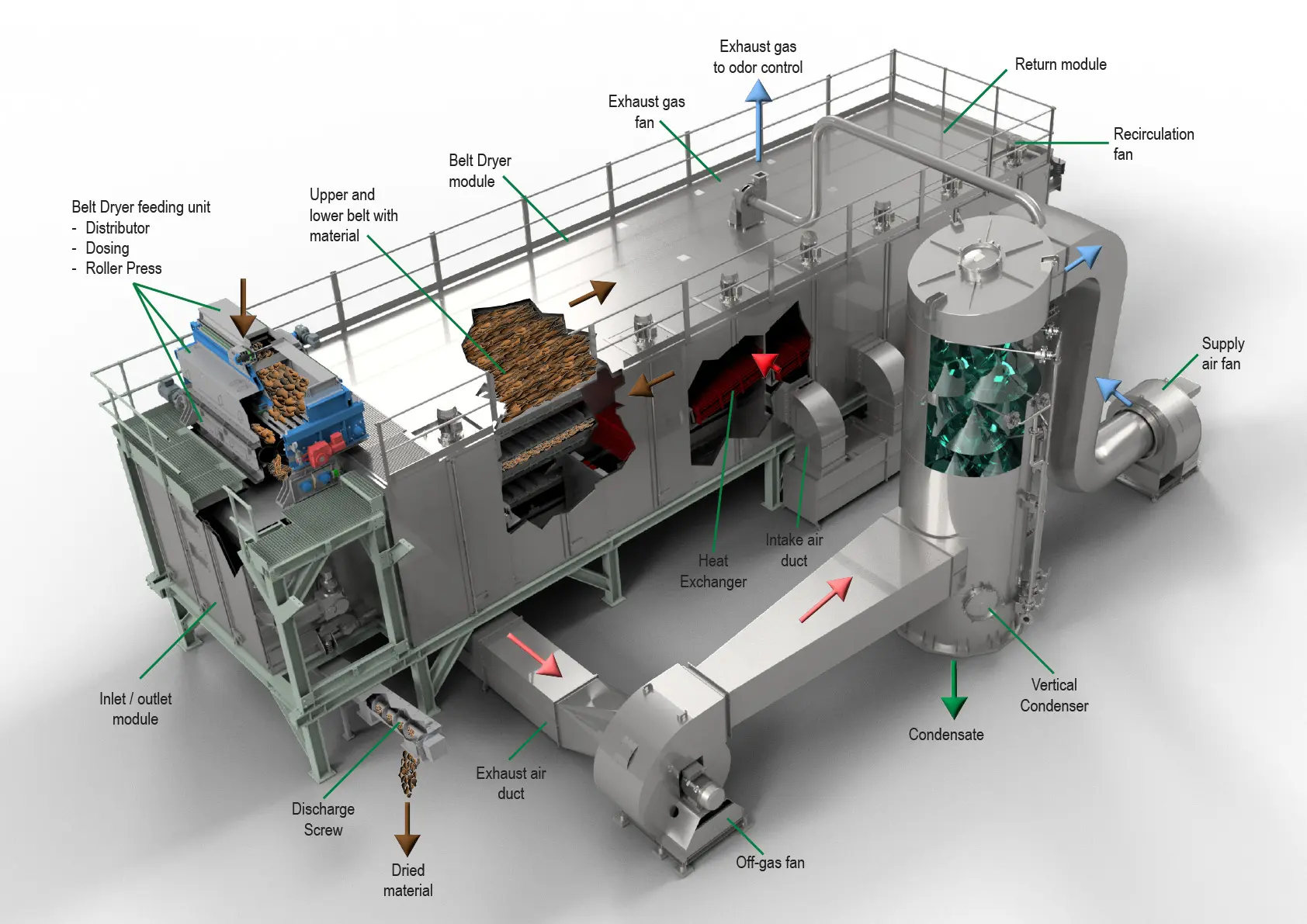
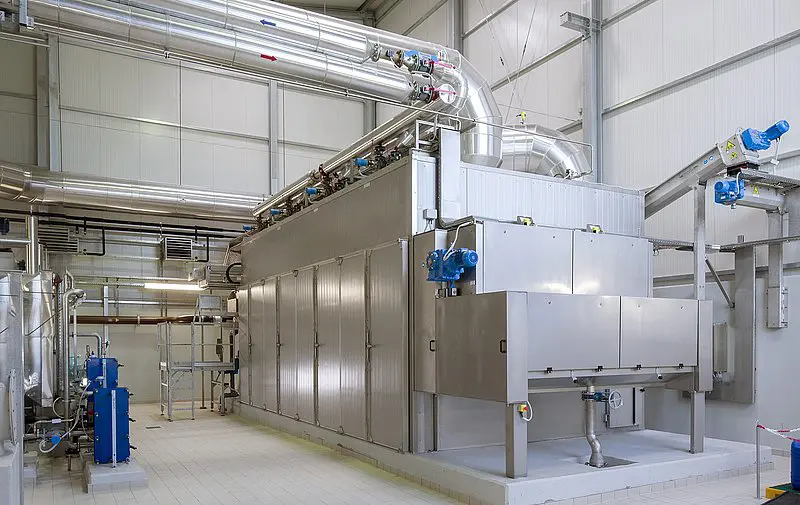
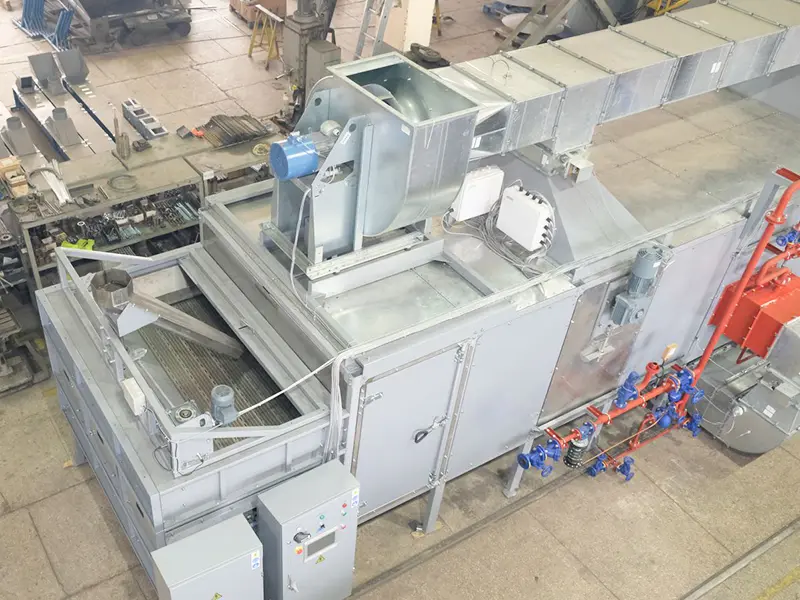
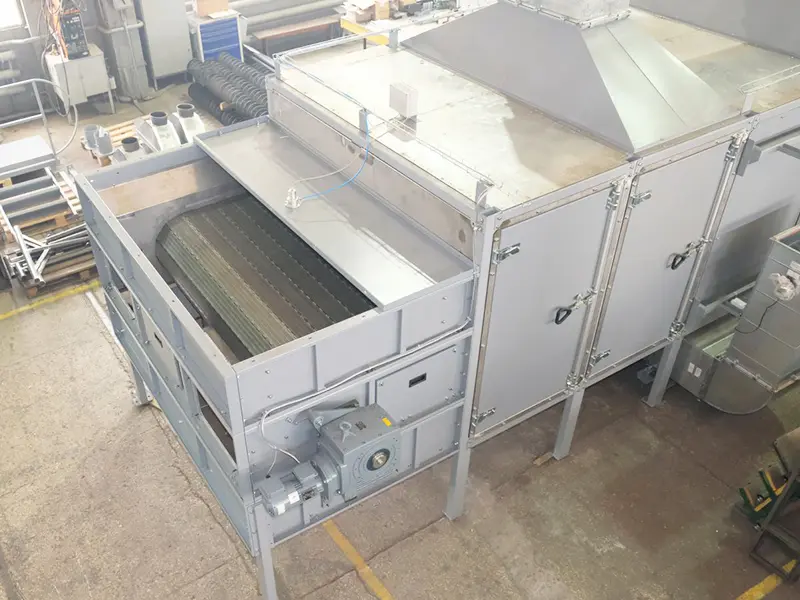
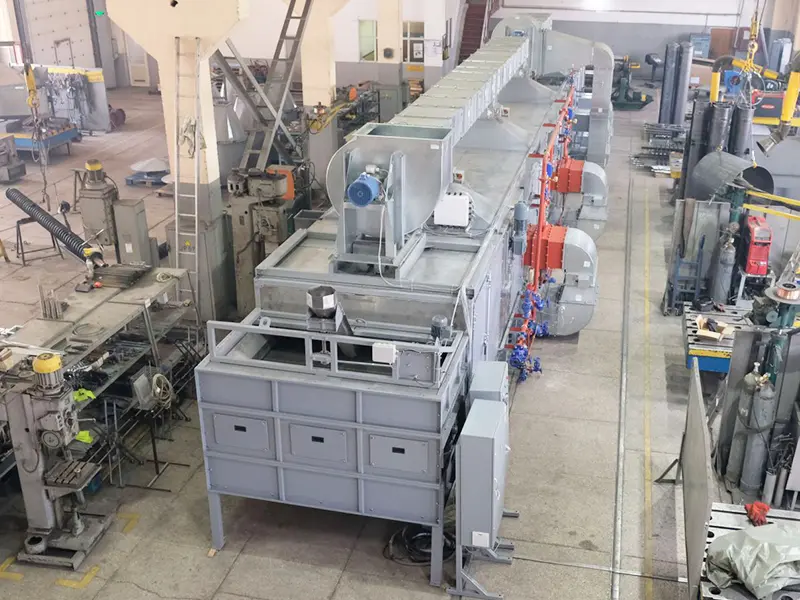
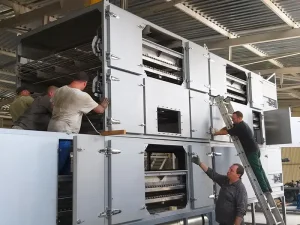
The belt dryer is composed of several independent units. Each unit consists of a box, a conveyor belt and a transmission system, a circulating fan, a heating device, a separate or common fresh air suction system and a tail gas discharge system. The number of units can be determined according to the needs, and the operating parameters of the drying medium such as air volume, temperature, humidity and exhaust circulation can be controlled independently.
Features of belt dryer
- Flexible Operation: The drying process is carried out in a completely sealed box, avoiding dust leakage.
- Material Integrity: Relative position between particles is fixed, ensuring uniform drying time and minimal breakage, ideal for food or color-sensitive materials.
- Versatility: Suitable for drying, baking, firing, or maturing materials.
- Easy Maintenance: Simple structure allows for long-term operation and easy internal box maintenance.
Applicable Scope
Belt dryer is the most commonly used continuous drying device, widely used in food, chemical fiber, leather, forestry, pharmaceutical and light industry, as well as inorganic salt and fine chemical industries.
Structure and Classification
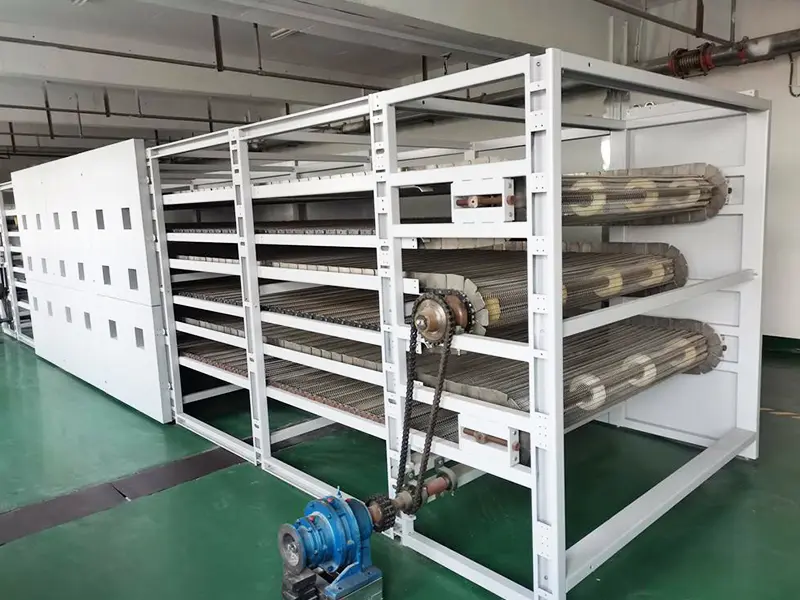
- By Layers: Single layer, multi-layer, and box body series types.
- By Air Flow: Downward, upward, and cross composite hot air flow.
- By Exhaust Mode: Countercurrent, parallel flow, and separate exhaust mode.
Design Requirements of Belt Dryer
Conveyor Belt
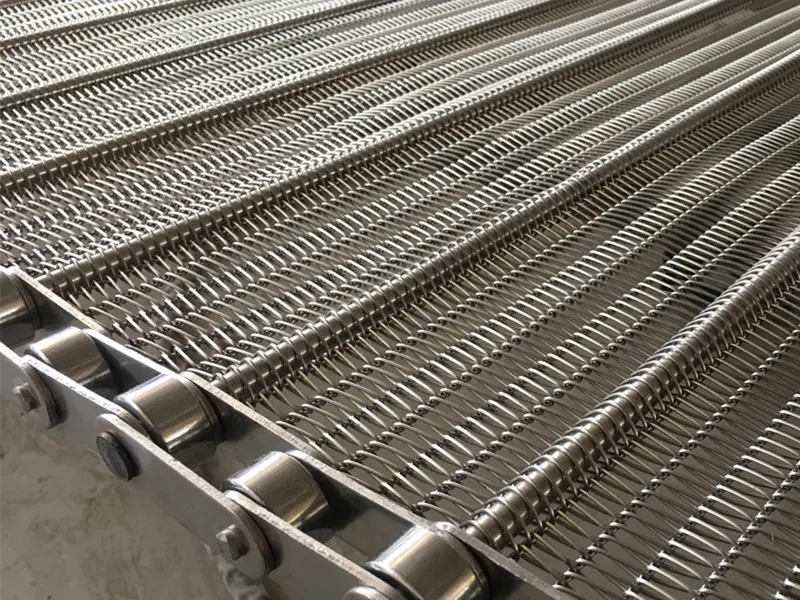
1. Stainless steel wire mesh (10-14 mesh) is most common. Two layers can be used for thin networks. Supported by rollers connected to the conveyor chain.
2. Sticky materials may require an additional non-stick mesh layer.
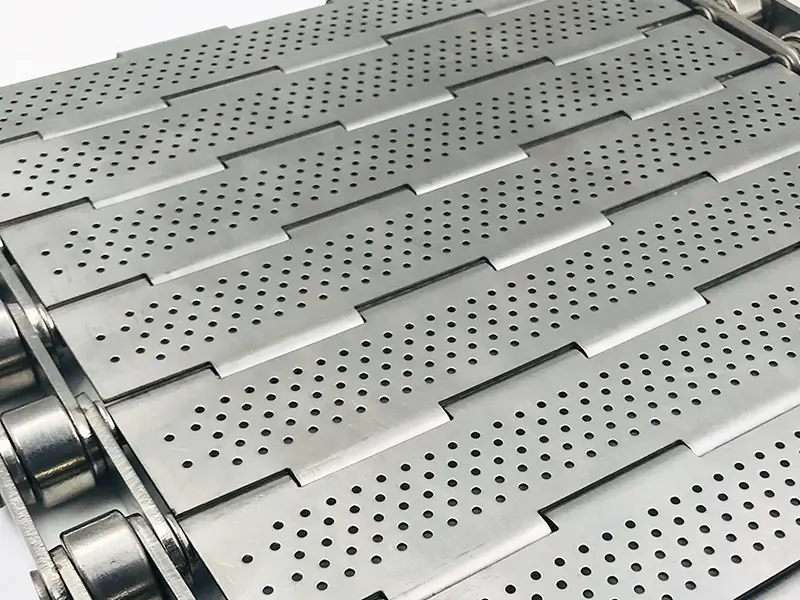
3. Perforated steel plates (1mm to 1.5mm thickness) with 12%-18% opening rate can also form the belt.
Feeding Device
Uniform feeding is critical to prevent air short-circuits. Devices include:
1. Feeding funnel: For non-viscous granular materials.
2. Stirring shaft funnel: For materials with poor fluidity.
3. Tooth blade funnel: For fibrous materials like wool or cellulose.
4. Drum extrusion: For paste materials (e.g., titanium dioxide, calcium carbonate).
Transmission and Heating
Transmission involves large-pitch chains, sprockets, and frequency converters to control speed. For heating, steam is used for temperatures below 150℃, while hot blast stoves are required for higher temperatures.
Calculation and Technical Notes
The critical moisture content is a key parameter in design, representing the junction between constant speed and decreasing speed drying stages. It is influenced by material shape, drying method, and air conditions.
Biological Deodorization Principle
Utilizes microorganisms to convert odorous substances into harmless compounds like CO2 and water. This process is typically managed through a biological deodorization tower filter.
Frequently Asked Questions
Q1: Which materials are most suitable for a belt dryer?
A: It is ideal for large particles, small sheets, cylindrical materials, and amorphous materials. It is also excellent for fragile materials like food and fibrous materials such as wool or cellulose.
Q2: Why is uniform feeding so important for the drying process?
A: Uneven material layers cause hot air short-circuits. Thin layers become "too dry" while thick layers remain wet, which significantly degrades product quality and reduces efficiency.
Q3: How does the belt dryer protect materials from breaking?
A: During transport, the relative position between material particles remains fixed (fixed bed state). This slight vibration and minimal impact ensure that delicate particles do not break.
Q4: What heating sources can be used with a belt dryer?
A: For temperatures below 150℃, steam heat exchangers are commonly used. For temperatures exceeding 150℃, a hot blast stove is required as the heat source.
Q5: How can the service life of the conveyor chain be extended?
A: Regular adjustment of the bearing position at both ends is necessary to manage wear and elongation. Additionally, ensuring the main driving shaft is in front of the conveying direction keeps the belt in a tense, stable state.
Q6: What are the benefits of the improved net belt dryer?
A: Innovations in air distribution and heat recovery from exhaust gases have significantly improved thermal efficiency, product uniformity, and output while reducing energy consumption.
 XINJIEYUAN