Project Introduction
Dissolved Air Flotation Wastewater Treatment System:
Dissolved air pump air flotation technology is a new type of air flotation technology developed in recent years. This technology overcomes the shortcomings of dissolved air flotation technology which requires more auxiliary equipment, has high energy consumption, and produces large bubbles. The dissolved air pump uses a vortex pump or gas-liquid multiphase pump. Its principle is that the air and water enter the pump shell together at the entrance. The high-speed impeller cuts the inhaled air into micro-bubbles. The bubble diameter is generally 20 ~ 40μm, with air content reaching up to 30%.
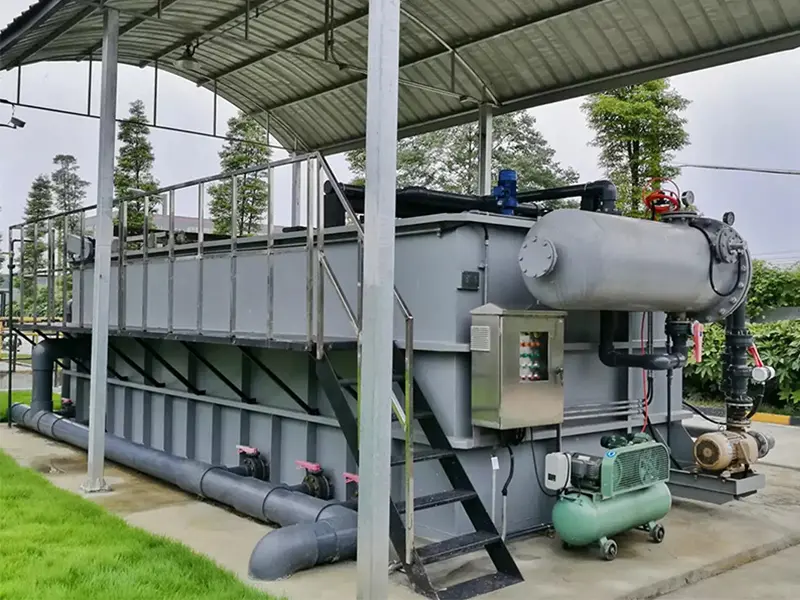
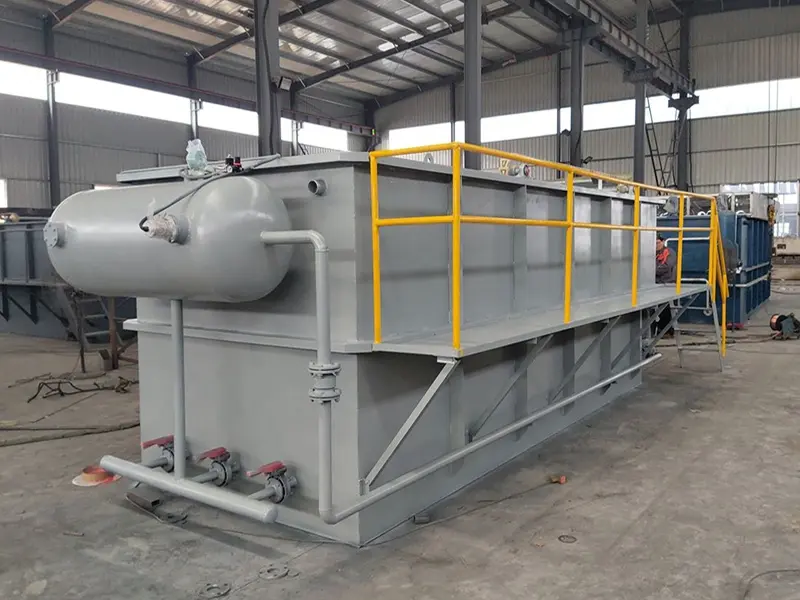
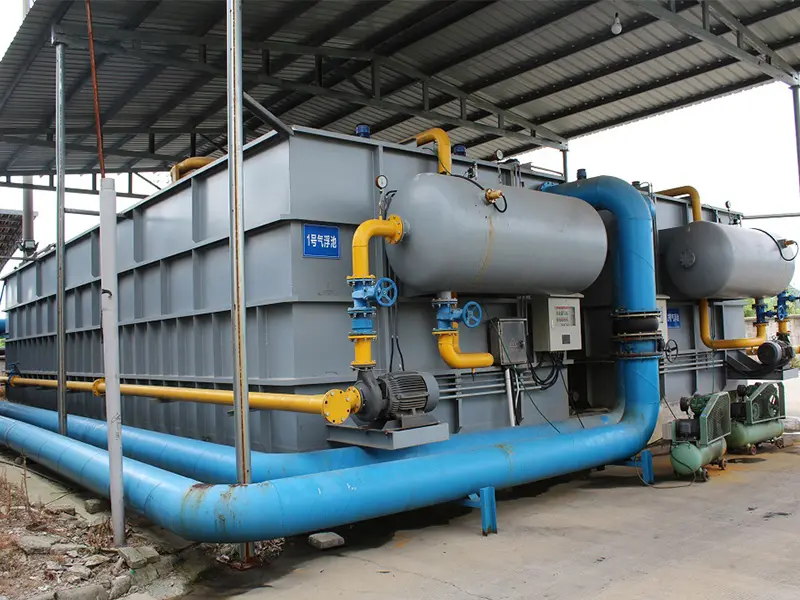
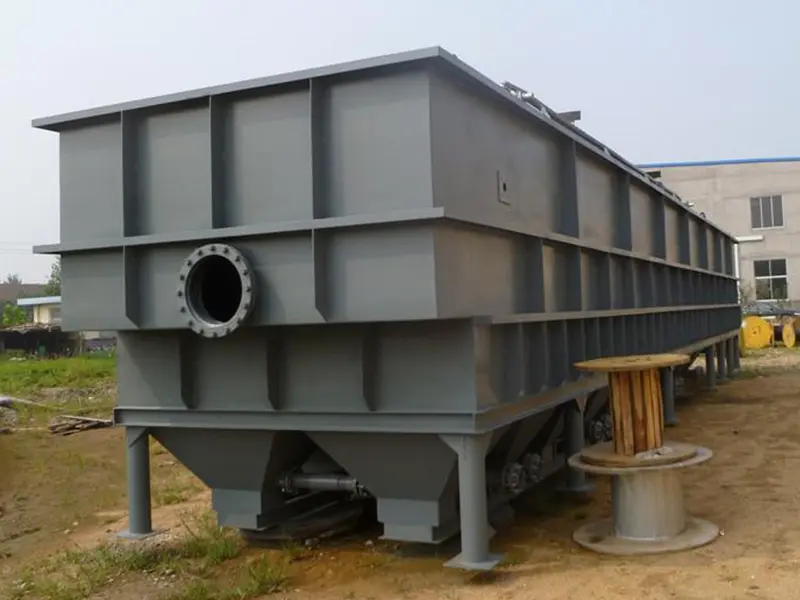
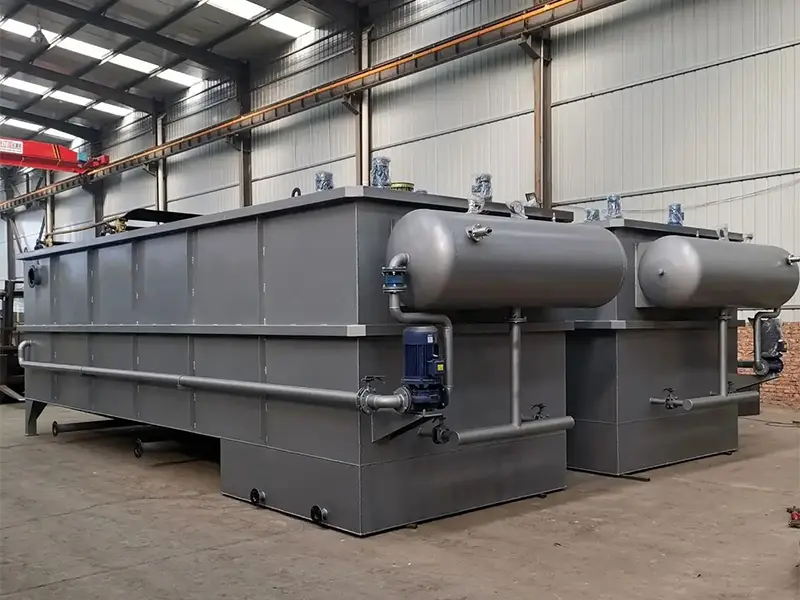
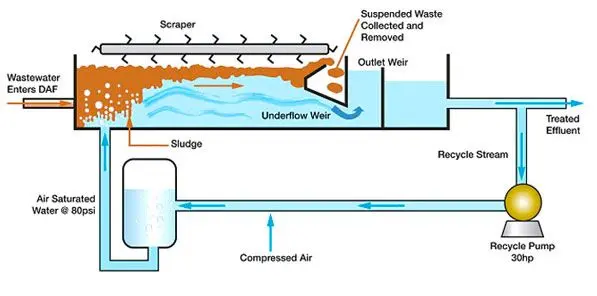
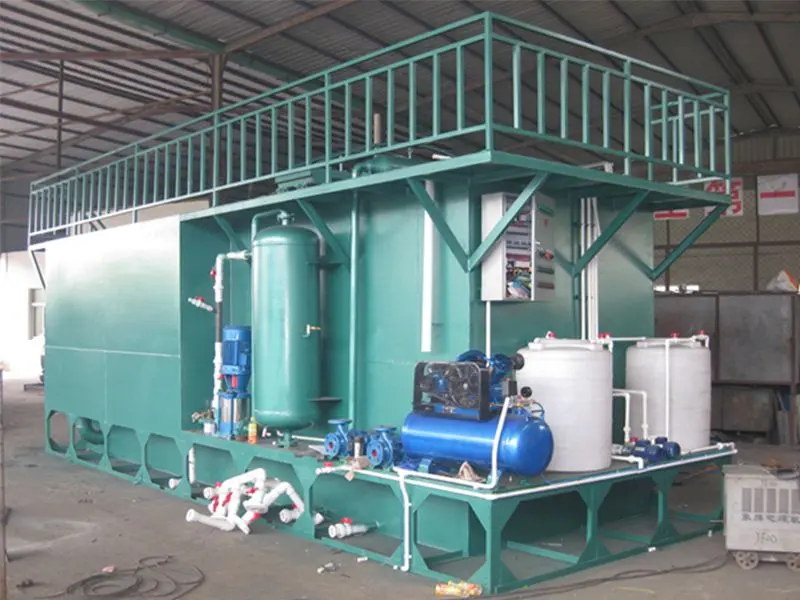
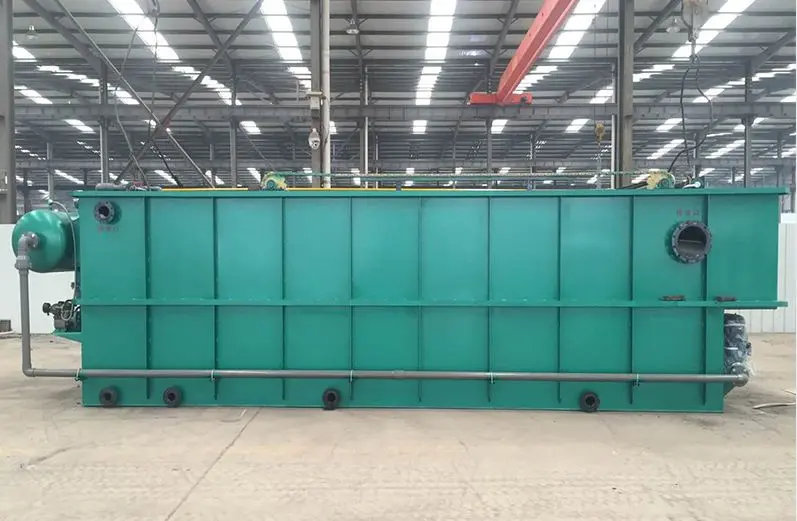
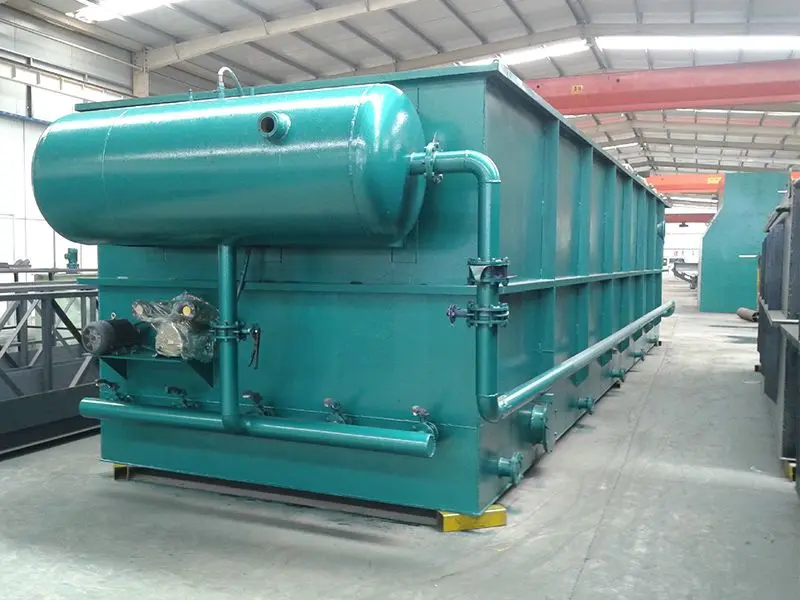
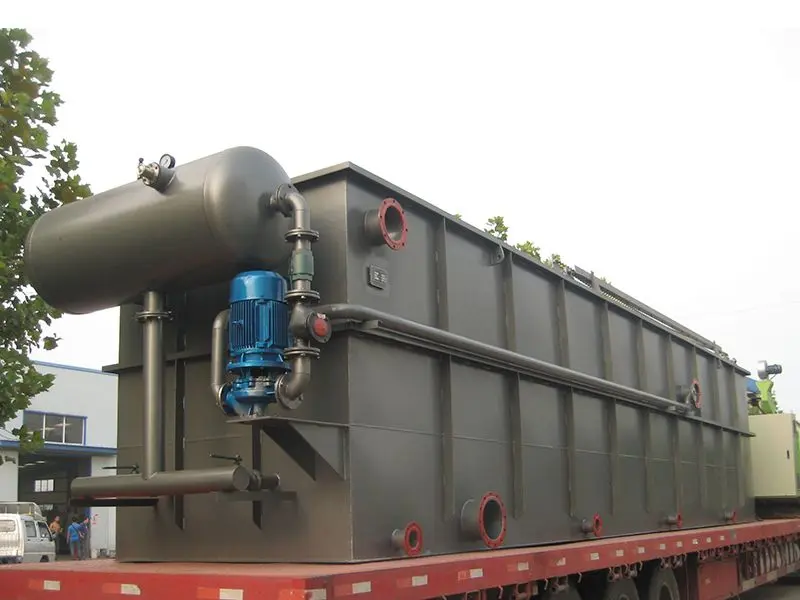
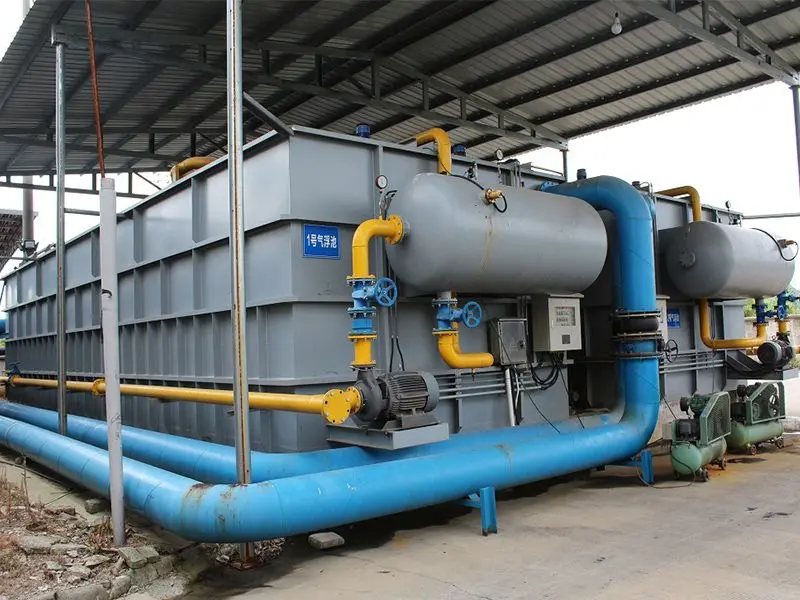
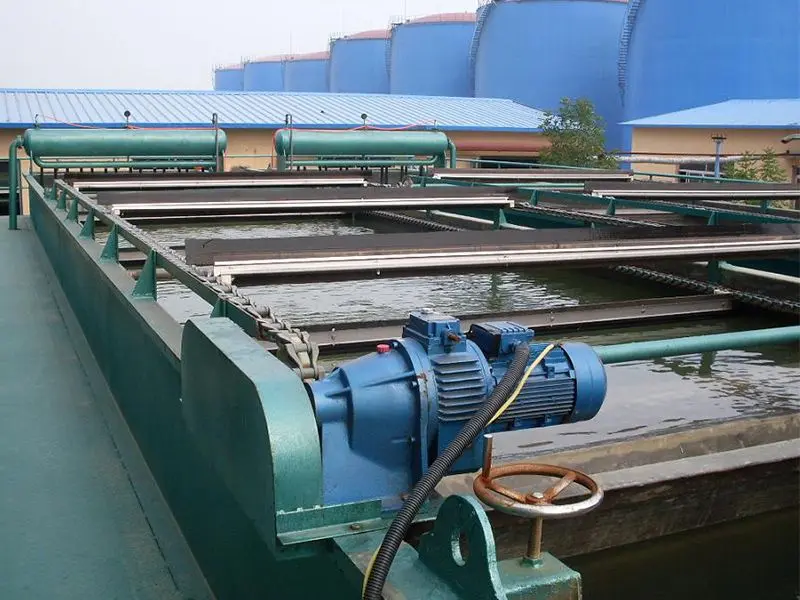
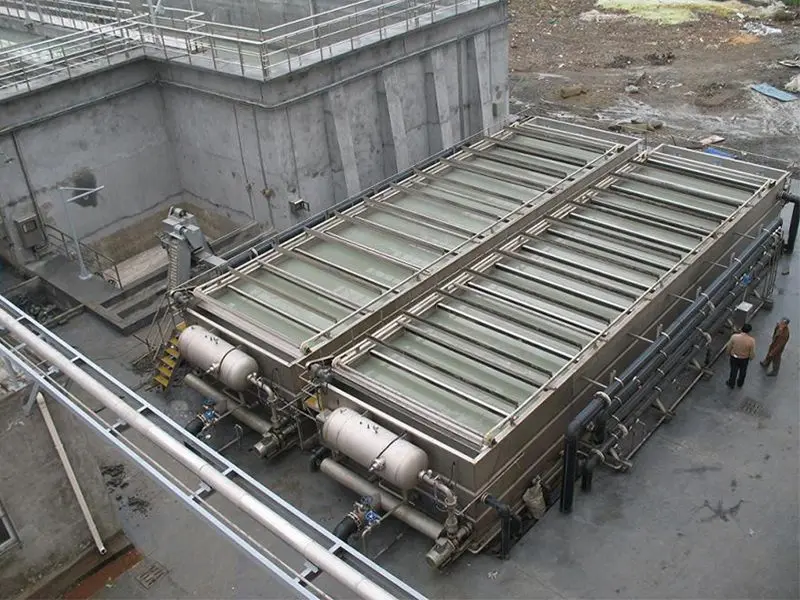
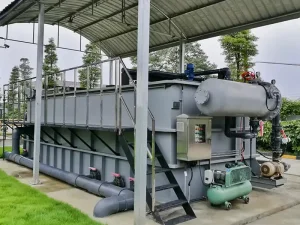
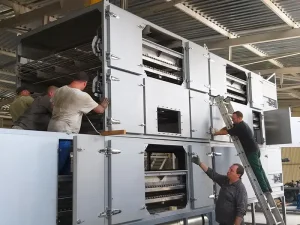
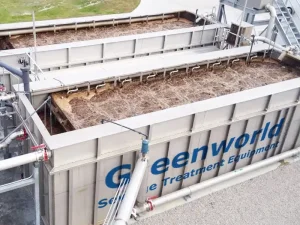
Dissolved air pump air flotation equipment is composed of a flocculation chamber, contact chamber, separation chamber, slag scraping device, and release pipe. The process involves producing dissolved air water full of fine bubbles, which are released into the contact chamber. These bubbles stick to impurity particles, forming a floating body with density less than water that floats to the surface as scum.
Pressure Dissolved Air Flotation (DAF) Methods
DAF is suitable for low turbidity, high chrominance, and high organic content wastewater. It is widely used in papermaking, printing, electroplating, chemical, and food industries. There are three basic methods:
1
Whole Process Dissolved Air Float Method: All sewage is pressurized and injected with air. This maximizes contact between particles and bubbles but requires higher power consumption and larger equipment.
2
Partially Dissolved Air Float Method: Only part of the sewage is pressurized with gas. This reduces power consumption compared to the whole process method.
3
Partial Reflux Dissolved Air Float Method: Part of the effluent is recirculated for pressurization. This is the most common method as it saves energy, prevents emulsification, and results in better flocculation.
Operation and Control Requirements
To ensure efficient operation of a pressurized DAF system, operators must adhere to the following:
✓
Monitor the coagulation process and adjust coagulant dosage to prevent tank clogging.
✓
Inspect the flotation tank surface regularly for large bubbles which may indicate releaser issues.
✓
Determine the appropriate scraping cycle based on sludge generation patterns.
✓
Maintain stable water levels and air-to-water ratios in the dissolved air tank.
Structural Components
Dissolved Gas Tank
The tank promotes air dissolution in water. Its internal structure can include baffle, flower plate, or filling types. High-efficiency fillers like the step ring can reach over 90% gas dissolving efficiency. Components include water/air inlets, safety valves, pressure gauges, and sight mirrors.
Dissolved Gas Releaser
This is the core equipment that releases gas into fine bubbles. Common types include TS, TJ, and TV type releasers.
Debugging and Daily Management
Debugging Steps: Before commissioning, pipelines must be purged. Check valves should be installed to prevent backflow. Systems should be tested with clean water first. The outlet valve must be fully open to prevent premature bubble release.
Daily Management: Observe water levels through observation holes. Ensure the scum surface is even; unevenness may indicate blocked releasers. In winter, increase reflux or pressure to compensate for higher water viscosity.
Frequently Asked Questions
1. What are the main benefits of using a dissolved air pump in DAF systems?
The dissolved air pump reduces energy consumption and the need for complex auxiliary equipment while producing highly stable micro-bubbles (20-40μm) for better purification.
2. Which DAF method is most efficient for industrial wastewater?
The Partial Reflux Dissolved Air Float method is generally considered the best as it saves energy, prevents further emulsification of the sewage, and offers superior treatment effects.
3. How often should the slag scraper be operated?
The cycle depends on the thickness of the scum (usually 5-8cm). The speed should be controlled between 50-100mm/s to avoid disturbing the separation layer.
4. What causes large bubbles to appear on the surface of the flotation tank?
Large bubbles usually indicate a problem with the releaser device (blockage or damage) or poor adhesion between bubbles and flocs due to improper coagulant dosage.
5. How does low winter temperature affect the DAF process?
Low temperatures increase water viscosity, which can hinder the floating performance of flocs. This can be countered by increasing the reflux water flow or increasing the dissolved gas pressure.
6. What is the role of the filling filler in the dissolved gas tank?
Fillers intensify turbulence and increase the contact interface between gas and liquid, significantly improving the efficiency of air dissolution, sometimes exceeding 90%.
 XINJIEYUAN