Working Principle of Hollow Paddle Dryer Machine
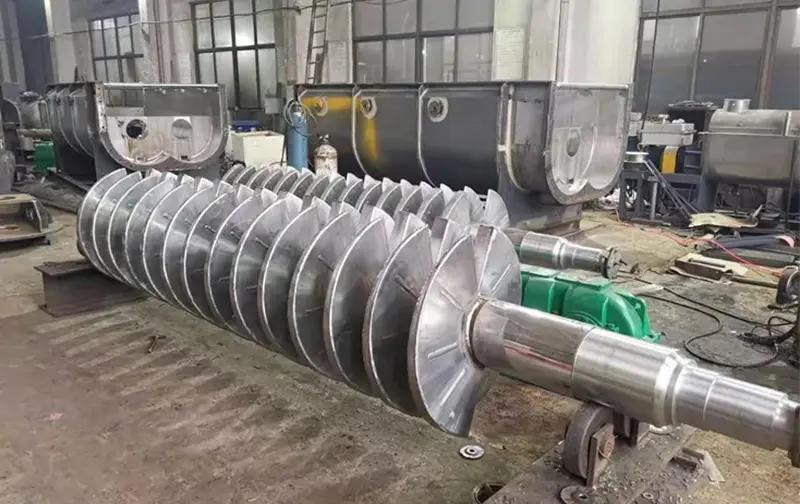
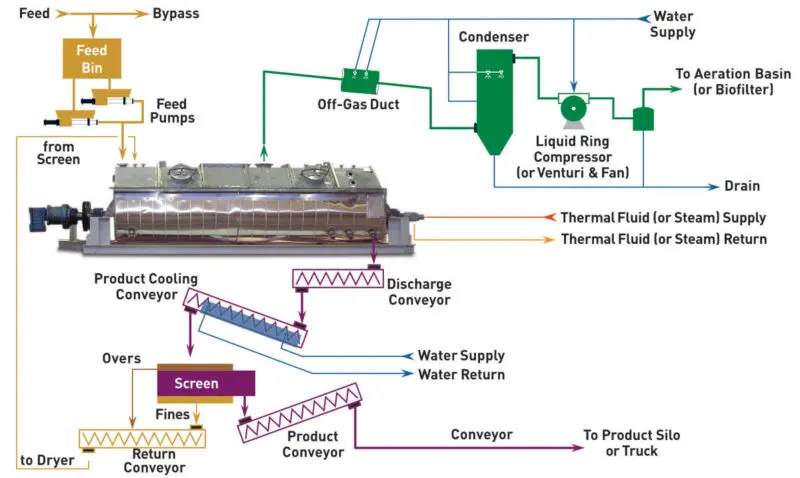
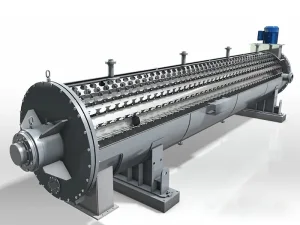
The hollow shaft is densely arranged with wedge-shaped hollow paddles, and the hot medium flows through the blades to the hollow shaft. The heat transfer area per unit of effective volume is large, and the temperature of the heat medium is from -40℃ to 320℃, which can be water vapor or liquid type: such as hot water, heat conduction oil, etc.
Indirect conduction heating, without carrying air away heat, heat is used to heat the material. In the drying process of the material, the hollow shaft with hollow paddle heats the material and stirring the material at the same time, so as to update the heating surface.
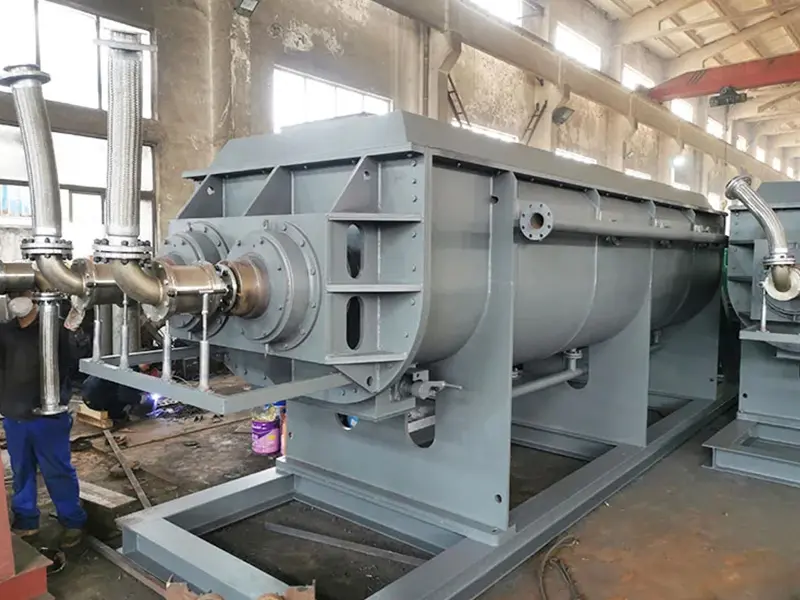
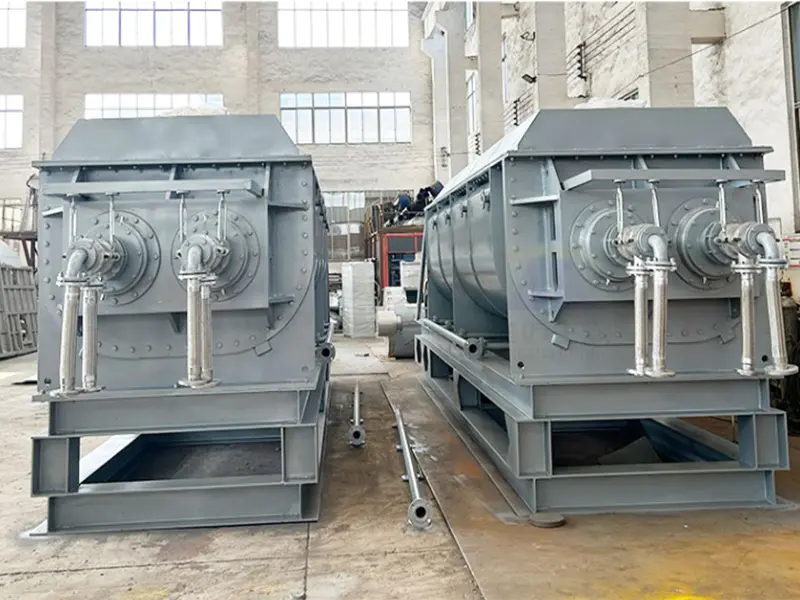
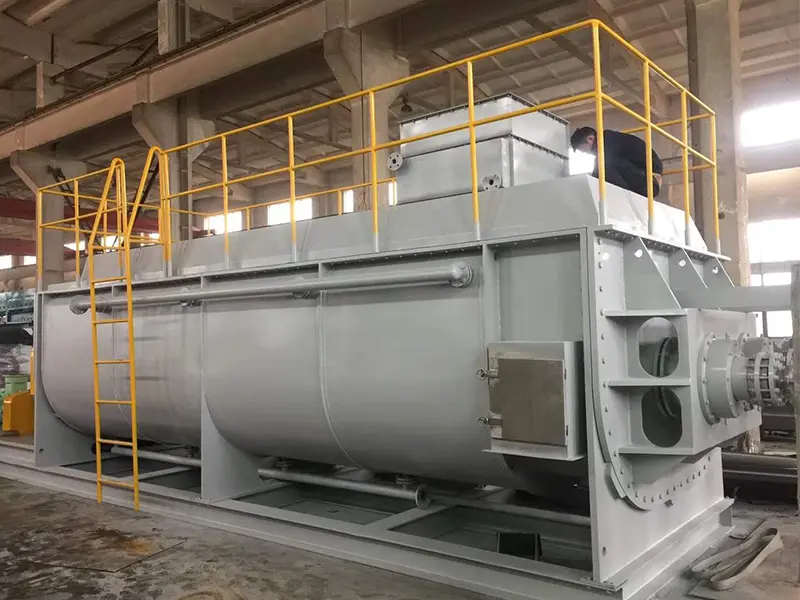
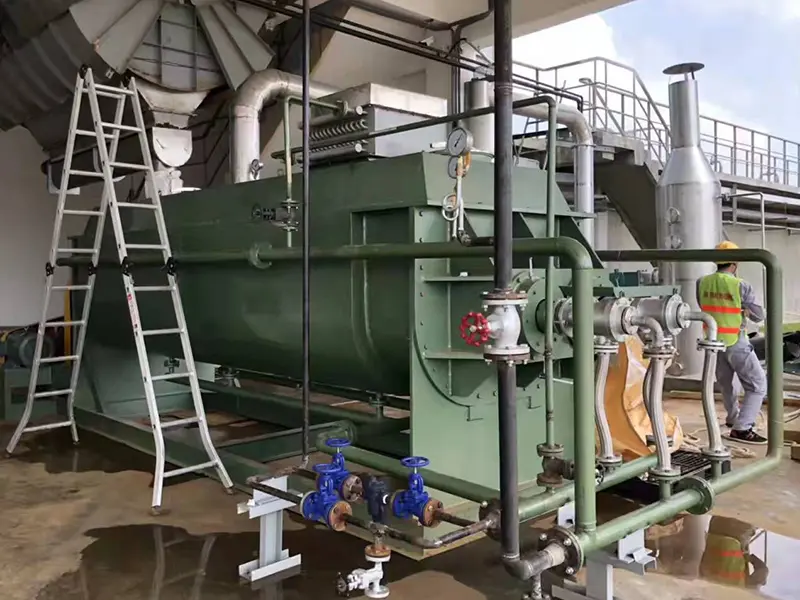
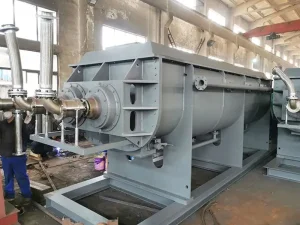
It is a continuous conduction heating dryer. The heat loss is only the heat dissipation to the environment through the insulation layer of the body. The heat transfer surface of wedge blade has self-cleaning function. The relative movement of the material particles and the wedge surface produces a washing effect, which can wash off the material attached to the wedge paddle surface and keep the clean heat transfer surface during operation. The shell of the paddle dryer is Ω type, and two to four hollow stirring shafts are generally arranged in the shell. The shell has a sealed end cover and upper cover to prevent the leakage of material dust and play a full role.
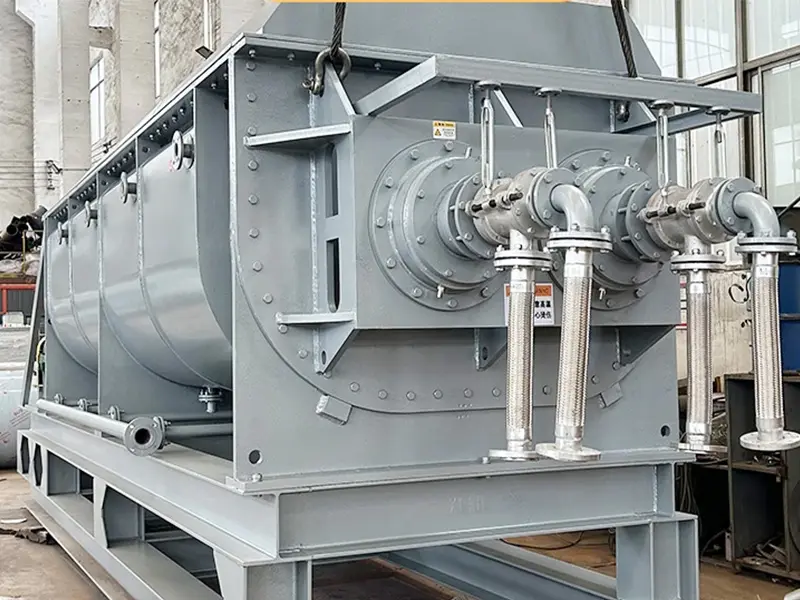
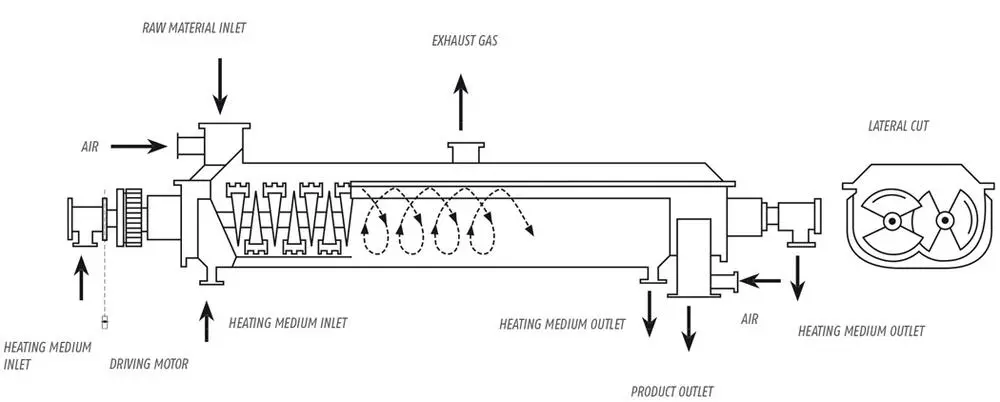
The heating medium flows through the casing jacket and the hollow stirring shaft through the rotating joint, and the material is heated and dried by conduction heating. The structure of the hollow paddle shaft of different materials is different to ensure better heat transfer effect.
Composition of Sludge Paddle Dryer Machine
The paddle sludge dryer is a slurry drying equipment widely used in the sludge drying process. The machine consists of several key components that work together to effectively dry sludge and other materials:
1
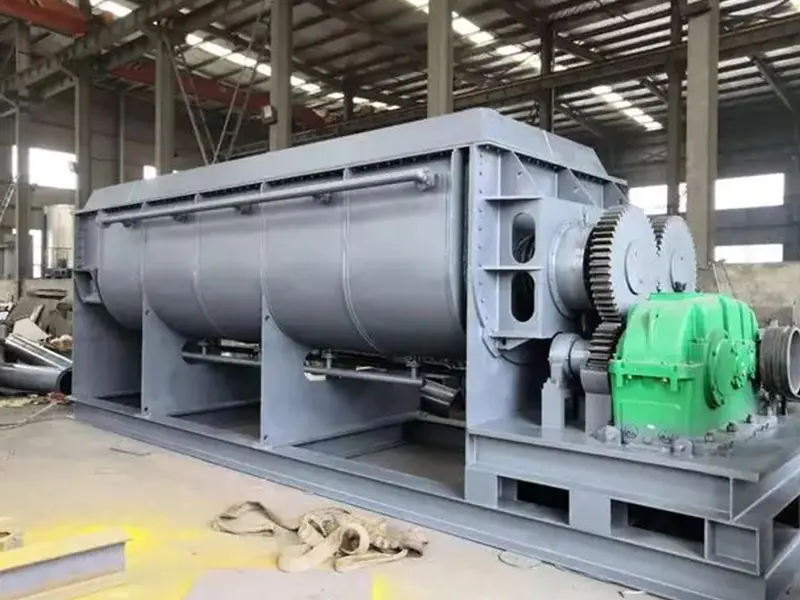
Main Spindle & Box: Mainly composed of a mixing spindle, a transmission mechanism, a box body, a bearing body, a rotating joint, and a discharge adjustment mechanism. The spindle consists of two hollow shafts and several wedge-shaped hollow blades.
2
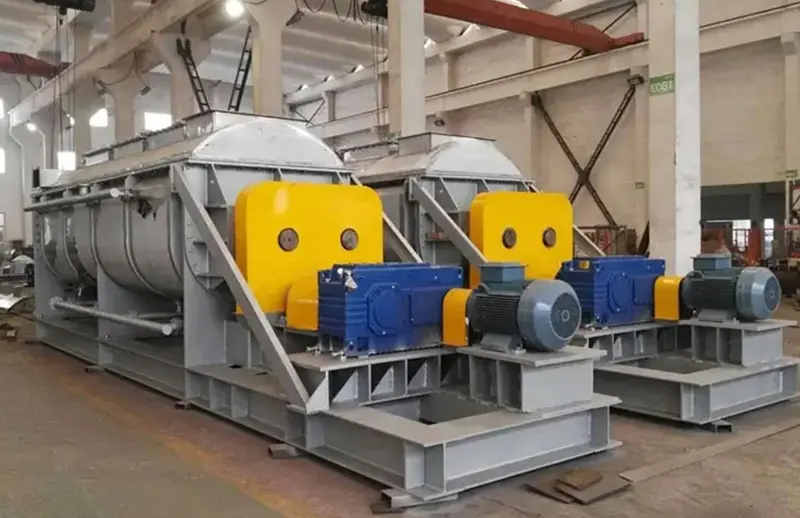
Power Transmission: Responsible for transmitting motor power to the main shaft via driving gears, driven gears, reducers, and inter-axis gears.
3
Bearing Body: Installed at both ends to support the spindle and ensure smooth operation, consisting of bearings, seats, caps, and sealing packings.
4
Heat Transfer System: Equipped with a medium return tank in the hollow shaft and a rotary joint for the medium to enter and exit.
Product Features of Hollow Paddle Dryer
Low Energy Consumption:
Indirect heating minimizes air-carried heat loss. With an insulation layer, only 1.2 kg of water vapor is needed to evaporate 1 kg of water, making it an energy-saving option.
Wide Material Compatibility:
By using different heat media (water vapor, thermal oil, hot water), it processes both heat-sensitive and high-temperature materials in wastewater treatment and chemical processing.
Environmental & Stable Operation:
Produces less pollution as it uses no carrying air, reducing dust entrainment. The wedge-shaped blades ensure consistent temperature and mixing gradients for reliable processing.
This Sludge Drying Machine is suitable for processing all kinds of paste, granule, powder and other materials with good thermal stability, and can also dry heat-sensitive materials under special conditions.
It has been successfully used in food, chemical, petrochemical, dye, and industrial sludge fields. Operations include combustion (low temperature), cooling, drying, heating, reaction, and sterilization. For example, it converts calcium sulfate dihydrate into calcium sulfate hemihydrate and calcinates sodium bicarbonate into soda ash.
Frequently Asked Questions
What is the heat medium temperature range for the paddle dryer?
The temperature of the heat medium can range from -40℃ to 320℃, allowing for a variety of heating or cooling applications.
How does the self-cleaning function work?
The relative movement between material particles and the wedge-shaped paddle surface produces a washing effect that removes attached material, keeping the heat transfer surface clean.
Is this equipment energy efficient?
Yes, it uses indirect conduction heating and features an insulation layer. For slurry materials, it requires only 1.2 kg of water vapor to evaporate 1 kg of water.
Can it process heat-sensitive materials?
Yes, by adjusting the heat media (such as using hot water or cooling brine), it can safely process heat-sensitive materials and even perform sterilization.
What are the environmental advantages?
The dryer uses no carrying air, which means very little dust is entrained, and solvent evaporation is minimized, making it ideal for contaminated or flammable materials.
Which industries typically use the hollow paddle dryer?
It is widely used in wastewater treatment, food processing, fine chemical, petrochemical, and dye industries.
 XINJIEYUAN