commercial Sludge Dryer System Manufacturer, Factory

Sludge Dryer System can achieve strict oxygen content control and high safety. It is one of the safest drying processes in the field of sludge drying today. It is the development trend of sludge treatment and disposal, which has obvious advantages in safety, stability, reliability, advanced and other aspects. The application of horizontal thin film drying process in cooperative sludge disposal is a scientific and reasonable choice for sludge treatment and disposal today.

Product Description

📋 Project Introduction

Sludge Treatment Project

With the rapid development of economy and the continuous improvement of the production value of industrial enterprises, as well as the rapid progress of urbanization, the discharge and treatment volume of industrial wastewater and urban sewage are also increasing day by day. Sludge treatment and disposal has become a bottleneck problem restricting the development of sewage treatment industry.

According to the Technical Guide for sludge treatment and disposal, four disposal methods of sludge are proposed: land use, sanitary landfill, building materials utilization, and dry incineration. Sludge drying incineration has become one of the most important and ideal technical disposal schemes at this stage.

Process Selection: After comparing fluidized bed, two-stage, thin layer, paddle, disc, and spray types, the thin film drying process was finally determined due to its technical maturity, system stability, and operation safety.

Working Principle of Thin Film Dryer

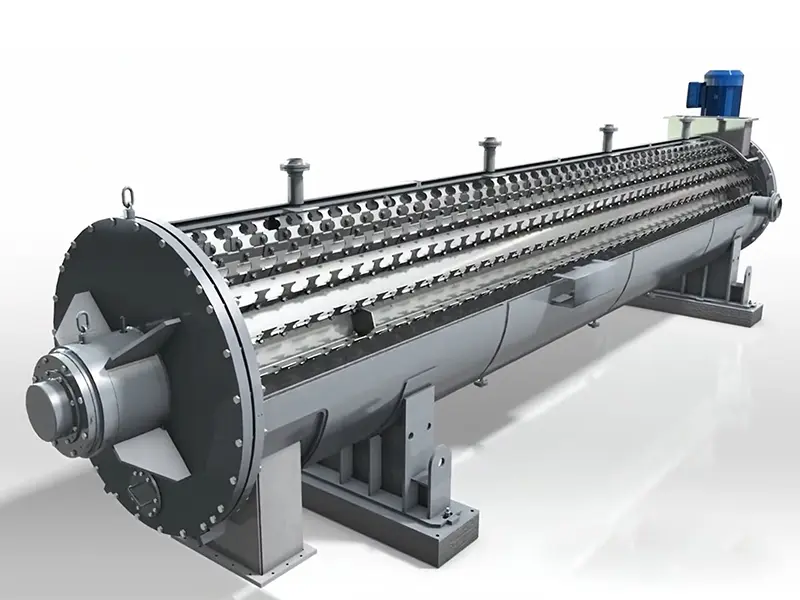
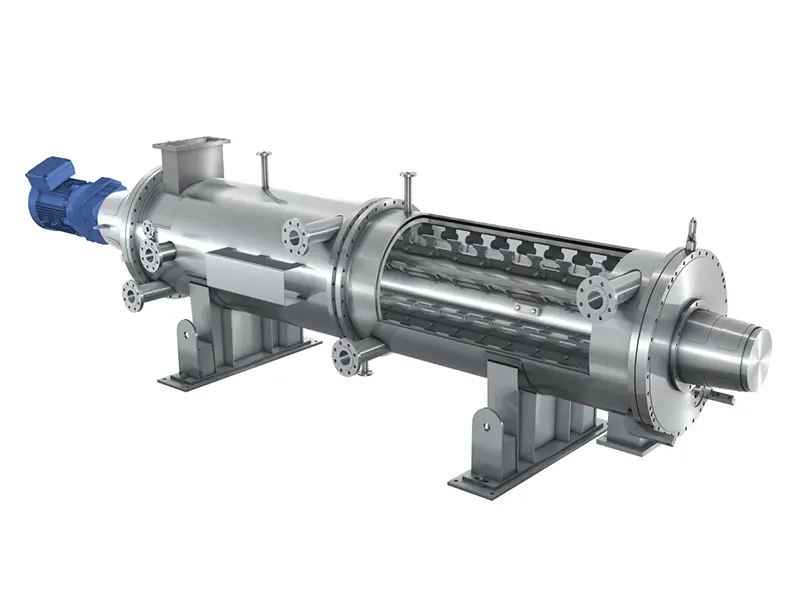
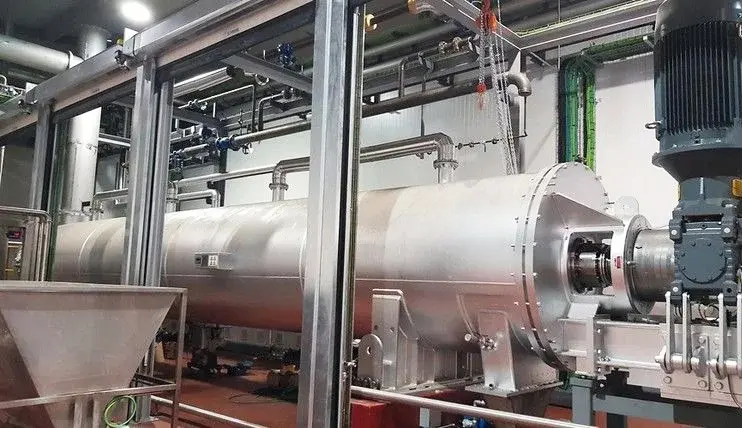
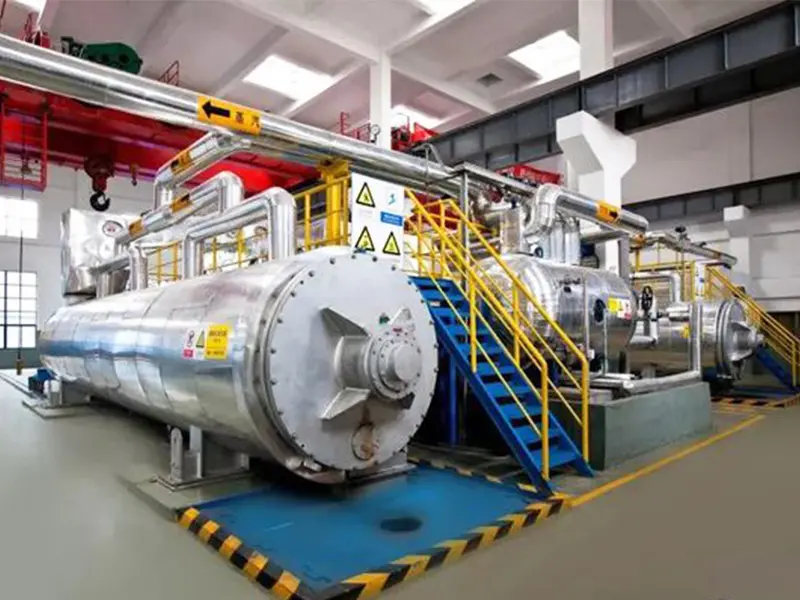
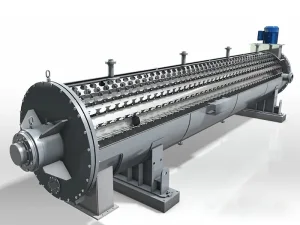
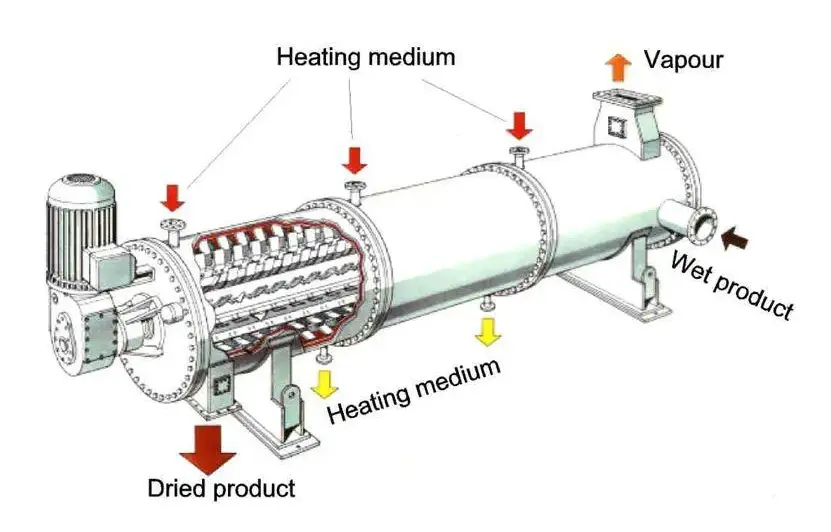
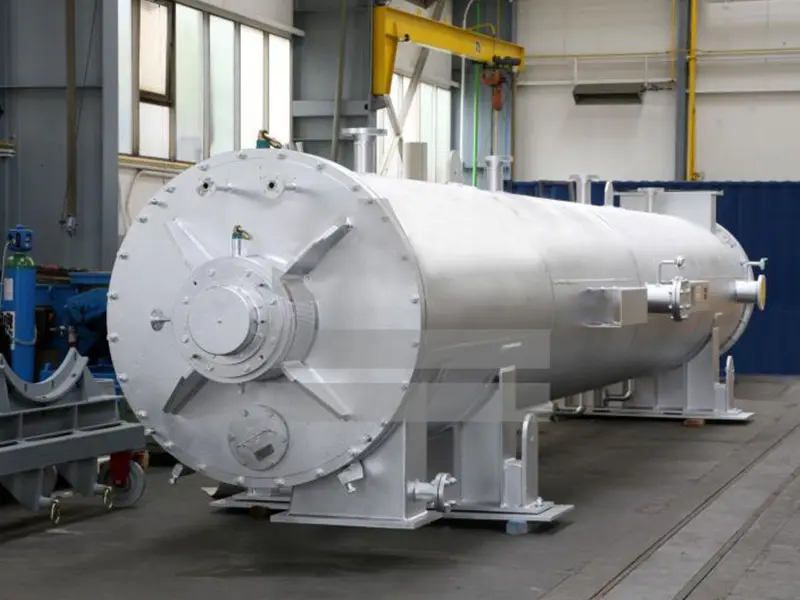
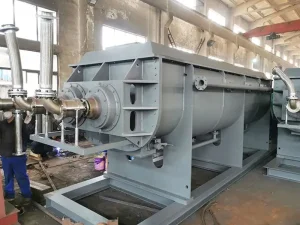
A thin film dryer is composed of a cylindrical shell with a heating layer, a rotating rotor, and a driving device. The rotor is equipped with paddles of different shapes that can be flexibly adjusted to adapt to various sludge characteristics.
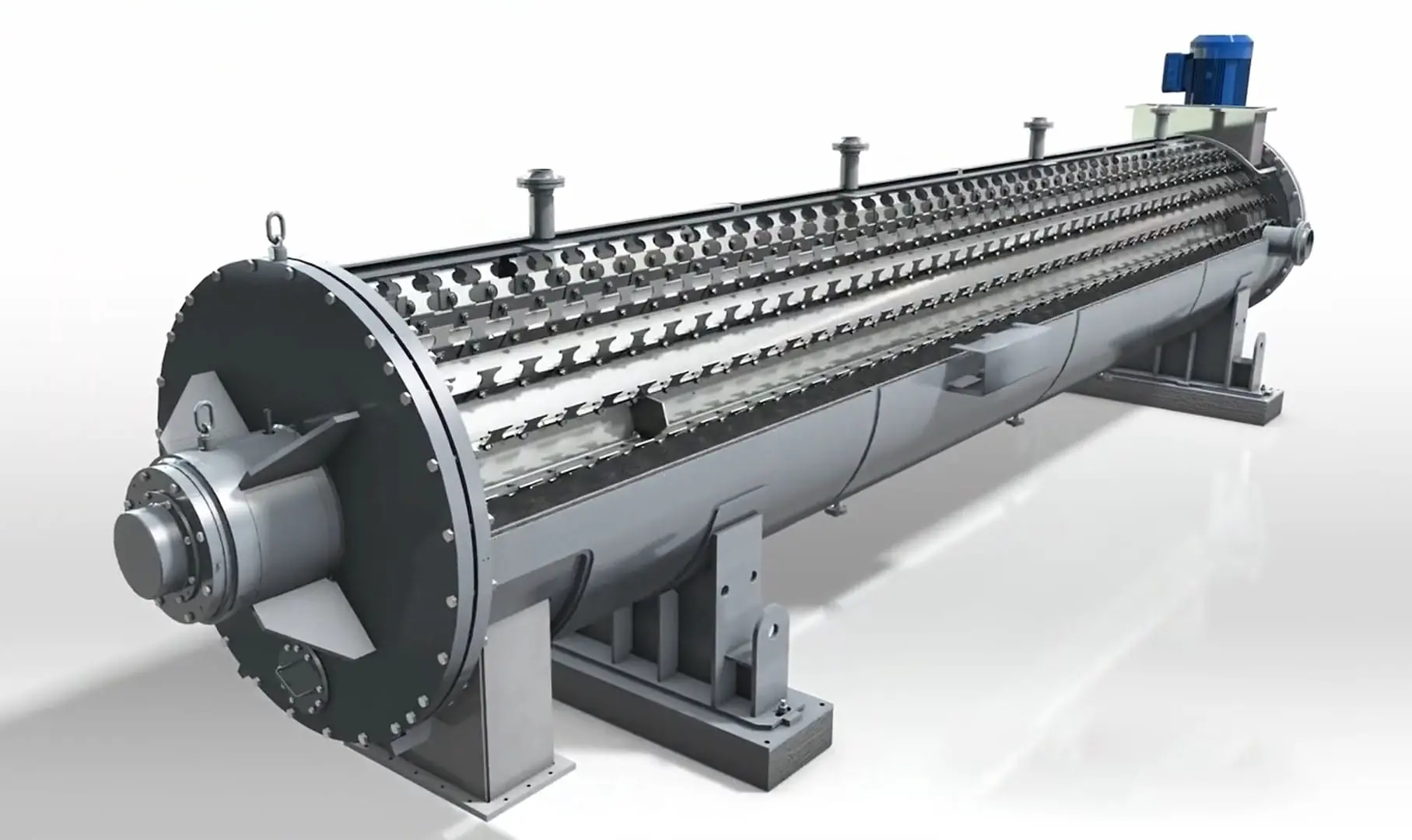
Thin Film Dryer Components
01
Spread Blades: Installed at the inlet and outlet to ensure sludge attaches to the hot wall and moves toward the discharge end.
02
Transmission Blades: Located in the middle area (720 blades total) to realize distribution, scraping, stirring, and self-cleaning.

The wet sludge forms a thin layer on the hot wall. The residence time is approximately 10-15 minutes, allowing for fast start, stop, and emptying operations.

🌬 Exhaust Gas Collection Process

The moisture content is reduced from 80% to approximately 35%. Carrier gases (water vapor, dust, and odor) are discharged into a condenser. The system operates under micro-negative pressure to prevent odor and dust leakage.
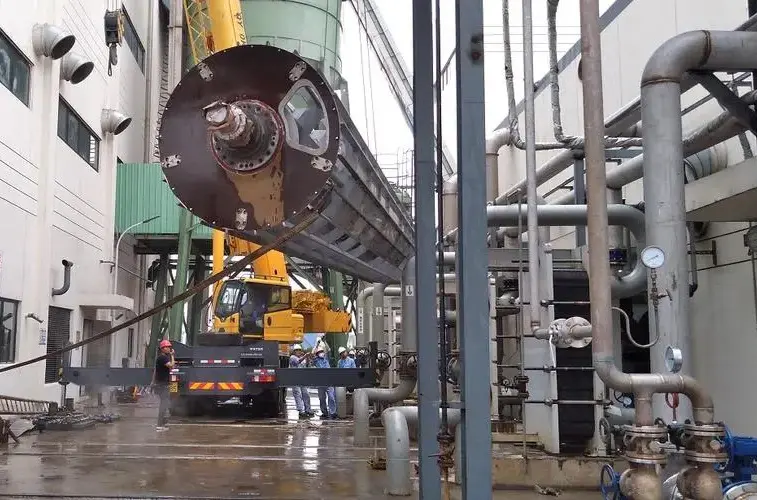
Exhaust Gas System

🚀 Equipment Selection & Parameters

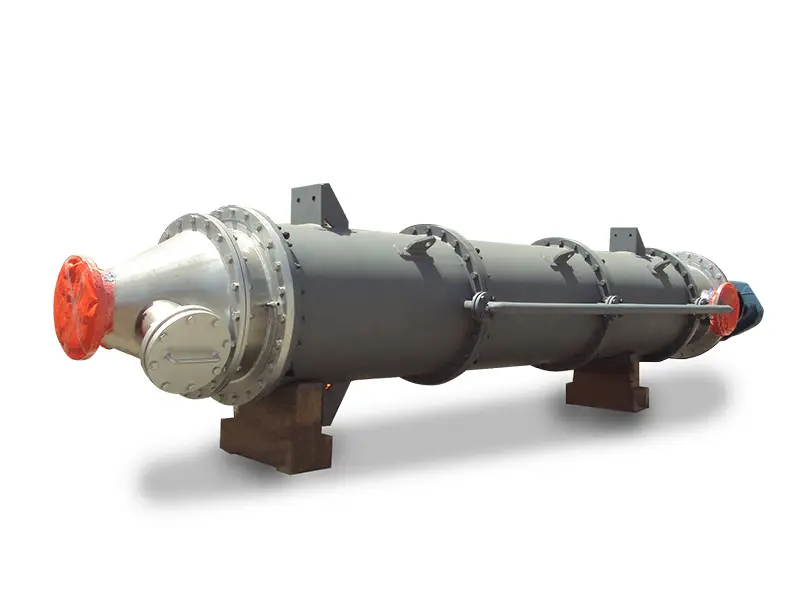
The thin film dryer body features a net weight of 33,000 kg and horizontal layout. It utilizes a steam heat source (1.0MPa, 180°C) for indirect heating.
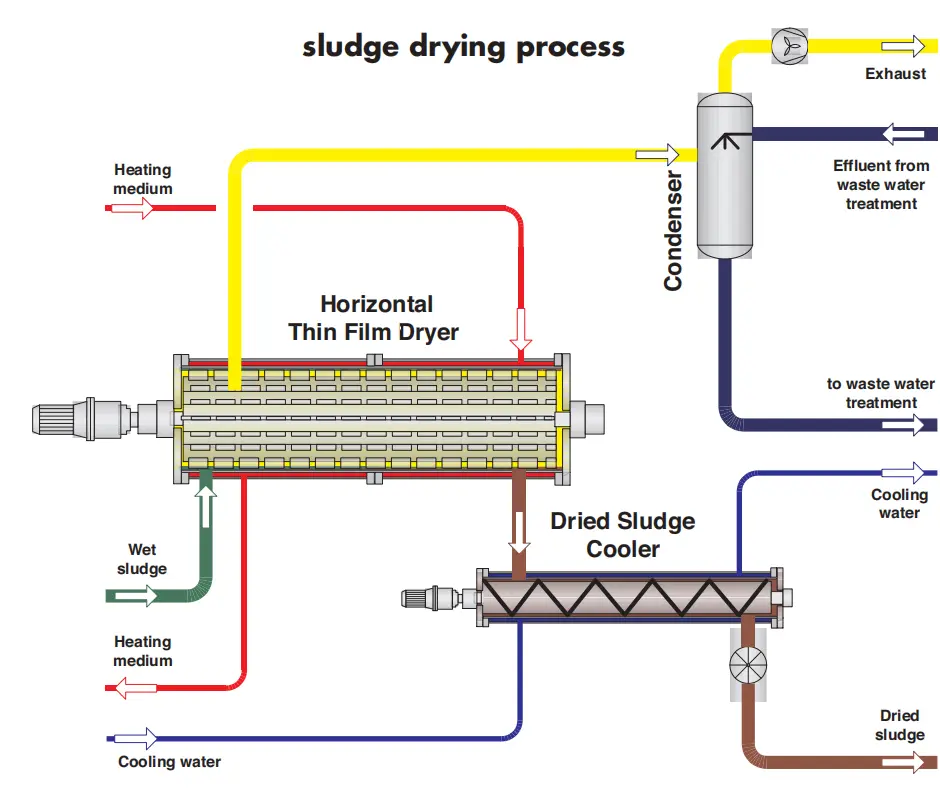
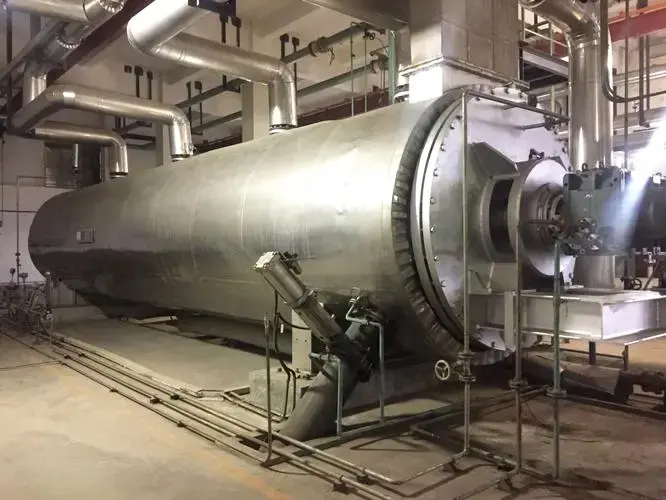
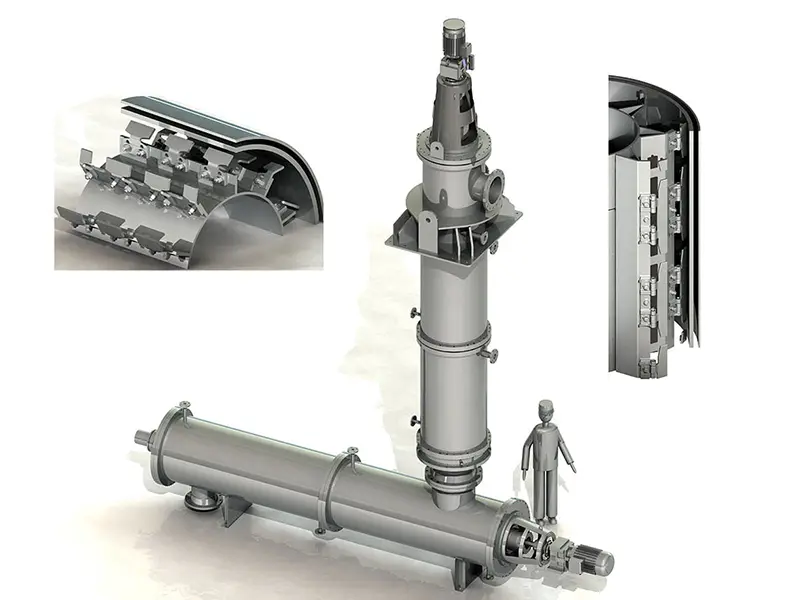
System Layout
Equipment Parameters
Key Performance Data:
  • Treatment Capacity: 60 t/d per unit
  • Evaporation Capacity: 1.731 t/h
  • Heat Exchange Area: 50 m²
  • Inlet Moisture: 80% | Outlet Moisture: 35% (up to 10% with linear dryer)

💰 Economic Energy Consumption Analysis

During commissioning, the system reached 87.5% of the designed dry base treatment scale. The unit heat consumption is approximately 504 kcal/kg of evaporated water, proving the system's efficiency.
🏗 Structure of the System

Dryer Structure
Cooler and Condenser
Shell: High-strength structural steel (Naxtra-700) or P265GH high-temperature resistant boiler steel.
Rotor & Blades: Made of Stainless Steel 316L for maximum durability and corrosion resistance.
Condenser: Direct spray hybrid condenser made of SS304.

Technical Characteristics

Simple Integration: Minimal auxiliary equipment; no back-mixing required.
Operating Economy: Low energy consumption and consistently high evaporation efficiency.
Operational Flexibility: Suitable for various pasty sludges; easy start/stop.
Safety & Environment: Negative pressure closed system; low oxygen level; no odor or dust leakage.
Technology Prospect

This technology is suitable for both hazardous waste sludge in petroleum/chemical industries and municipal sludge treatment, achieving maximum reduction and stable operation.
Frequently Asked Questions

What is the typical sludge residence time in the dryer?
The wet sludge typically stays in the thin film dryer for about 10 to 15 minutes, allowing for rapid processing and adjustment.
What level of moisture reduction can be achieved?
The system typically reduces moisture from 80% down to 35%. If a linear dryer is added, the final product can reach a 10% moisture content.
What materials are used to prevent wear and corrosion?
The inner shell uses wear-resistant high-strength structural steel or P265GH boiler steel, while rotors and blades are made from Stainless Steel 316L.
What type of heat source is required?
The system requires saturated steam as a heat source, typically with a pressure of 1.0 MPa and a temperature of 180°C.
How does the system handle odor and safety?
The entire drying system operates under micro-negative pressure in a closed environment to prevent odor and dust leakage. It also includes multi-faceted inert designs using N2 and steam.
What is the daily treatment capacity of a single unit?
A single thin film dryer unit has a rated daily sludge treatment capacity of approximately 60 tons per day (based on 80% moisture content).

Related Products