 XINJIEYUAN
1 / 5
The spiral conveyor of BD plate technology is one of the most advanced technologies for reducing moisture content and improving solid recovery of activated sludge. It can improve the decanter centrifuge processing capacity, reduce the moisture content of the sediment, improve the solid recovery rate, clear liquid more clear. Compared with ordinary centrifuges, it has lower working speed, less power consumption, and can also save pharmaceutical consumption and reduce equipment operating costs.
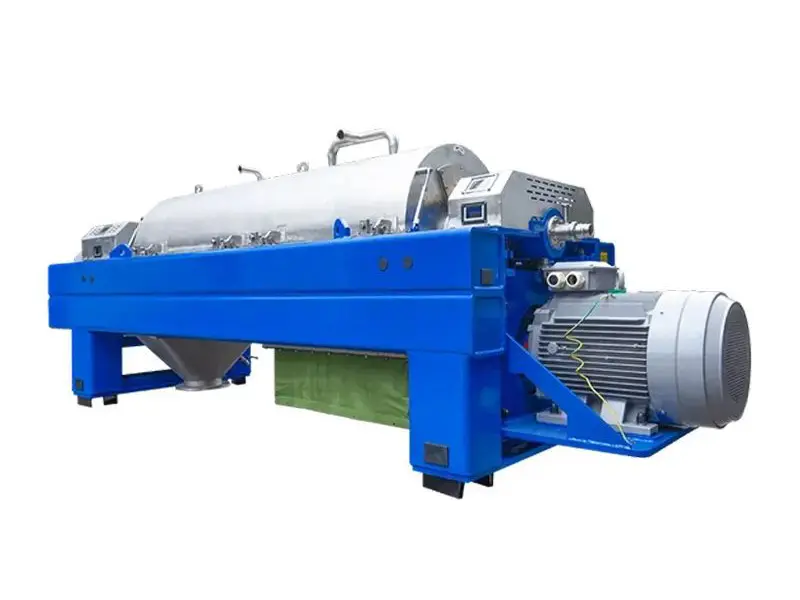
Our decanter centrifuge is a high-performance device that can be used in a variety of technological processes. In a wide range of applications at the same time, we also fully consider the decanter centrifuge easy to wear problems. And the use of targeted anti-wear configuration, reduce wear, extend the service life, reduce maintenance costs. By choosing our decanter centrifuge, you will get efficient and stable centrifugal separation without frequent replacement of parts.
In terms of environmental protection applications, decanter centrifuges mainly refer to the dewatering of sludge generated in the process of industrial and civil sewage treatment. Today's environmental problems have become the focus of common concern all over the world. In this context, the value of decanter centrifuge has been reflected. In the past, sewage plants or related treatment plants have used self-sedimentation or belt filter press to dewater and concentrate sludge. Sludge moisture content from 98% to 80%, its volume can be reduced by 10 times, because of this, decanter sedimentation centrifuge because of its inherent processing capacity, automatic operation, good dehydration effect and other characteristics, in the field of environmental protection has been widely used and promoted. Screw Decanter centrifuge single product sales accounted for about half of all centrifuge products, laying its irreplaceable position. Screw Decanter centrifuge is preferred for sewage treatment equipment.
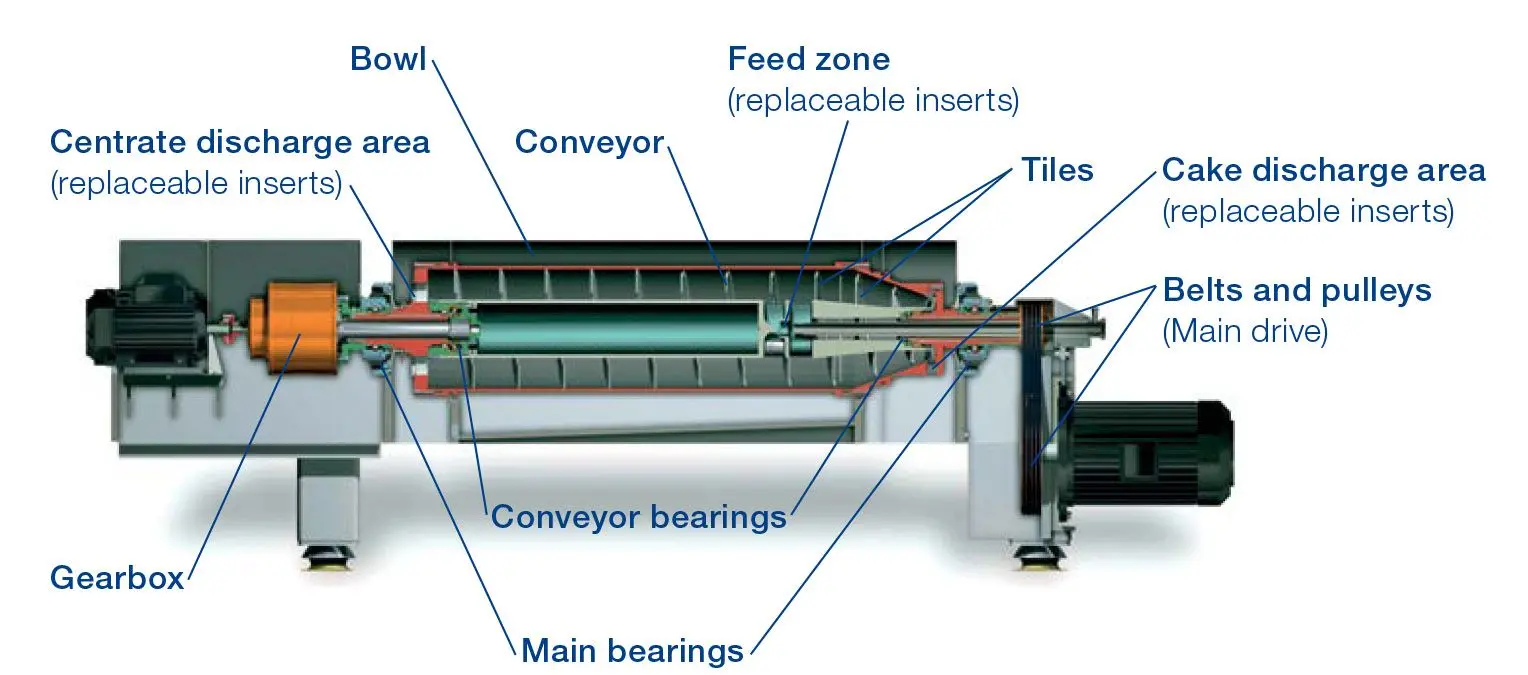
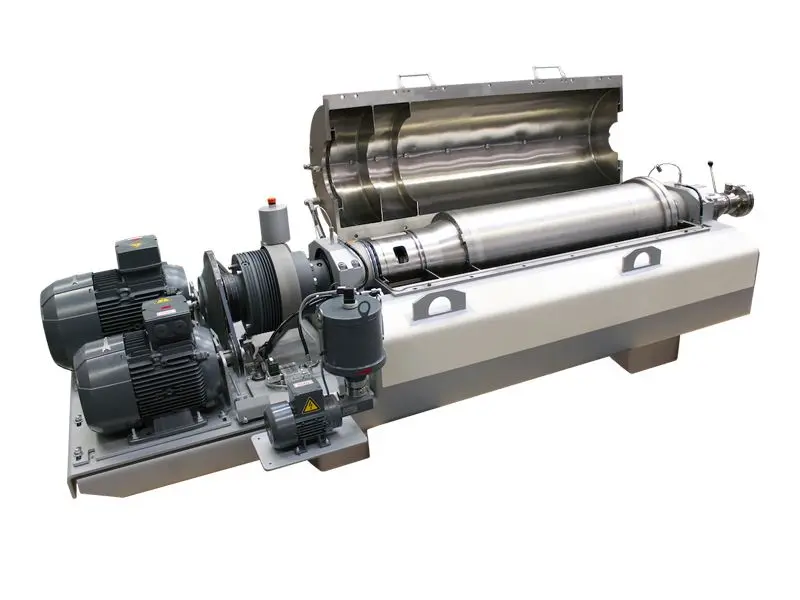
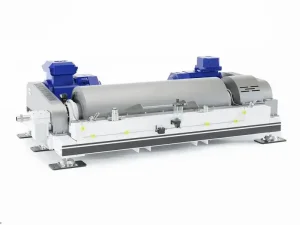
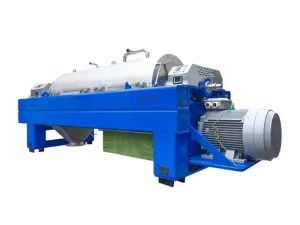
Horizontal screw centrifuge is a kind of spiral unloading and settling decanter centrifuge, which is pushed to the slag discharge port at the small end of the drum by the blade on the spiral pusher, and the liquid phase is spilled through the overflow hole at the large end of the drum. This cycle continues to achieve the purpose of continuous separation.
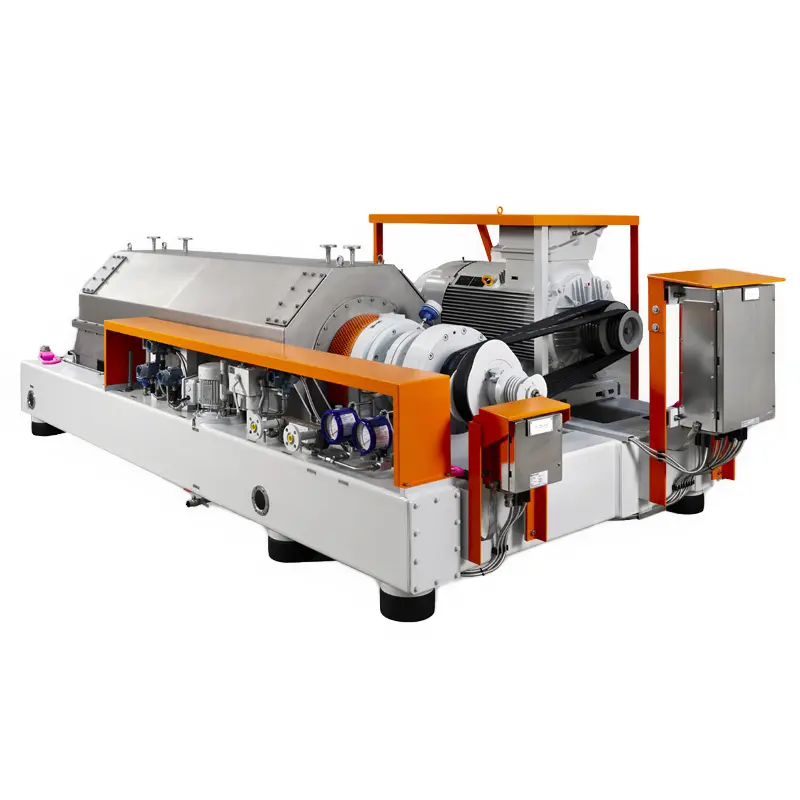
The working principle of the screw decanter centrifuge is centrifugal sedimentation, which uses a combination of high-speed rotation and differential speed to separate solid particles from liquids. The main and auxiliary motors of the decanter centrifuge drive the drum and differential through the belt, so that the centrifuge drum and the screw conveyor rotate in the same direction at a certain speed difference.
When the turbid liquid enters the spiral conveying chamber, it moves into the drum chamber under centrifugal action. The high-speed rotating drum stratifies solid particles and liquids of different densities, forming a solid-liquid annular layer on the inner wall of the drum. The denser solid particles settle close to the inner wall of the drum, forming a sediment layer. Subsequently, the solids in the sediment layer are pushed to the cone part of the drum under the action of the rotating spiral conveying blades for squeezing and further dehydration. The dehydrated solid phase is discharged from the drum through the discharge port, and the liquid phase is discharged from the overflow port through the filter. By controlling the position of the overflow port, the depth of the liquid pool can be controlled to achieve specific separation requirements.
Generally, decanter centrifuge has the characteristics of compact structure, continuous operation, stable operation and strong adaptability, and large production capacity, convenient maintenance, good dehydration effect, so it is more and more widely used in the field of environmental protection.
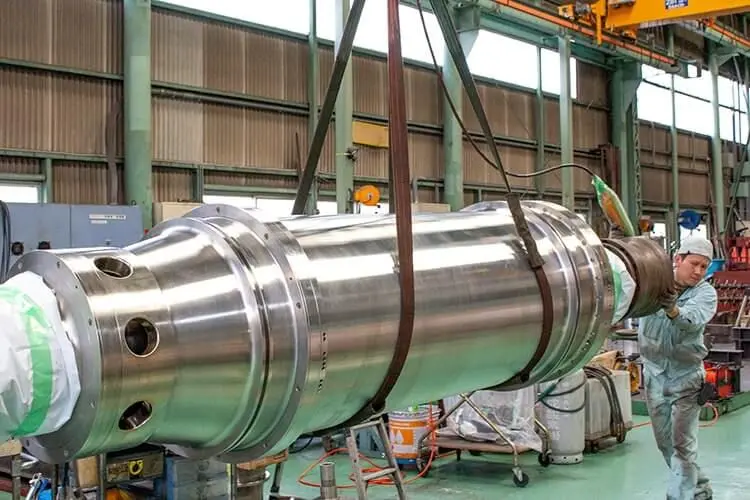
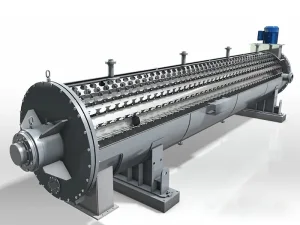
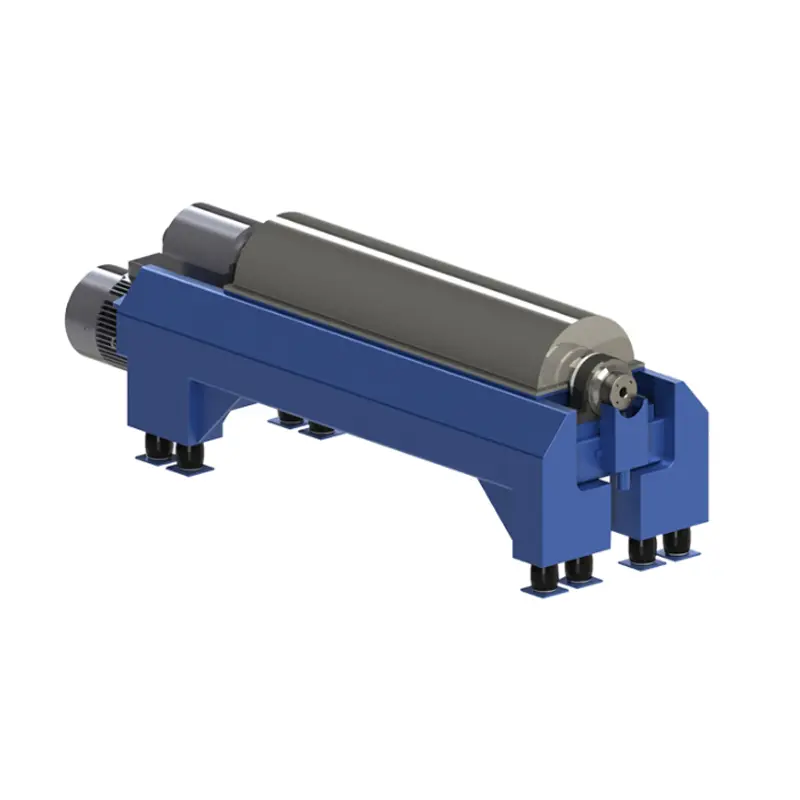
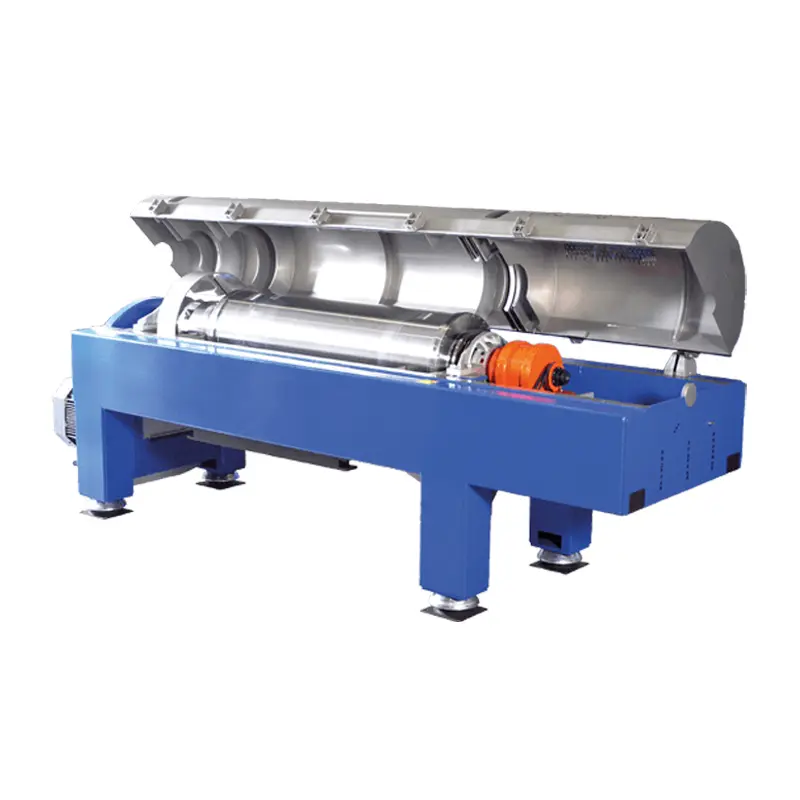
The core component of the screw decanter centrifuge is the drum. Its internal structure is composed of two parts: cylindrical shell and internal screw propeller. The axis of the drum intersects the horizontal plane, and the drum is equipped with the separated mixed liquid, suspension liquid or suspended solid material to be separated.
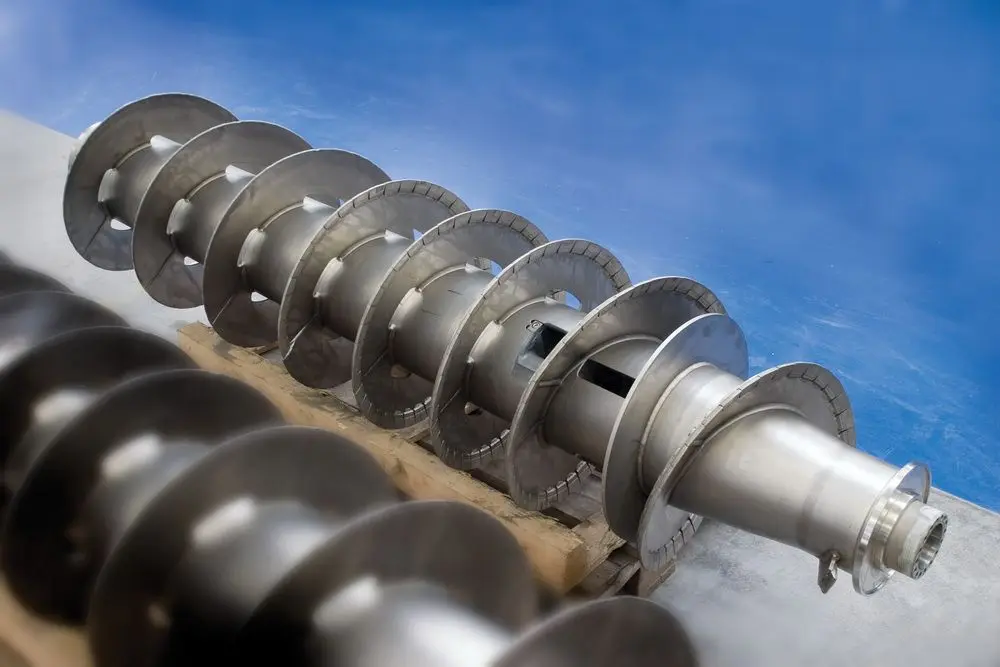
The screw propeller conveyor is fixed inside the drum, and its main function is to push the material to be separated to the high-speed separation area generated by centrifugal force. By continuously pushing the material, the screw propeller can make the separation effect more even and thorough.
The liquid collection tank is installed at the bottom of the drum, and its function is to receive and collect the pure liquid that is separated. The collection box is equipped with a drain hole to discharge the pure liquid and send it to the next process.
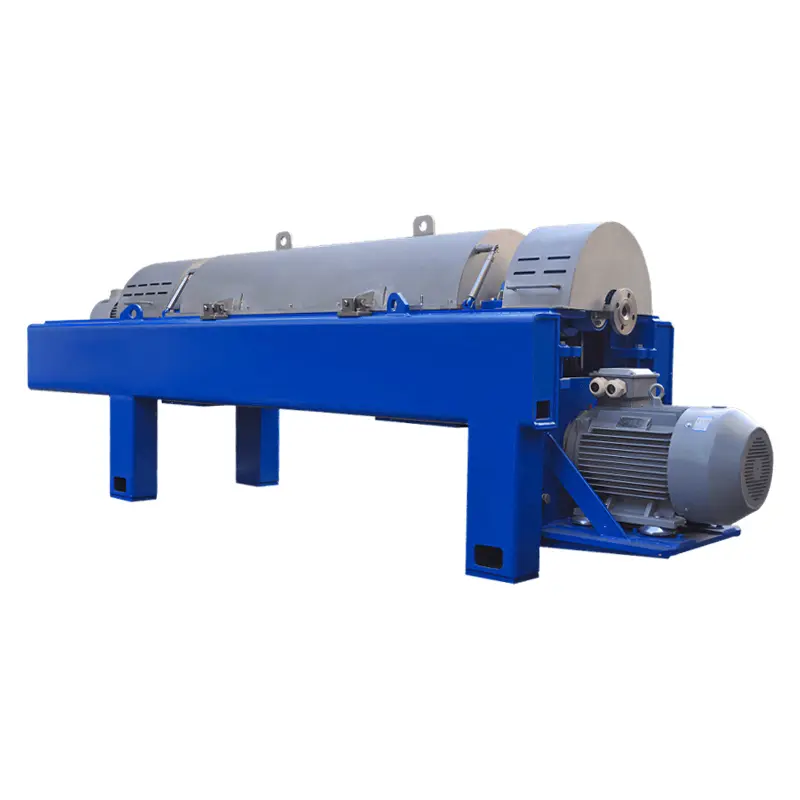
In addition to the above three main components, decanter centrifuge has some other necessary components, such as motor, reducer, bearing, support frame and so on. These components work together to ensure the normal function and efficient operation of the decanter centrifuge.
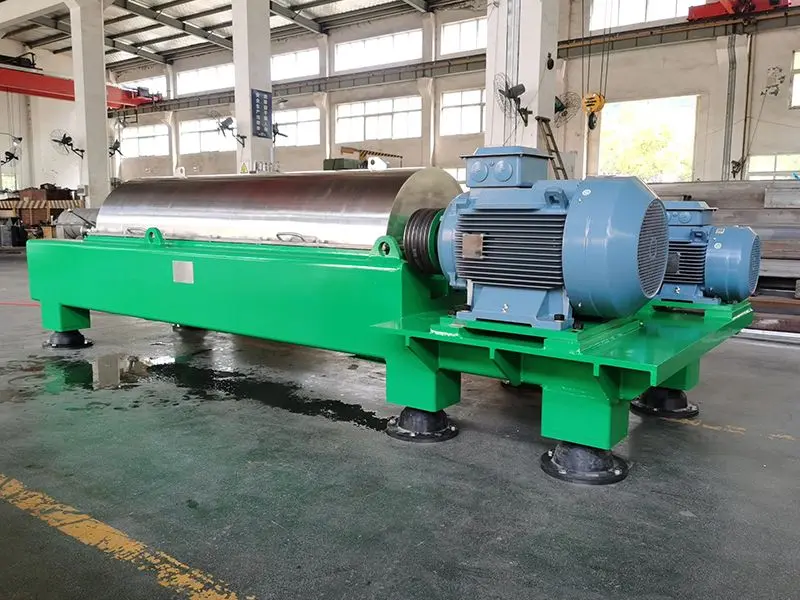
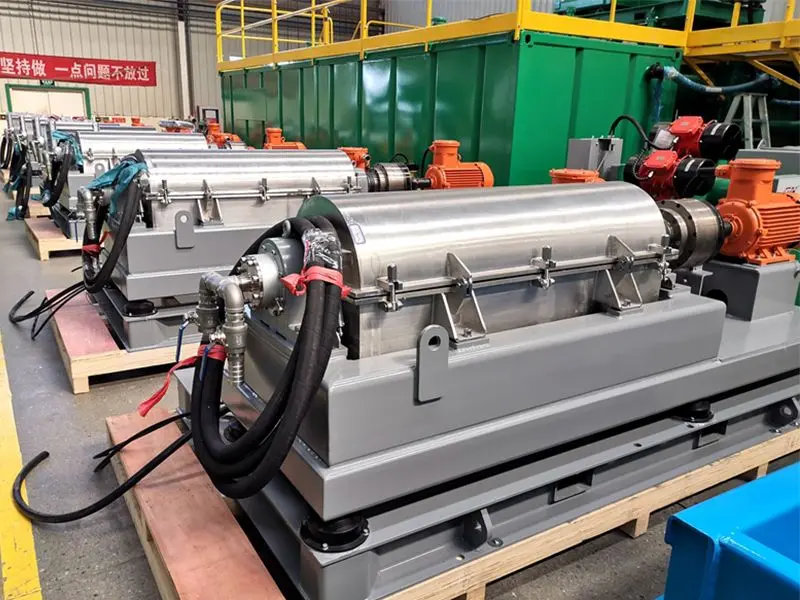
1. The main components such as the rotating drum are made of corrosion-resistant stainless steel. This ensures the machine's longevity and maintains the hygiene and purity of separated liquids.
2. The conveying screw adopts special anti-wear measures. A protective layer of carbide can be spray-welded or embedded with carbide wear-resistant sheets to withstand wear during the separation process.
3. Large aspect ratio and high rotational speed. The drum cone structure at various angles effectively separates solids and liquids, ensuring high purity of separated materials.
4. Equipped with heavy-duty, high-ratio cycloidal pinwheels, planetary gears or hydraulic differentials to provide the necessary power and torque.
5. Microcomputer control system automatically adjusts speed and torque according to changes in material concentration and flow rate.
6. Horizontal spiral sedimentation with BD plate allows the machine to handle difficult-to-separate materials in primary sedimentation and activated sludge.
Maximum amount of liquid handled under stable operation. Generally between 1000L/h and 20000L/h.
Also known as centrifugal acceleration (g value). Generally between 800 and 3000.
Affects centrifugal force and treatment effect. Typically between 2500rpm and 4500rpm.
Energy consumption of the dehydrator. Generally between 4kW and 22kW.
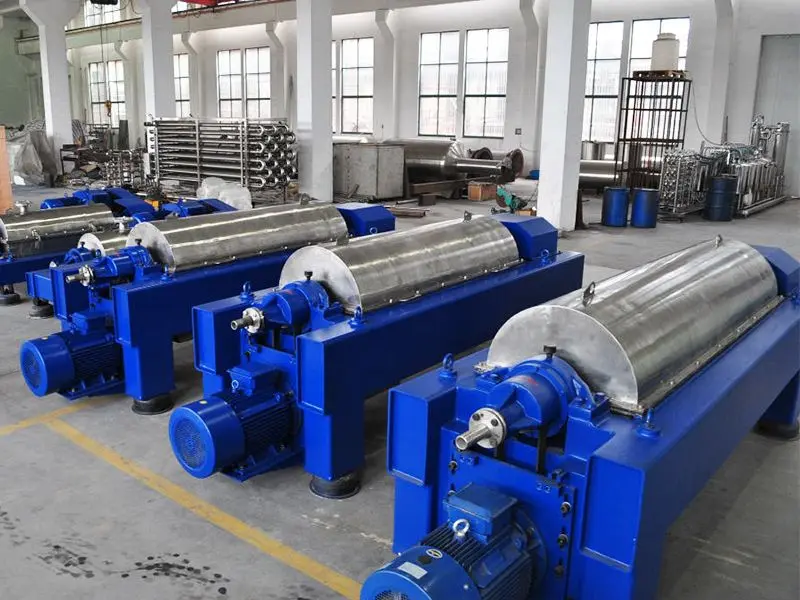
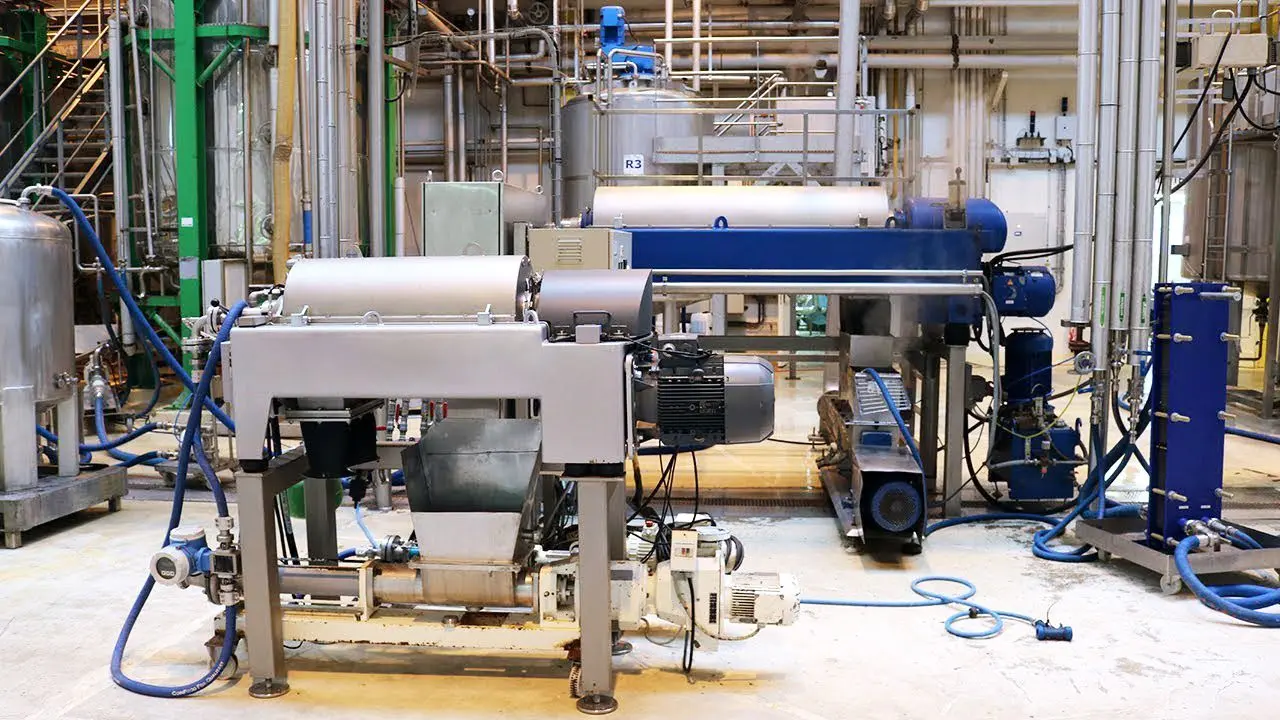
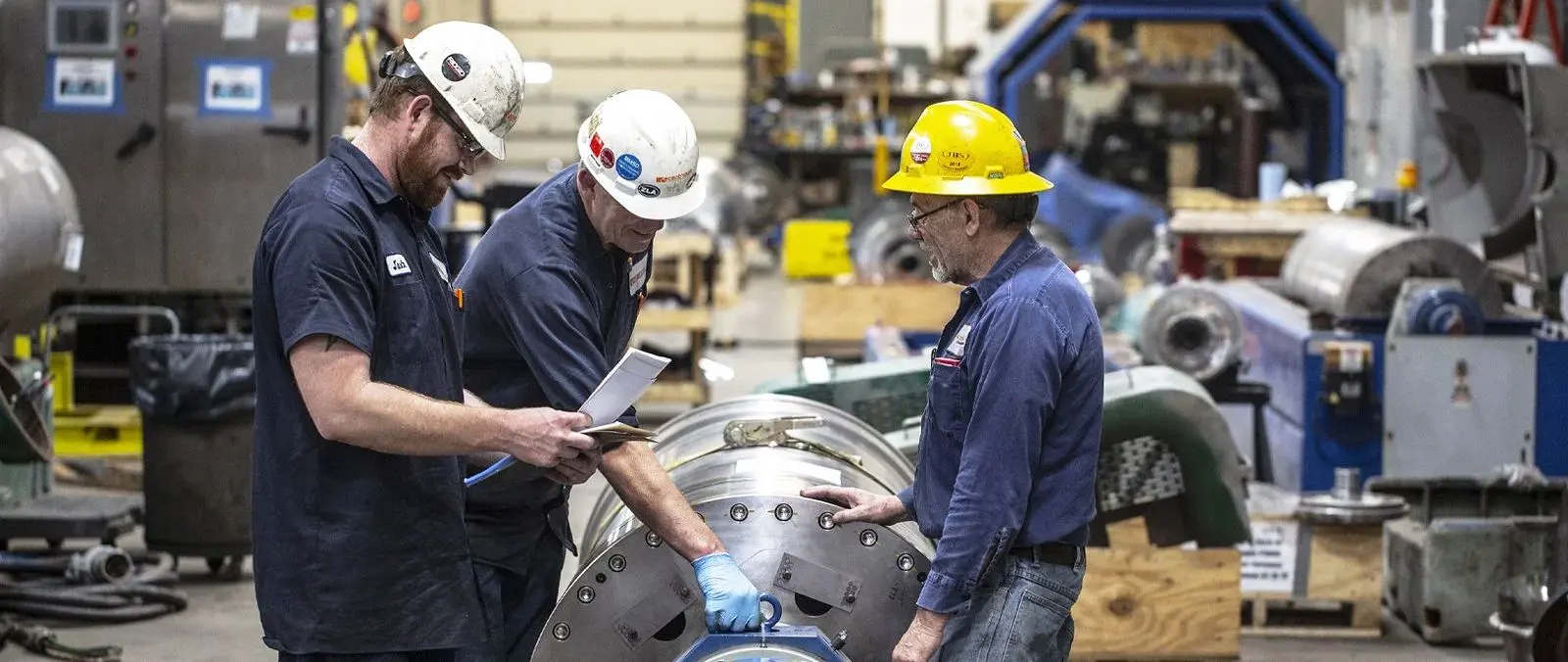
Widely used in chemical, pharmaceutical, food, environmental protection and other fields. It can handle all kinds of solid-liquid mixtures, especially materials containing solid particles.
1. Clean the supernatant reflux tube regularly.
2. Clean the mud screw pump regularly to reduce centrifuge wear.
3. Choose appropriate flocculants based on sludge characteristics.
4. Adjust the differential to optimize the drum and screw speed ratio.
5. Regularly check and maintain all components.