1
Working Principle of Belt Concentrated Filter Press
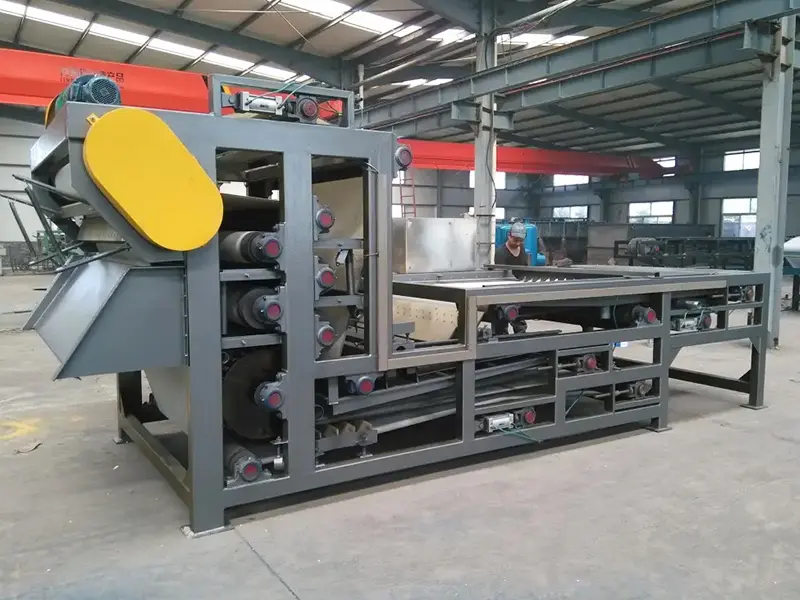
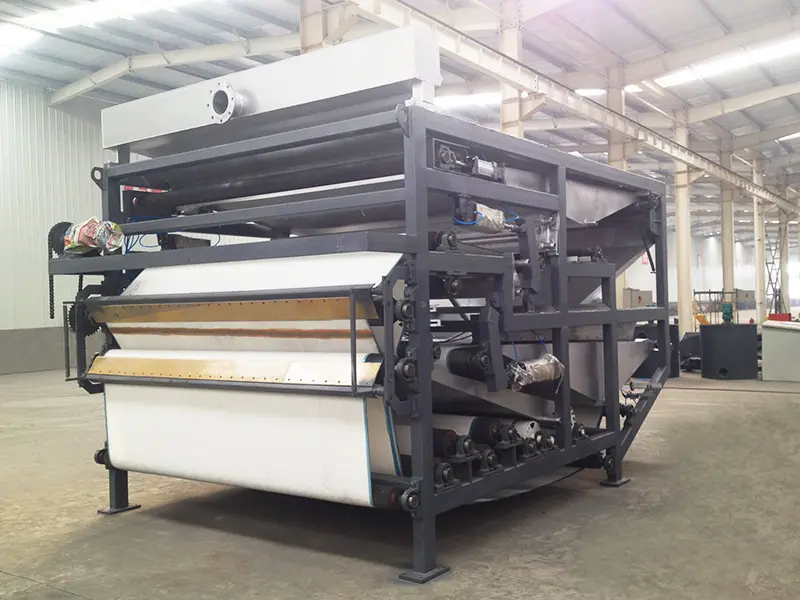
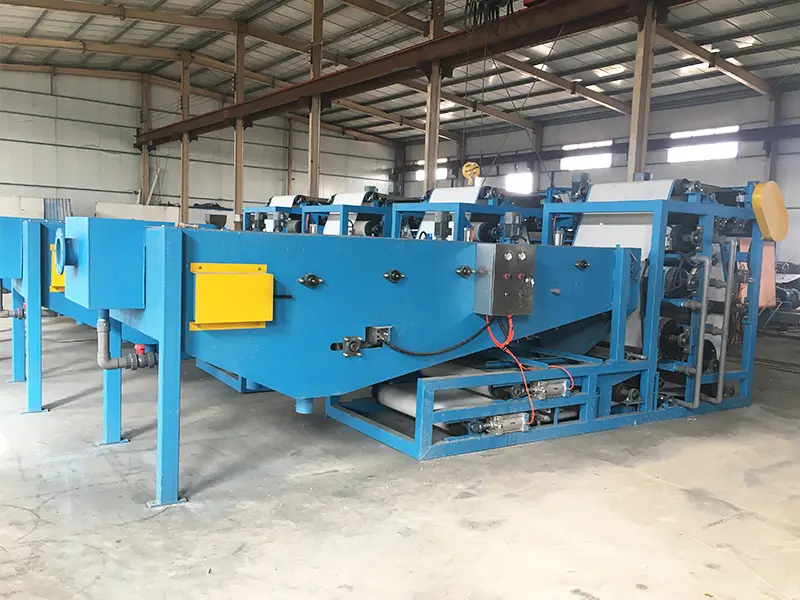
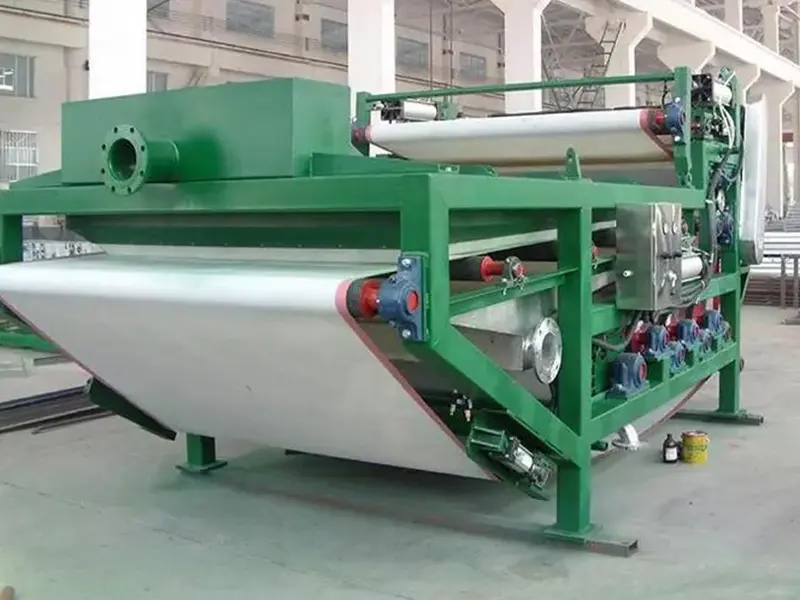
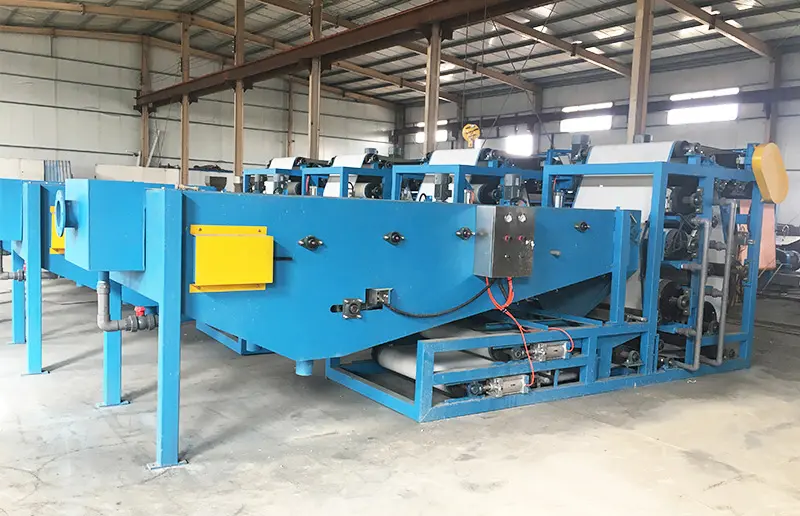
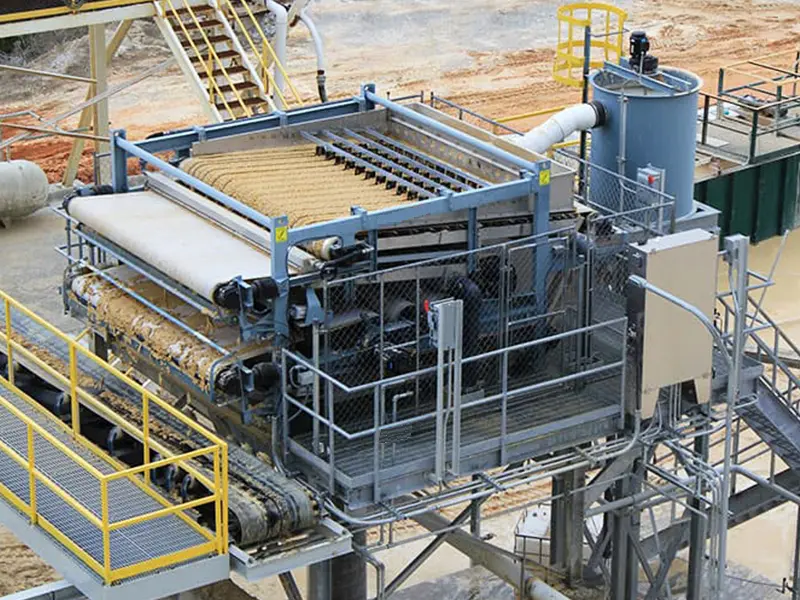
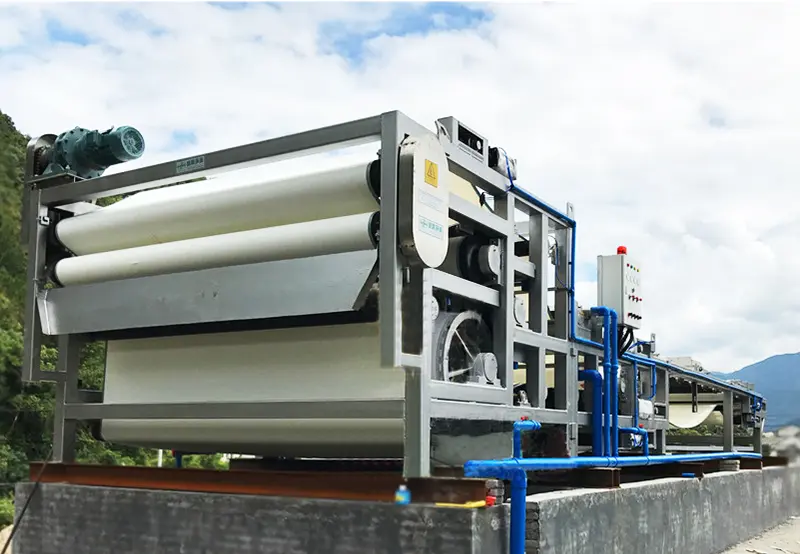
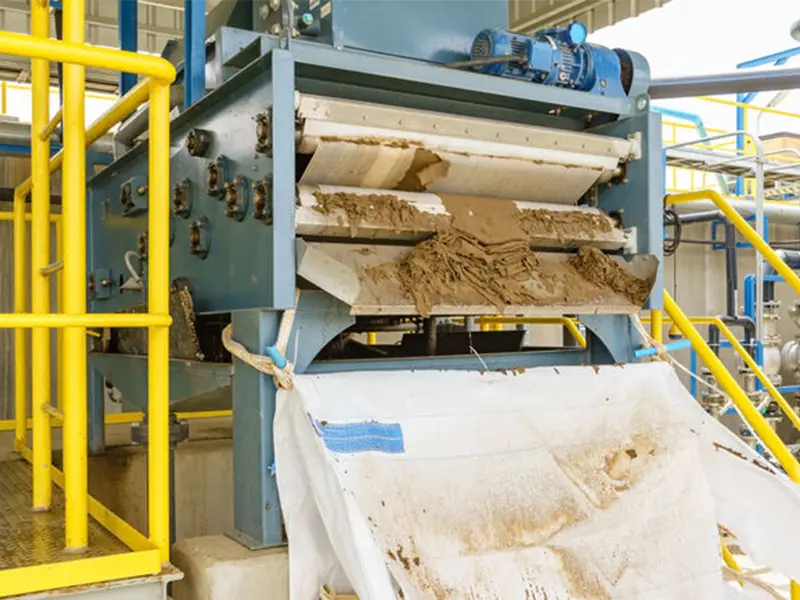
Belt filter press is a continuous filter, which uses multi-layer polypropylene filter belt to press and dewater the material. This press filtration process can effectively separate the water and solid particles in the suspension, so that the liquid can be purified and the solid can be concentrated or dehydrated.
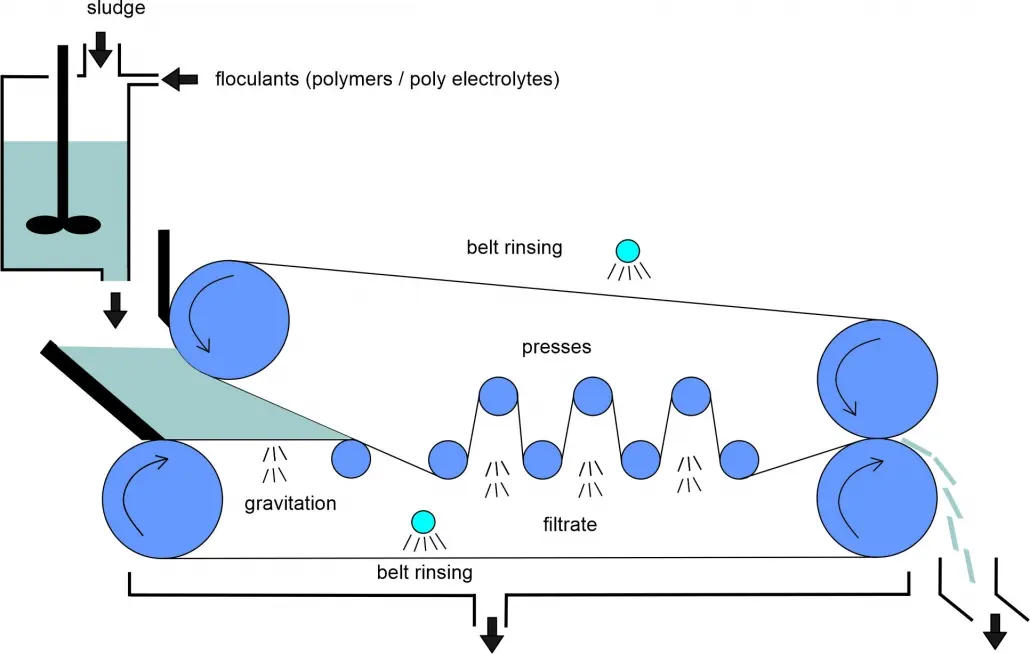
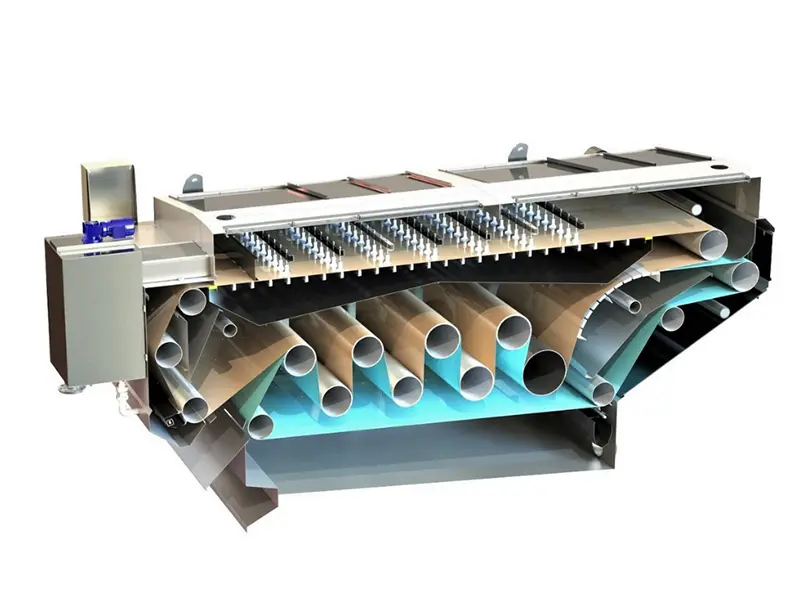
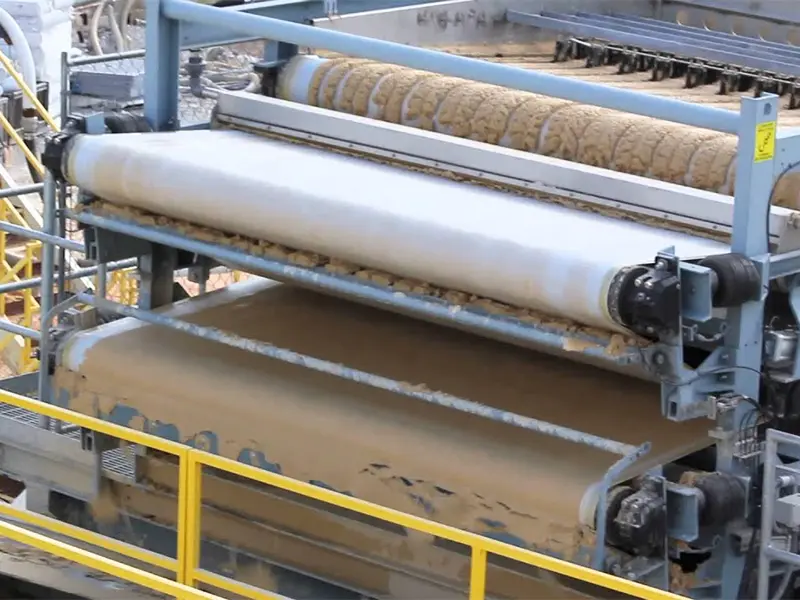
The flocculant in the flocculant preparation device is pumped to the static mixer, fully mixed with the material, and then enters the concentration section. Under the action of flocculant and gravity, most of the free water is effectively removed in the concentration section, and then sent to the pressure filter section through the unloading mechanism. After gravity dehydration, the material is discharged to the two closed filter belts through the turning mechanism. A pair of main dehydration rollers are pressed and dehydrated, and a series of S-shaped rollers with diameters from large to small are arranged to make the filter cake from small to large.
The whole dehydration procedure is continuous: flocculation - feeding - gravity dehydration of the concentration section - extrusion and shear force - gravity dehydration of pressure filter section - prepressure dehydration - press dehydration - unloading.
2
Structure of Concentration Section
The concentration section is composed of feeding device, tensioning device, distribution device, chassis, deviation correction device, detection and protection device, washing device, transmission device, unloading device and other parts.
Feeding Device: Static mixer ensures sludge and flocculant are fully mixed. A diversion plate directs material in a "U" shape flow.
Tensioning Device: Uses tensioning rollers and springs to adjust filter belt force based on spring compression.
Dispensing Device: Composed of feeding board and support rod to avoid puddling and improve drainage.
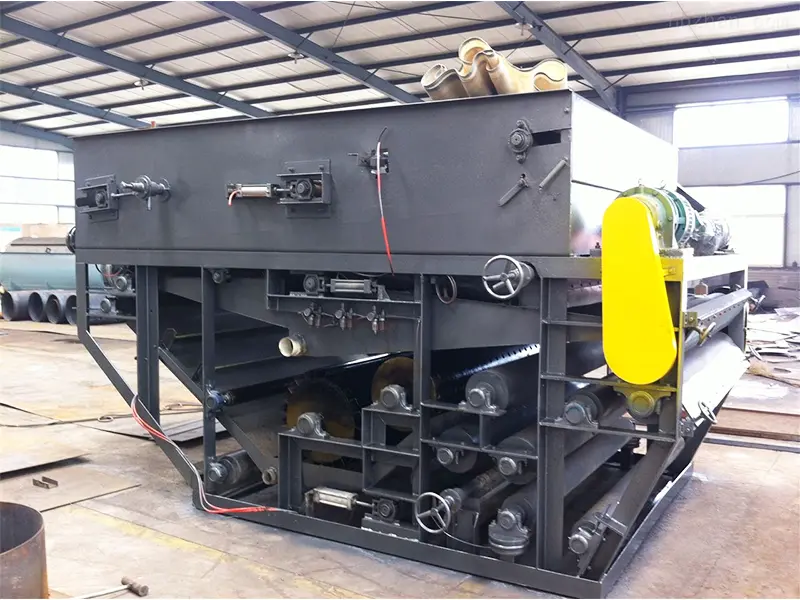
Correction Device: Employs air pressure automatic correction via sensor rods and pneumatic valves to maintain belt balance.
3
Main Components of the Unit
Press Roller System: Graduated diameter rollers form a pressure gradient to remove water progressively.
Gravity Zone: Removes large volumes of water to reduce material fluidity before extrusion.
Wedge Zone: Exerts initial extrusion pressure for pre-pressure dehydration.
Filter Belt Cleaning: High-pressure sprayers regenerate the belt for continuous operation.
4
Application Fields
As an advanced filtration equipment, belt filter press is widely used in:
• Sewage Treatment: Efficient sludge dewatering.
• Fine Chemical Industry: Treating dye and coating waste residue.
• Mineral Processing: Tailings and water slag separation.
• Food Industry: Juice and starch material processing.
• Pharmaceutical & Papermaking: Improving production efficiency and quality.
5
Operation and Adjustment
Performance varies with mud and chemical changes. Key adjustments include:
Belt Speed: Controls dewatering time. Lower speeds typically result in higher solid content but lower processing volume. Recommended range: 2-5m/min.
Filter Belt Tension: Affects extrusion and shear force. Typical municipal sewage tension: 0.3 - 0.7MPa.
Sludge Agent (PAM): Proper dosage (1-6kg/t dry sludge) is critical to convert capillary water into free water.
6
Maintenance Guidelines
Regularly clean the filter belt using high-pressure washers to prevent clogging.
Inspect drum operation, pressure rollers, and dragging systems for abnormal noise.
Replace hydraulic and reducer oils regularly to extend mechanical life.
Strictly follow operational manuals and avoid equipment overloading.
Frequently Asked Questions (FAQ)
What is the main function of a belt filter press?
The belt filter press is used for continuous liquid-solid separation, primarily to dehydrate sludge or suspensions, resulting in purified liquid and concentrated solid cakes.
How does belt speed affect the moisture content of the mud cake?
Lower belt speeds increase filtration time, resulting in higher solid content (lower moisture) and easier cake stripping, but reduce the total processing capacity.
What is the recommended tension for standard sewage sludge?
For municipal sewage mixed sludge, tension is typically maintained between 0.3 to 0.7 MPa to ensure optimal extrusion without causing material leakage.
Why is the cleaning device important?
The cleaning device uses high-pressure water to remove residual material from the filter belt, ensuring the belt’s permeability is regenerated for the next dehydration cycle.
Can the belt filter press handle activated sludge?
Activated sludge is difficult to treat alone due to its microbial nature. It is best handled at lower belt speeds (below 1m/min) or when mixed with primary or chemical sludge.
What happens if the flocculant dosage is incorrect?
Insufficient dosage prevents proper water separation, leading to sludge running. Excess dosage creates a viscous residue that clogs the filter belt and increases operational costs.
 XINJIEYUAN